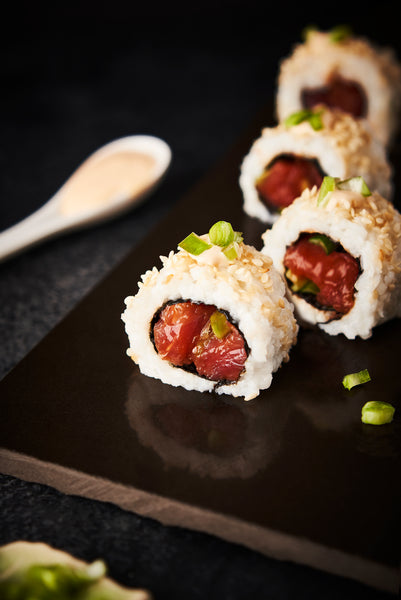

Although when you have sushi the array of dishes and styles is amazing, the most common way to have sushi is with soy sauce, wasabi, pickled ginger (gari), green tea and miso soup.
On this page we try to detail the main sushi accompaniments and point you in the direction or more info on the ingredients of a sushi meal.
With the exception of sashimi all sushi dishes contain some amount of rice. And to make great sushi you need the right sushi rice, cooked to perfection and seasoned with the right sushi rice seasoning. To make sushi rice you need a short grain rice. Readily available at many online Asian grocery stores, it’s worth the extra hunting around for ingredients as the taste is fantastic and it will have the correct adhesive qualities after all, rice is the biggest part of your sushi meal!
Wow that went straight up my nose! Surprisingly, not many people who haven't tried sushi before have tried the delights of wasabi paste. A fantastic accompaniment to any such dish, this paste can also come in powdered form and is in fact usually merely flavoured horseradish. The wasabi plant is very rarely used as mostly it only grows in the Highland steams of Japan.
The taste of wasabi is hot and has a feeling like that of English mustard when the heat rises up though your nose. But unlike the heat of chilies it dissipates quickly leaving no burning sensation.
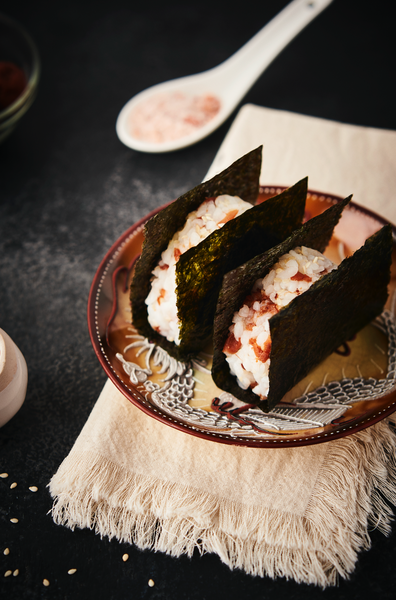
When you see a sushi roll, nori is the green wrapper around the rice (although, on an inside out roll, it’s on the inside of the sushi roll obviously!). nori is made from dried and pressed seaweed and can be found in most asian supermarkets all over the UK. If you have a problem finding one in your area, there are many online food shops where you can order nori online. For that matter you can order most sushi ingredients online. This is the best thing for making maki-sushi rolls. You can roll your own by following our guide. Nori seaweed is red algae from the Porphyra genus. The major source of Nori is of course Japan. Because Japan is relatively small and hilly, farming land is scarce so Japan harvests the sea for it’s crops.
Most of us have tried green tea in our lives and certainly most of us have heard of it but most people are blissfully unaware of the vast variety of tea that's available. With more than 16 kinds of chinese tea and many Japanese teas as well there much to choose from. When you've drunk green tea before did you even know which one it was!? Add to that the many other tea producing countries such as Thailand India and Vietnam and it can soon become confusing. More information on chinese green tea, Japanese green tea and many others can be found on this site
Soy Sauce
Most people like a saucy accompaniment to many of their dishes whether it be mango chutney on your popadums or ketchup on you burger. Soy sauce is a vital part of the Chinese and Japanese diet and as such any sushi meal without it is missing something.
As with green tea there are many kinds, brands and flavours of soy sauce, like tamari soy sauce, shoyu soy and even special sushi soy sauce, but all are made by brewing and fermenting the soy bean and adding a variety of other ingredients including salt and water. Although there are many kinds of soy, only a handful of sauces actually make it by naturally brewing the soy beans, Kikkoman is one of the few mass produced soy sauces that is naturally brewed
Gari
This pickled ginger has a beautiful taste and completes the sushi dish but this is not meant to be eaten with the sushi like soy sauce or wasabi, but instead is used as a palette cleanser between different kinds of dish.
Gari sushi ginger is bright pink in colour and thinly sliced. It can be purchased in packs or in picking jars and can have many different shades all the way from bright magenta to almost white.