
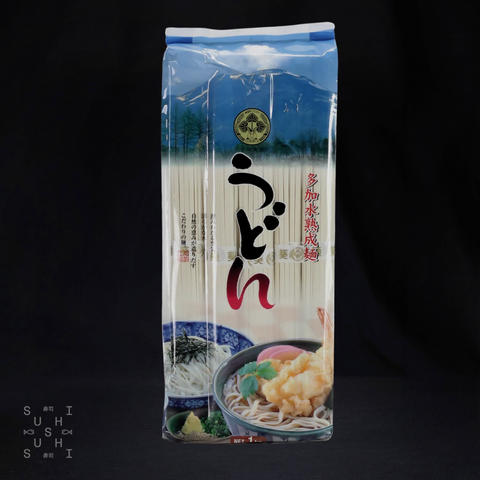
Aoi, Dried Udon Noodles, High-Hydration Aged, 1kg
High-Hydration Aged Udon — Dried Noodles with Fresh Noodle Character
Udon are thick Japanese wheat noodles prized for their firm, chewy bite and ability to carry rich broths. Aoi Seimen's version uses a takasui jukusei (多加水熟成) process — a high-hydration dough that is slowly aged before drying — which produces a texture closer to fresh udon than standard dried noodles typically achieve. The 1kg pack is a practical format for professional kitchens running udon as a menu staple, offering long ambient shelf life without sacrificing the bounce and bite that makes udon distinct from other noodle types.
Why Chefs Choose This
- High-hydration process: More water in the dough creates a softer, chewier texture after cooking — noticeably different from basic dried udon
- Aged before drying: Resting the dough develops gluten structure, improving elasticity and mouthfeel
- Long shelf life: Dried format stores ambient for months — no freezer space needed, unlike fresh or frozen udon
- 1kg bulk pack: Approximately 8–10 portions per bag, reducing packaging waste compared to individual serving packs
How to Use
- Kake udon: Boil, drain, and serve in hot dashi broth with toppings — the standard Japanese udon serve
- Zaru udon: Boil, chill in ice water, and serve cold on a bamboo mat with tsuyu dipping sauce — ideal for summer menus
- Yaki udon: Stir-fry boiled noodles with vegetables, protein, and soy or yakisoba sauce for a quick wok dish
- Nabeyaki udon: Add to individual clay-pot hot pots with tempura, egg, and vegetables — a warming winter dish
What is the difference between dried udon and fresh udon?
Fresh udon has a soft, pillowy bite and a short shelf life — typically one to three days refrigerated. Dried udon trades some of that softness for practicality: it stores for months, cooks in a predictable time, and holds its shape better in broth-heavy dishes. The gap between the two narrows significantly when the dried noodle is made with a high-hydration method, as Aoi's version is. Unlike standard dried udon, which can cook up stiff and flat, high-hydration aged noodles retain more of the springy, elastic chew that makes fresh udon appealing. For kitchens that cannot justify the waste and storage demands of fresh noodles, this is the closest dried alternative.
Product Details
| Type | Dried Udon Noodles (うどん — Udon), High-Hydration Aged (多加水熟成麺) |
| Brand | Aoi Seimen (葵製麺) |
| Net Weight | 1kg |
| Origin | Japan |
| Storage | Ambient — store in a cool, dry place |
How long do you cook dried udon noodles?
Dried udon typically takes 8–12 minutes in a rolling boil, significantly longer than fresh udon (which cooks in 1–3 minutes). The exact time depends on noodle thickness — check the packaging for the manufacturer's recommended cooking time. After boiling, rinse under cold running water to stop the cooking process and remove surface starch. This step is essential for achieving a clean bite, whether serving hot or cold. For hot broth dishes, reheat the rinsed noodles briefly in the broth just before serving.
What is the difference between udon, soba, and ramen noodles?
Udon are thick wheat noodles — chewy, neutral in flavour, and designed to carry broth. Soba are thin buckwheat noodles with an earthy, nutty taste, typically served cold with a dipping sauce or in hot broth. Ramen noodles are thin wheat noodles made with alkaline water (kansui), which gives them their distinctive yellow colour and springy texture. Each has its own broth traditions and serving styles, and they are not interchangeable in authentic Japanese cooking — the noodle defines the dish.
Can you stir-fry dried udon noodles?
Yes — yaki udon (焼きうどん) is a classic Japanese stir-fry dish. Boil and rinse the udon first, then stir-fry in a hot wok or on a teppan with vegetables, protein, and sauce. Dried udon actually holds up better for stir-frying than fresh udon, which can turn soft and break apart under high heat. The firmer texture of rehydrated dried noodles gives better wok hei and a more satisfying chew in the finished dish.
SKU : S0343