Koji (麹) is the enzymatic engine of Japanese fermentation. Aspergillus oryzae — yellow k
Koji (麹) is the enzymatic engine of Japanese fermentation. Aspergillus oryzae — yellow koji mould grown on steamed grain — produces the amylase and protease enzymes that break starch into sugars and protein into amino acids. It is the biological mechanism behind sake, miso, soy sauce, mirin and rice vinegar. In 2006, Japan's Brewing Society formally designated it the country's national fungus (国菌).
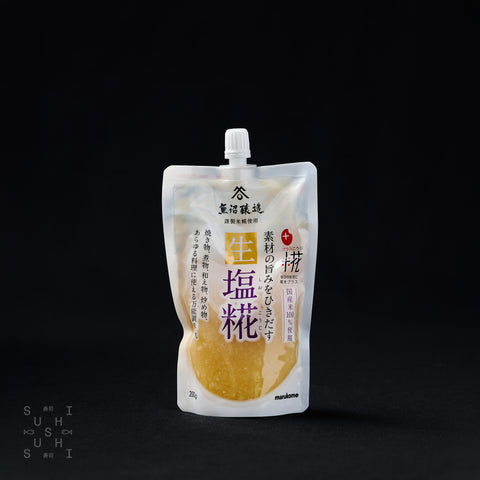
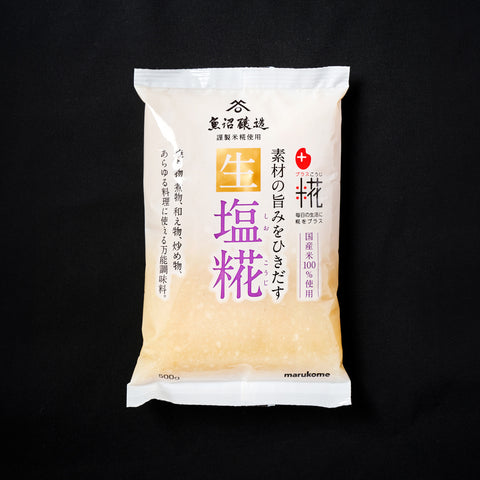
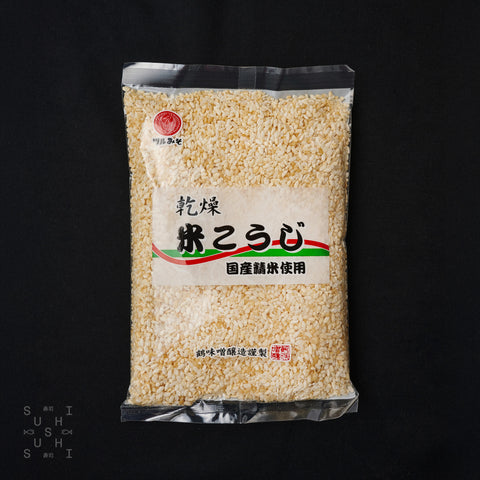
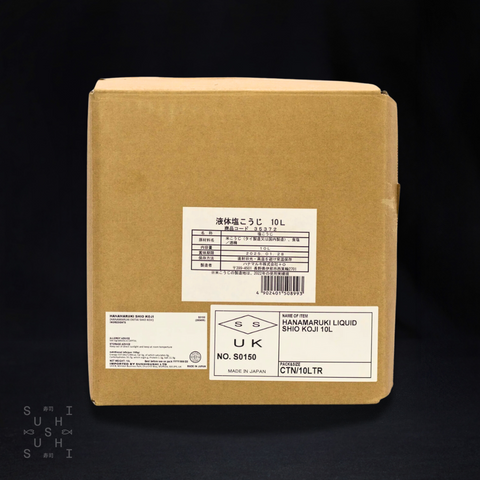
In a professional kitchen the most direct application is shio koji — a salt-and-koji paste that tenderises protein through enzymatic action and adds layered, fermented depth without the heaviness of a straight fermented ingredient. As a dry culture, it opens up further: quick-cure misos, house-made condiments, koji cures and fermentation experiments.
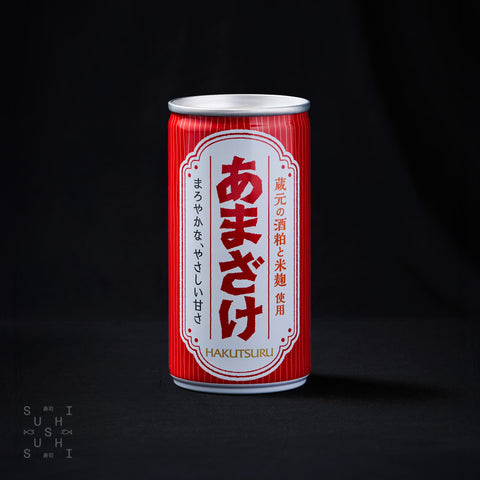
SushiSushi's koji range includes dry rice koji, shio koji paste and koji-based seasonings, sourced primarily from Hanamaruki — a Nagano specialist whose koji underlies some of Japan's best-known fermented ingredient brands.