


Hario, Rice Cooker, Small
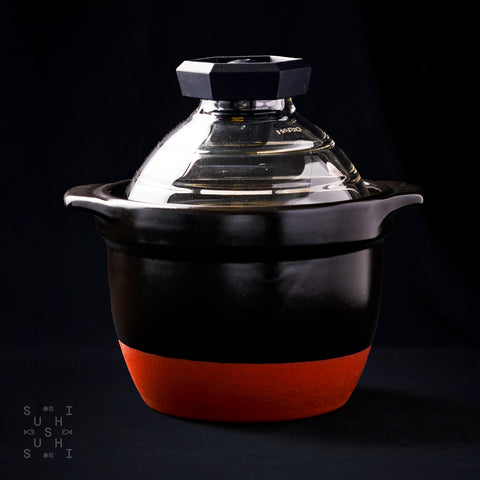
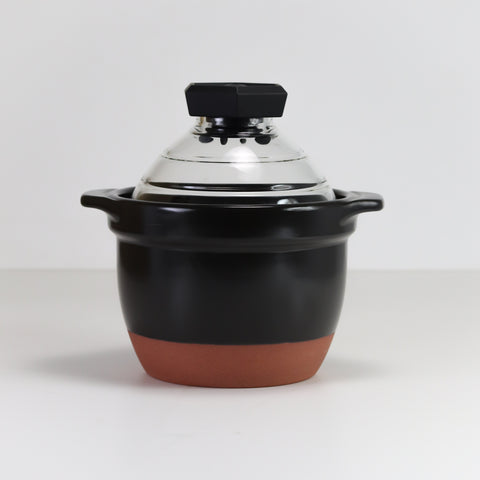
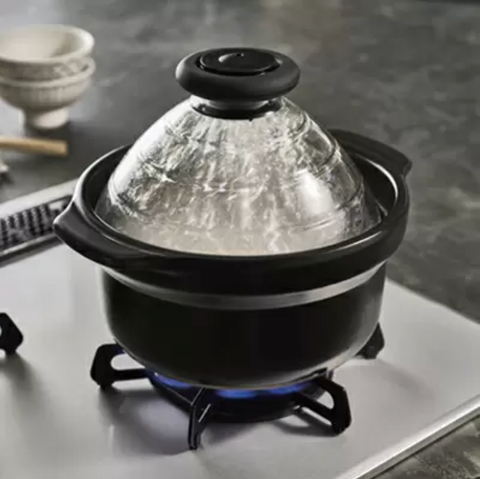
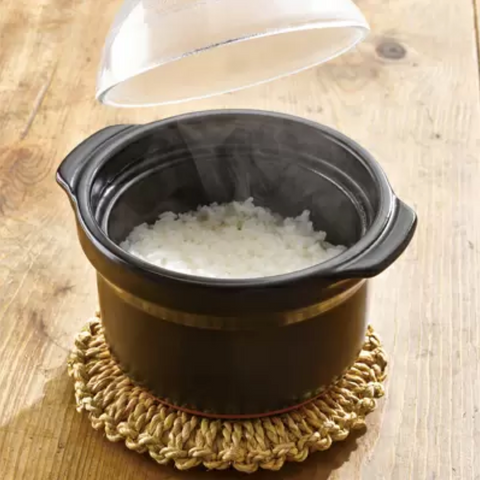
Cooks one go of rice (180ml dry, about two small bowls) on a gas flame, under a glass lid you can see through.
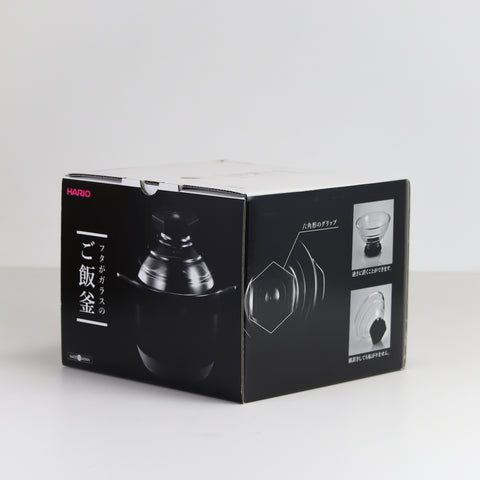
This is Hario's small glass-lid rice pot, sold in Japan as フタがガラスのご飯釜 and sized for a single go, the standard Japanese rice measure. The pot is Banko ware, a heatproof ceramic made in Japan, and the lid is Hario's own heatproof glass. A whistle in the grip sounds when the pot comes to the boil, which is your cue to turn off the heat. Then it rests, lid on, and the rice finishes in its own steam. It suits one or two people, or a kitchen that wants a small pot of good rice cooked to order rather than held.
Why Chefs Choose This
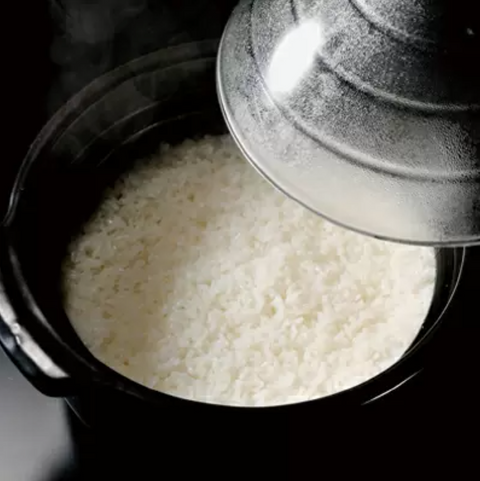
- You can see it cook: the heatproof glass lid shows the boil, the foam and the steam, so you judge each stage without lifting the lid and losing heat.
- A whistle tells you when: steam blows through the grip and it whistles as the pot boils. That is the moment to turn the flame off.
- Ceramic heat: a thick Banko ware body holds heat and releases it slowly, the way a clay donabe does, so the rice finishes evenly off the flame.
- Small by design: one go at a time means rice cooked fresh for each order or each meal, not kept warm for hours.
How to Use
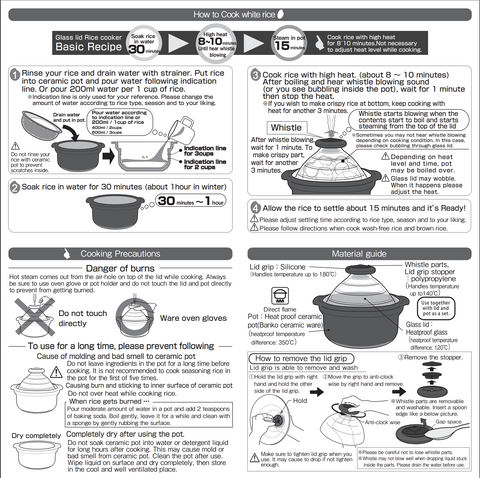
- Rinse and measure: rinse one go of rice, drain, and add water to the line inside the pot, or 220ml, as Hario's instructions give.
- Soak: leave it for 30 minutes, or about an hour in winter.
- Cook: medium to high flame for around 8 to 10 minutes, until the whistle sounds or you see it bubbling through the glass, then turn off the heat.
- Rest: leave the lid on for about 15 minutes to steam, then fluff and serve. A premium sushi rice shows what the pot can do.
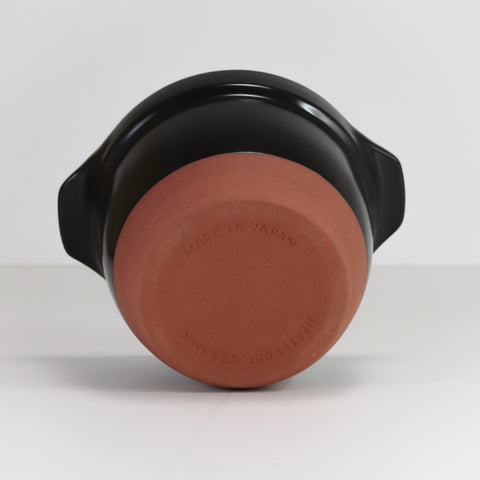
Before electric cookers, Japanese rice was cooked in a clay pot over a flame: a donabe (土鍋) or kama (釜). Many cooks still think it gives the best grain. The drawback was always that you could not see inside, so the timing came from sound, smell and experience. Hario, founded in Tokyo in 1921 and known above all for heatproof glass, answered that with a clear lid. The pot is Banko ware (萬古焼), a heatproof stoneware from Mie Prefecture long used for donabe because it copes with direct flame. "Made in Japan" and "Heatproof Ceramic" are stamped on the unglazed base. If you cook for more people, the same pot comes in a large size for 2 to 3 go.
Learn more: Japanese Rice
How much rice does a one-go pot make?
One go (一合) is the Japanese rice measure: 180ml of uncooked rice, the size of the cup that comes with most rice cookers, and roughly 150g by weight. Cooked, it comes to a little over 300g, which is two small rice bowls or one generous serving. That is enough for one person with leftovers for an onigiri, or two people alongside other dishes. Hario designs this pot for exactly that amount, and the water line inside is set for it. For more rice at a time, the large pot takes 2 to 3 go.
Product Details
| Capacity | 1 go (180ml uncooked rice), about two small bowls cooked |
| Type | Stovetop rice pot with glass lid (フタがガラスのご飯釜) |
| Brand | Hario (ハリオ), founded 1921 |
| Pot | Heatproof ceramic, Banko ware (萬古焼) |
| Lid and Grip | Heatproof glass lid; silicone grip with whistle, polypropylene stopper |
| Heat Source | Direct flame (gas). Not for induction |
| Origin | Made in Japan |
| Care | Let it cool, wash, and dry the pot fully before storing |
Can I use it on an induction hob?
No. It is a ceramic pot made for direct flame, and ceramic does not work on induction. Use it on gas. Avoid sudden temperature shocks, such as putting the hot pot down on a cold or wet surface. If your kitchen is induction only, this is not the right pot.
What if the whistle does not sound?
Watch the glass instead. Hario notes that the whistle can be quiet depending on the flame and conditions, so if you see the rice bubbling up under the lid after about 8 to 10 minutes, turn off the heat and let it rest. If rice sticks or catches on the bottom, the flame was too high; turn it down a little next time. The whistle parts come out for washing, so keep them clear of starch.
How do I look after the ceramic pot?
Let it cool, then wash it and dry it completely before putting it away; Hario warns that ceramic left damp can develop mould and smells. Do not leave it soaking in water or detergent for long, and do not leave food sitting in the pot. If rice does burn on, Hario suggests boiling some water with two teaspoons of baking soda in the pot, leaving it to stand, then wiping it clean with a soft sponge.
SKU : S0775