

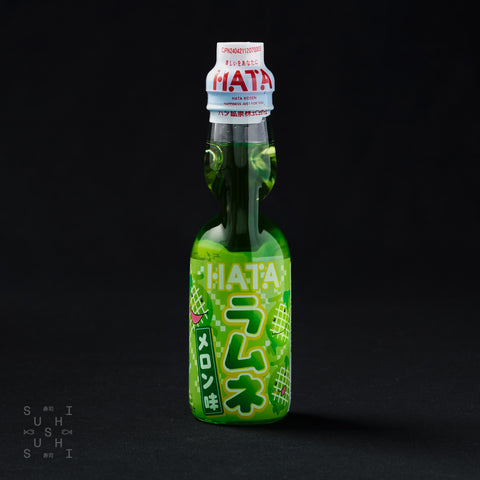
Hatakosen Melon Ramune 200ml
Japan's marble soda, in melon. You push the marble in to open it.
Hatakosen Melon Ramune is a sweet, fizzy Japanese soft drink in the classic codd-neck bottle. A glass marble seals the bottle; press it down into the neck and the soda is open. Serve it well chilled. 200ml glass bottle.
Why Chefs Choose This
- The bottle sells it: the marble seal and pinched neck make it a talking point on any table or counter.
- Single serve: 200ml is one drink, no glass needed, nothing left half open.
- Recognisable: ramune is one of the most familiar Japanese soft drinks, and customers ask for it by name.
- Pairs with the menu: a sweet, fizzy contrast to salty, fried and spicy Japanese dishes.
How to Use
- Festival style: drink it ice cold straight from the bottle, the way it is sold at Japanese summer festivals.
- With Japanese food: alongside karaage, gyoza, yakitori or takoyaki.
- Events and parties: set out in an ice bucket for themed nights, anime events or children's parties.
- Beyond Japanese food: a sweet soda for a burger, a curry or a picnic.
Ramune (ラムネ) takes its name from the English word lemonade, softened by Japanese pronunciation. The bottle is the point. It is a codd-neck bottle, a design patented by the British soft drinks maker Hiram Codd in the 1870s, sealed from the inside by a glass marble that the pressure of the gas holds against a seal in the neck. The design fell out of use in Britain but stayed in Japan, where ramune became a fixture of summer festivals (natsu matsuri) and old-style sweet shops (dagashi-ya). Hatakosen (ハタ鉱泉) bottles its ramune under the HATA name, in a run of flavours that goes well beyond the original.
More HATA ramune flavours: Original, Strawberry and Pineapple.
What does melon ramune taste like?
Sweet and fragrant, with the honeydew-style melon flavour that is a favourite in Japanese sodas and sweets. It tastes more like a melon sweet than fresh-cut fruit, light and floral rather than heavy. The fizz is lively at first and then softens. Served ice cold, it is one of the most refreshing flavours in the range.
Product Details
| Type | Ramune ラムネ (Japanese marble soda), meron-aji メロン味 (melon flavour) |
| Brand | Hatakosen (ハタ鉱泉), sold as HATA |
| Origin | Japan |
| Volume and Format | 200ml glass codd-neck bottle with marble seal (also sold by the case of 30) |
| Best Used As | A chilled soft drink, on its own or with Japanese food |
How do you open a ramune bottle?
Peel the wrapper off the cap and take the cap off. Inside is a small plastic plunger. Push the plunger down onto the marble firmly until it drops into the neck, then keep your palm pressed on the plunger for a few seconds while the fizz settles, so it does not foam over. Once it is open, drink with the indents in the neck facing down: they catch the marble and stop it blocking the flow. Open it over a sink the first time.
Which ramune flavour should I try first?
Start with the original if you have never had ramune: it is the reference point. From there, melon is the classic Japanese fruit soda flavour, strawberry and lychee are sweeter and more floral, and pineapple is the most tropical. All of them come in the same 200ml marble bottle, so a mixed selection works well for events.
How should I store and serve ramune?
Store the bottles upright in a cool place out of direct sunlight, and chill them well before serving, ideally in the fridge for a few hours or in an ice bucket. Warm soda foams more when the marble goes in, so cold bottles open more cleanly. Once opened, ramune cannot be resealed, so it is best drunk in one go. Do not freeze it, as the glass bottle can crack.
SKU : S0303