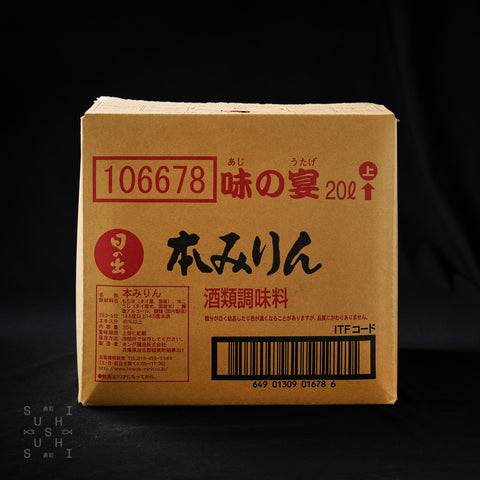
Hinode, Real Hon Mirin 13%vol, 20L
Twenty litres of real hon mirin, around 13% alcohol, from a Hyogo brewer founded in 1900. Sized for kitchens that glaze every day.
This is Hinode hon mirin in a 20 litre catering box, made by King Brewing Co. in Inami, Hyogo Prefecture. It is true brewed mirin, not a mirin-style seasoning, and its alcohol is the reason it works: it carries seasoning into food, takes fishy and meaty odours with it as it cooks off, and leaves a rounded sweetness and a shine that sugar alone cannot give. For a busy grill or a restaurant running teriyaki, tare and nimono every service, one box replaces a shelf of bottles.
Why Chefs Choose This
- A proper glaze: its sugars form a film on grilled and simmered food, giving the teri and tsuya (shine and gloss) Japanese cooking is built on.
- Rounder sweetness than sugar: koji turns glutinous rice starch into a softer, deeper sweetness than sucrose.
- Cleaner fish and meat: as the alcohol evaporates it lifts strong odours and helps seasoning into the food.
- Volume without compromise: real hon mirin in a format that suits batch tare, stock sauces and high-volume glazing.
How to Use
- Teriyaki and tare: equal parts with soy sauce, reduced, for teriyaki, yakitori tare or an eel-style kabayaki glaze.
- Nimono: with dashi and soy for simmered fish, daikon, pumpkin or nikujaga.
- Tsuyu and dipping sauces: the sweet backbone of soba and tempura tsuyu. Boil it first (nikiri) for anything served cold.
- Beyond Japanese food: brush onto roast carrots, pork belly or salmon near the end of cooking, or deglaze a pan with it.
Mirin (味醂) is a sweet rice seasoning made by saccharifying and maturing glutinous rice with rice koji and distilled alcohol. Hon mirin (本みりん) means true mirin: the full-strength brewed style that Japan classes as a liquor, as opposed to low-alcohol mirin-style seasonings. It was drunk as a sweet sake before it became a kitchen staple, and by the Edo period cooks were using it in eel sauce and soba tsuyu. King Brewing (キング醸造) was founded in 1900 in Inami, Hyogo, by Itaro Onishi, launched its first mirin in 1901, and still brews there under the Hinode (日の出, sunrise) name.
Learn more: What Is Mirin? Hon-Mirin vs Mirin-Style, and How to Use It
What does hon mirin taste like?
Sweet first, but not sugary. Straight from the pack there is a warm, sake-like lift from the alcohol and a faint rice and koji depth underneath, and it pours a pale gold with more body than water. Cooking is where it changes: the alcohol goes, the sugars concentrate, and what is left is a glossy, rounded sweetness with a savoury edge that ties soy sauce and dashi together. Compared with sugar it tastes softer and longer; compared with mirin-style seasoning it has more depth and a better shine.
Product Details
| Type | Hon mirin (本みりん), classed in Japan as an alcoholic seasoning |
| Brand | Hinode (日の出), made by King Brewing Co., Ltd., founded 1900 |
| Alcohol | Around 13% vol (see pack for exact figure) |
| Origin | Japan. King Brewing is based in Inami, Kako District, Hyogo Prefecture |
| Volume and Format | 20 litre catering box |
| Storage | Room temperature, out of direct sunlight. No refrigeration needed |
| Best Used As | Glazes, teriyaki, tare, nimono, tsuyu and dipping sauces |
| Also Available | 1 litre bottle for smaller kitchens |
What is the difference between hon mirin and mirin-style seasoning?
Alcohol, and what it does. Hon mirin is brewed and matured from glutinous rice, rice koji and distilled alcohol, and sits at around 13 to 14% alcohol, which is why Japan taxes it as a liquor. Mirin-style seasonings are under 1% alcohol and are classed as food. In the pan, hon mirin gives more shine, a rounder sweetness and better odour removal.
Do you need to cook off the alcohol?
Yes. In anything simmered, grilled or reduced this happens on its own. For dressings, dipping sauces or anything served cold, do what Japanese kitchens call nikiri: bring the mirin to the boil in a pan for a minute or so, let the alcohol burn off, then cool it before use. With a 20 litre pack it is worth boiling off a batch ahead for cold sauces.
How should I store a 20 litre pack?
At room temperature, sealed, away from direct sunlight and heat, such as in a dry store rather than beside the stove. It does not need refrigeration. Decant into smaller bottles for the line if that suits your kitchen, keep them capped, and check the best-before date on the pack.
Ingredients and allergens
Ingredients: Syrup, water, alcohol, glutinous rice, rice koji.
Allergen information is taken from the manufacturer's import specification; always check the pack before use.
SKU : S0183