
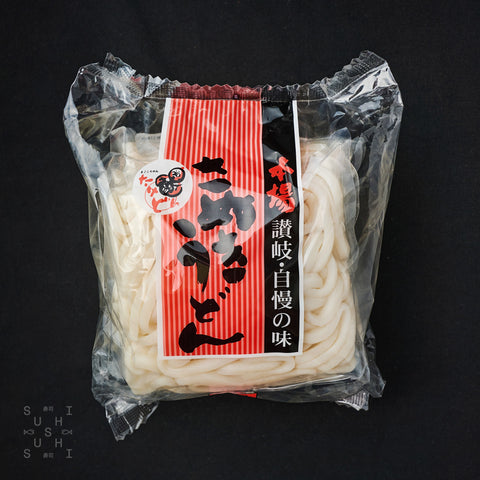
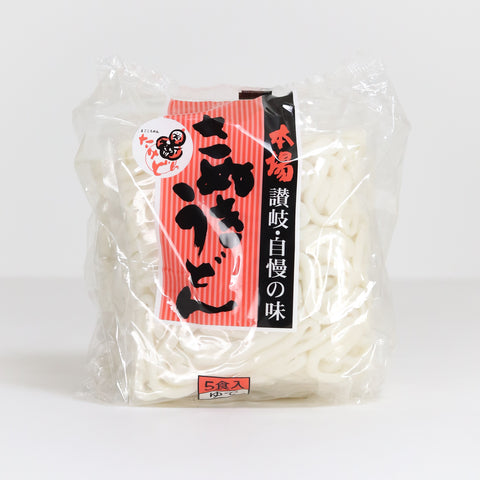
Miyatake, Sanuki Udon Noodles, 5 Packs, 900g
Pre-cooked Sanuki udon, on the pass in under two minutes.
Five sealed 180g packs of fully cooked udon from Kagawa, Japan's udon heartland. No boiling, no soaking: drop straight into broth or a hot pan for the thick, chewy noodle Sanuki built its name on.
Why Chefs Choose This
- No cook time: fully cooked and sealed; heats through in broth or a pan in under two minutes.
- Genuine Sanuki bite: firm, square-cut noodle from the region that defines the style.
- Portion control: five individually sealed 180g packs, no weighing or guesswork on covers.
- Ambient storage: shelf-stable until opened, easy to hold as backstock.
How to Use
- Classic: drop into hot dashi for a kake udon bowl.
- Stir-fried: toss into yaki udon with vegetables, pork and a soy-based sauce.
- Cold: rinse and chill for zaru udon with a dipping sauce.
- Cross-cuisine: use anywhere a thick, chewy wheat noodle works, from Western noodle salads to brothy soups.
Sanuki udon (讃岐うどん) takes its name from Sanuki, the old province now called Kagawa Prefecture, on the island of Shikoku. The style is defined by a square cut with flat edges and a firm, chewy bite, made to standards that call for at least 40% water by weight to flour and a fermentation rest of two hours or more before cutting. Kagawa built this into a national identity: by 2009 the prefecture produced over 59,000 tonnes of udon a year and held roughly a quarter of Japan's udon market, up from just 5% in 1980, and it has marketed itself as "Udon Prefecture" since 2011. Miyatake Sanuki Seimenjo, the maker behind this pack, was established in 1948 in the Sanuki region and has specialised in udon production since.
Learn more: Japanese Noodles: Ramen, Soba, Udon and Somen Explained
What does Sanuki udon taste like?
Firm and chewy rather than soft, with a clean, mild wheat flavour that carries a broth or sauce without competing with it. The square-cut noodle holds its shape and bite even after reheating, which is the point of the Sanuki style. On its own it tastes plain and faintly sweet from the wheat; its job is to pick up whatever it is served in, whether that is a hot dashi, a soy-based stir-fry sauce, or a cold dipping tsuyu.
| Type | Sanuki udon 讃岐うどん (pre-cooked thick wheat noodle) |
| Brand | Miyatake Sanuki Seimenjo (est. 1948) |
| Origin | Kagawa (Sanuki), Japan |
| Format | 5 x 180g sealed packs, pre-cooked, 900g total |
| Best Used As | Noodle soups, yaki udon stir-fries, cold noodle salads |
What makes Sanuki udon different from other udon?
Sanuki udon follows a specific standard: a square cut with flat edges, a minimum water content relative to flour, and a rest period before cutting that builds a firmer, chewier bite than softer regional styles. It comes from Kagawa Prefecture, the old Sanuki province, which produces more udon than any other part of Japan and has built its identity around the noodle. Other regional styles, such as the thinner Inaniwa udon from Akita, use different ratios and techniques for a different texture.
Do these udon noodles need cooking before use?
No. These are pre-cooked and vacuum-sealed, so they only need heating through rather than boiling from raw. Drop the noodle straight into simmering broth for about a minute to loosen and warm it, or toss it into a hot pan for a stir-fry. For a cold dish, rinse briefly under cold water to firm the texture before serving.
How should I store udon noodles once a pack is opened?
Unopened packs keep at ambient temperature until the date on the pack. Once a pack is opened, refrigerate any noodle you are not using immediately and use it within a day or two, as pre-cooked noodle dries out and loses texture quickly once exposed to air. It is not designed for long-term storage after opening, so open only the packs you need for service.
SKU : H1289