

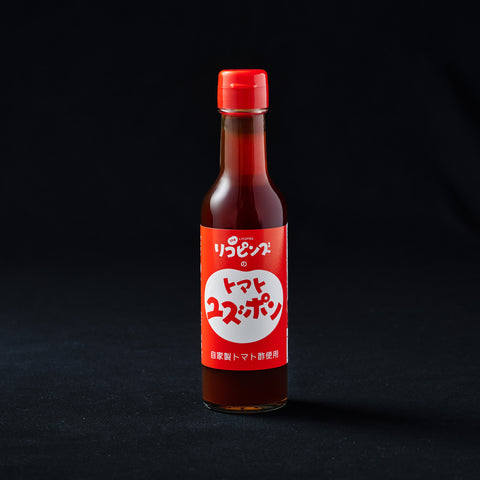


Lycopins, Tomato Yuzu Ponzu, Japanese Citrus Soy Dressing, 200ml
Ponzu made with home-brewed tomato vinegar by tomato farmers in the Ehime mountains. Rounder, fruitier, and good on far more than sashimi.
Most ponzu gets its sharpness from rice vinegar. The Lycopins swap it for tomato vinegar they brew themselves from their own tomatoes, grown at around 600m in Yusukawa, a mountain village of a few hundred people in Ehime Prefecture. Kōchi yuzu, dark soy sauce and katsuobushi go in on top. The label says it plainly: 自家製トマト酢使用, made with home-made tomato vinegar. The tomato brings a softer acidity and a natural sweetness, so this ponzu sits as happily on a tomato salad or a grilled pork chop as it does beside sashimi.
Why Chefs Choose This
- A different acid: home-brewed tomato vinegar gives rounder, fruitier acidity than rice vinegar, with a little natural sweetness
- Crosses the menu: it works with Japanese dishes and just as well with salads, grilled meat and vegetables
- Proper ponzu backbone: Kōchi yuzu, dark soy and bonito keep it savoury and aromatic, not just tomato-sharp
- Farm-made: brewed in small batches by the growers themselves, not a factory tomato flavouring
How to Use
- Sashimi and tataki: use in place of standard ponzu; it is especially good with oily fish and seared beef
- Salads: pour straight over tomatoes, leaves or burrata, or whisk with a little oil for a dressing
- Grilled meat: spoon over steak, pork belly or yakitori at the pass to cut through the fat
- Hot pot: as a dip for shabu-shabu and nabe, where the sweetness suits fattier cuts
Ponzu (ポン酢) is usually traced to the Dutch pons, a citrus punch, with su (酢) meaning vinegar. The classic version pairs a sour citrus with soy sauce and dashi. The Lycopins (リコピンズ) are a group of tomato farmers and their families in Yusukawa, high in the mountains of Ehime, where cold nights and warm days give tomatoes a good balance of sweetness and acidity. Their name nods to lycopene, the red pigment in tomatoes. They press juice from their ripe tomatoes and turn it into vinegar over about a year, managing temperature and timing as it ages, then build this ponzu on it with yuzu from neighbouring Kōchi. The bottle calls it Tomato Yuzu Pon (トマトユズポン).
Learn more: The Lycopins, Tomato Ponzu
What does tomato ponzu taste like?
Yuzu first: bright, floral and sharp, as you would expect from a good ponzu. Then the tomato vinegar comes through, and that is where it parts company with the classic. The acidity is softer and warmer, with a gentle fruit sweetness underneath, and the sauce feels a little fuller in the mouth. Soy and bonito give it a savoury finish. It is less austere than a rice vinegar ponzu, which is why it works on dishes where standard ponzu would feel out of place.
Product Details
| Type | Tomato yuzu ponzu (トマトユズポン), citrus-seasoned soy sauce made with tomato vinegar |
| Brand | The Lycopins (リコピンズ) |
| Made In | Yusukawa, Ehime Prefecture, Japan |
| Vinegar | Home-made tomato vinegar (自家製トマト酢使用) from the growers' own tomatoes |
| Citrus | Yuzu from Kōchi Prefecture |
| Volume and Format | 200ml glass bottle; also available as a case of 12 |
| Storage | Cool and out of direct sunlight before opening; refrigerate once opened |
| Best Used As | Dipping sauce, dressing and finishing sauce |
What is the difference between ponzu and tomato ponzu?
The vinegar. Classic ponzu uses rice vinegar with citrus, soy sauce and dashi, and tastes sharp and clean. Tomato ponzu swaps in tomato vinegar, which brings a rounder acidity, some natural sweetness and a bit more body. The Lycopins brew theirs from their own tomatoes. In the kitchen that means it reaches further: Japanese dishes, salads, grilled meat and vegetables.
Can I use tomato ponzu with non-Japanese dishes?
Yes, and that is where it earns its place. Use it anywhere you would reach for a light vinaigrette: tomato and mozzarella, a crudo, grilled lamb, roast vegetables. The yuzu, soy and bonito underneath add a savoury depth a plain vinaigrette does not have. Add it at the end; it is a finishing sauce, not one to boil.
How should I store it once opened?
In the fridge with the cap on, and use it while the yuzu aroma is fresh. Before opening, keep it in a cool cupboard out of direct sunlight. Give the bottle a gentle shake before use, as a little natural settling is normal.
Ingredients and allergens
Ingredients: Soy sauce (soybeans, wheat) (43.8%), yuzu juice (19.6%), tomato vinegar (19.6%), sugar (16.1%), soup stock powder (0.8%) (bonito: fish).
Allergen information is taken from the manufacturer's import specification; always check the pack before use.
SKU : K0077