


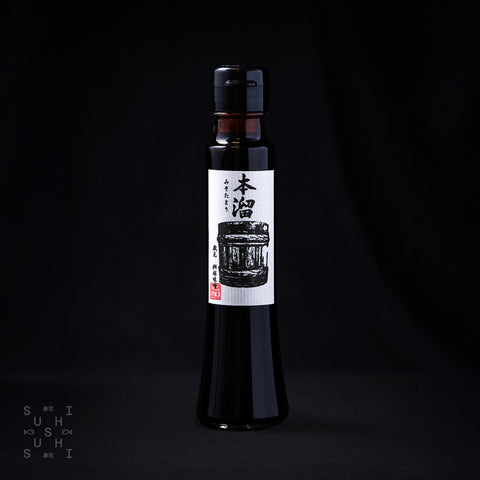
Noda, Miso Liquor Soy Sauce, 100ml
Miso tamari from a wooden-barrel miso brewery in Aichi. Dark, deep and made for finishing.
本溜 (hon tamari, true tamari) from 蔵元 桝塚味噌 (Kuramoto Masuzuka Miso), the miso brewery run by Noda Miso Co. in Toyota, Aichi Prefecture. The maker founded the business in 1928 and still ages its miso in wooden barrels. The label calls this みそたまり (miso tamari): the dark liquid of the tamari tradition, closer to the miso vat than to everyday soy sauce. 100ml bottle.
Pairs with: Maruya Original Hatcho Miso (300g) and Kōmi Tamari Soy Sauce (1L).
Why Chefs Choose This
- Depth: a darker, rounder savouriness than a standard koikuchi soy sauce.
- Finishing grade: a small bottle for the pass, used drop by drop rather than poured.
- Barrel brewery: made by a miso house that still matures in wooden barrels in Aichi.
- Clings to food: thicker body holds on sashimi and glazes instead of running off.
How to Use
- Sashimi: a dipping sauce for tuna, yellowtail and other oily fish.
- Teriyaki and glazes: brush on grilled fish, chicken or aubergine in the last minutes.
- Senbei and dango: brush over toasted rice cakes or mochi before a final grill.
- Beyond Japan: a few drops in a beef gravy, a mushroom risotto or over a fried egg.
Tamari (溜, from tamaru, to pool) began as the dark liquid that gathered in vats of soybean miso. It is the older relative of modern soy sauce and is most closely tied to the Tokai region around Aichi, Mie and Gifu, where soybean miso is the local style. Masuzuka Miso (桝塚味噌) is part of that tradition. Its own site describes four generations of the Noda family, a business founded in 1928 in Toyota, and wooden barrels that the Agency for Cultural Affairs has recognised as part of a food culture museum.
Learn more: Soy Sauce
What does miso tamari taste like?
Dark, rich and rounded. Where a standard soy sauce is sharp and salty up front, tamari leads with depth: a savoury, almost meaty body with a soft sweetness and roasted notes behind it. The texture is thicker and it coats the tongue. Used neat it can dominate, so treat it as a finishing sauce; a few drops over sashimi or a glaze go further than you expect. Gently warmed in a pan it turns glossy and sticky, which is why it suits teriyaki and grilled rice cakes.
| Type | Miso tamari みそたまり, labelled 本溜 (hon tamari) |
| Brand | Kuramoto Masuzuka Miso 蔵元 桝塚味噌 (Noda Miso Co., founded 1928) |
| Key Feature | From a miso brewery that ages in wooden barrels |
| Origin | Toyota, Aichi Prefecture, Japan |
| Net Volume / Format | 100ml bottle |
| Best Used As | Dipping sauce for sashimi, glaze and finishing seasoning |
What is the difference between tamari and soy sauce?
Both are fermented soybean seasonings. Tamari is the older style, tied to the soybean miso of the Tokai region, and is darker, thicker and rounder. Most everyday Japanese soy sauce (koikuchi) is brewed with a large share of wheat, which gives it more aroma and a sharper, saltier edge. Tamari leads with depth and body; soy sauce leads with fragrance. Use tamari for dipping and glazing, and soy sauce for general seasoning.
How do I use miso tamari?
Use it like a premium finishing sauce. Pour a little into a small dish for sashimi, brush it over grilled food at the end of cooking, or add a few drops to a sauce once it is off the heat. It is more concentrated in feel than everyday soy sauce, so start with half what you would normally use and taste. It also works beyond Japanese food: a dash deepens gravies, stews and mushroom dishes.
How should I store tamari after opening?
Close the cap tightly after each use and keep the bottle in the fridge once opened, following the storage guidance on the label. Air and warmth darken and dull soy-based seasonings over time, so a small bottle used within a few months stays at its best. Wipe the neck after pouring so it does not crust around the cap.
SKU : S0006