
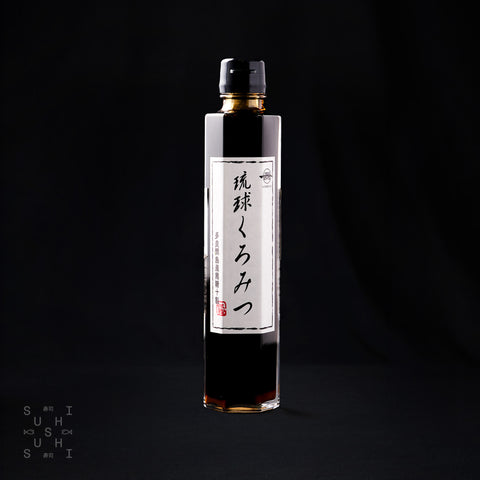
Kakinohana, Okinawan Sugar Syrup, 270g
Made from one ingredient: black sugar from Tarama Island, Okinawa. Kakinohana's Ryūkyū kuromitsu, a dark, pourable syrup in a 270g bottle.
Kuromitsu (黒蜜, "black honey") is the syrup made from kokuto, Okinawa's unrefined black sugar. This one is from Kokuto Honpo Kakinohana, an Okinawan black-sugar specialist, and its label says 多良間島産黒糖十割: made entirely from black sugar from Tarama Island. Because kokuto keeps the molasses of the whole cane, the syrup has a deep, rounded sweetness with caramel, treacle and a faint mineral edge, where ordinary syrup is simply sweet. It is the classic pour for kakigori, warabimochi and anmitsu, and very good over ice cream.
Why Cooks Choose This
- Single-origin sugar: made from kokuto from Tarama Island alone, per the maker and the label.
- Depth, not just sweetness: molasses, caramel and a light mineral note from unrefined cane sugar.
- Ready to pour: no melting or reducing; it goes straight from bottle to plate.
- The Japanese dessert finish: the traditional syrup for kakigori, warabimochi, anmitsu and kuzumochi.
How to Use
- Kakigori: pour over shaved ice, often with kinako and sweet red beans.
- Mochi: drizzle over warabimochi or kuzumochi with a dusting of kinako (roasted soybean flour).
- Desserts: over vanilla ice cream, panna cotta, pancakes, custard or yoghurt.
- Drinks and baking: stir into coffee, milk tea or a cocktail, or use in place of treacle in a glaze or dressing.
Kokuto (黒糖) is made by boiling down pressed sugarcane juice until it sets into dark, unrefined blocks, and it is one of Okinawa's defining foods. Tarama Island (多良間島) is a small, flat island between Miyako and Ishigaki, one of a handful of Okinawan islands that still make kokuto from their own cane. Kakinohana (黒糖本舗垣乃花) was founded in Okinawa in 1989 and specialises in black-sugar products. Dissolve kokuto into a syrup and you have kuromitsu, which despite the name contains no honey. The word Ryūkyū (琉球) on the label is the old name for the Okinawan islands, once an independent kingdom.
What is the difference between kuromitsu and golden syrup?
The sugar it starts from. Golden syrup and simple syrups are made from refined sugar, so they taste sweet and not much else. Kuromitsu is made from kokuto, an unrefined black sugar that keeps the molasses of the whole cane. That gives it a darker colour and a deeper flavour: caramel, a hint of liquorice and treacle, and a faint mineral saltiness that stops it cloying. Think dark muscovado against caster sugar, but pourable. Use it where you want the sweetener to add flavour, not just sweetness.
Product Details
| Type | Kuromitsu (黒蜜), Okinawan black sugar syrup |
| Maker | Kokuto Honpo Kakinohana (黒糖本舗垣乃花), Okinawa |
| Made From | Kokuto from Tarama Island sugarcane (多良間島産黒糖十割) |
| Net Weight and Format | 270g glass bottle |
| Origin | Okinawa, Japan |
| Storage | Cool, dark place; refrigerate after opening |
| Best Used As | Kakigori, warabimochi, anmitsu, ice cream, drinks |
| Also Available | Kokuto sugar blocks, the solid form |
Does kuromitsu contain honey?
No. The name means black honey, but it refers to the colour and the thick, glossy pour, not the ingredients. This kuromitsu is made from Okinawan black sugar alone. If you are avoiding honey, it is a good dark, rich alternative for drizzling.
What do you use kuromitsu on?
In Japan it is the syrup for traditional sweets: kakigori shaved ice, warabimochi and kuzumochi with kinako, and anmitsu, a jelly and fruit dessert. It is just as good over vanilla ice cream, pancakes and custard, stirred into coffee or milk tea, or used in a glaze for pork or roast vegetables where you would otherwise reach for treacle.
How should I store it?
Keep the bottle in a cool, dark place, and in the fridge once opened, with the cap closed. It may thicken when cold; stand the bottle in warm water for a few minutes, or let it come to room temperature, and it will pour freely again. Check the best-before date on the bottle.
SKU : S0631