
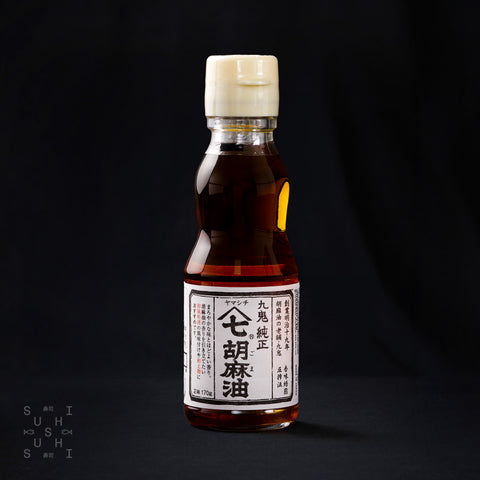

Kuki, Classic Roast Sesame Oil, 170g
Kuki's everyday pure roasted sesame oil: mellow, nutty and made for Japanese seasoning.
This is Kuki's classic roast sesame oil, labelled junsei goma abura, pure sesame oil. The seeds are roasted for aroma and the oil is pressed out, giving a rounded sesame flavour rather than the heavy smokiness of a dark roast. The label recommends it for seasoning Japanese dishes and dressed vegetables, where sesame should lift the food, not take it over. 170g glass bottle.
Why Chefs Choose This
- Balanced roast: toasty enough to taste of sesame, mellow enough to use across a whole menu.
- Pressed oil: the label states the oil is pressed (圧搾法) from roasted seed.
- Sesame specialist: Kuki has made sesame oil since 1886, the year printed on the label.
- Two sizes: a 170g bottle for the pass or the home cupboard, and a 1.65kg size for heavier use.
How to Use
- Aemono and ohitashi: a few drops through sesame-dressed greens or blanched spinach.
- Finishing: drizzle over ramen, miso soup, rice bowls or cold tofu just before serving.
- Dressings and dips: whisk with soy sauce and rice vinegar for a gyoza dip or a salad dressing.
- Beyond Japanese food: over roast vegetables, noodle salads or a stir-fry at the end of cooking.
Goma abura (胡麻油) means sesame oil, and junsei (純正) on Kuki's label means pure. In Japan, roasted sesame oil is a seasoning first and a cooking fat second: it goes into dressings, dipping sauces and the last moment of a dish, where its aroma counts most. The degree of roast sets the character, from pale, almost neutral oils to dark, smoky ones. Kuki (九鬼) is a sesame specialist based in Yokkaichi, Mie Prefecture. Its label carries the founding date Meiji 19, which is 1886, with the words kōmi baisen (香味焙煎), roasted for aroma, and asshaku-hō (圧搾法), the pressing method. The ヤマシチ (Yamashichi) mark on the front is Kuki's brand mark.
Learn more: Japanese Spices & Seasonings
What does roasted sesame oil taste like?
Nutty and toasty on the nose, like freshly roasted sesame seeds. On the tongue this classic roast is rounded and smooth, with a light bitterness at the very end rather than the burnt, smoky edge of a dark roast. It is an aromatic oil, so the flavour is strongest when it goes on cold or at the last minute; long frying at high heat drives the aroma off. A little goes a long way: a teaspoon seasons a bowl of noodles or a dish of greens for two.
More from Kuki: Dark Roast Sesame Oil (170g), Classic Roast Sesame Oil (1.65kg) and Deep Roast White Sesame Seeds.
Product Details
| Type | Junsei goma abura 純正胡麻油 (pure roasted sesame oil) |
| Brand | Kuki (九鬼), founded 1886 according to the label |
| Key Feature | Roasted for aroma and pressed (香味焙煎, 圧搾法) |
| Origin | Japan (Kuki is based in Yokkaichi, Mie Prefecture) |
| Net Weight and Format | 170g glass bottle |
| Best Used As | Seasoning and finishing oil for dressings, dips, noodles and soups |
What is the difference between light, classic and dark roast sesame oil?
The difference is how far the seeds are roasted before pressing. A light roast is pale with a soft sesame note, useful when you want gentle aroma or a cooking oil with a hint of sesame. A classic roast like this one is the all-rounder: clearly nutty, still mellow. A dark roast is deeper in colour with a stronger, smoky, slightly bitter edge that stands up to bold dishes. Many kitchens keep two: a lighter oil for dressings and a darker one for finishing ramen or stir-fries.
Can I cook with roasted sesame oil?
Yes, but treat it as a flavouring rather than your main frying oil. A spoonful in the pan for a stir-fry or fried rice works well, especially mixed with a neutral oil. Long, very hot frying burns off the aroma that makes it worth buying and can turn it bitter, so if you want the sesame to come through, add a little more at the end, off the heat. For dressings, dips and finishing, use it straight from the bottle.
How should I store sesame oil after opening?
Keep it in a cool, dark cupboard away from the hob and direct sunlight, with the cap closed tightly. Heat, light and air are what dull the aroma and eventually turn any roasted oil stale. There is no need to refrigerate it. Use it within the date on the bottle, and for the best aroma within a few months of opening. If it smells flat or like paint, it is past its best.
SKU : S0421