

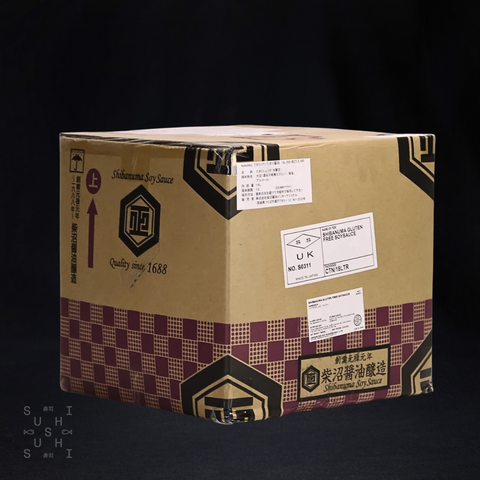
Shibanuma, Gluten Free Tamari Soy Sauce, 18L
Wheat-free tamari from an Ibaraki soy house that has brewed since 1688, in an 18 litre pack for kitchens that go through it by the jug.
Tamari is the soy sauce brewed mostly or entirely from soybeans, with little or no wheat. Shibanuma's is made as a gluten-free tamari: darker, thicker and rounder than everyday koikuchi soy, with more savoury weight and a softer edge to the salt. This 18 litre catering pack is for kitchens running gluten-free service at volume, where one soy has to do the dipping, the glazing and the marinating, and decanting into smaller bottles on the line is the norm.
Why Chefs Choose This
- Gluten-free service: made as a wheat-free tamari and labelled gluten-free, so the soy on a coeliac guest's tray matches the soy everyone else gets
- More umami, less bite: the high soybean content gives a fuller, rounder savouriness than wheat-heavy soy, which flatters raw fish
- Holds up to heat: it reduces into glazes and braises without turning harsh, and its body helps sauces cling
- Cost at volume: 18 litres cuts the price per litre and the pile of empty bottles against buying in small formats
How to Use
- Sashimi and sushi: a dipping soy with enough body to stand up to oily fish like salmon and tuna
- Teriyaki and glazes: reduce with mirin and sake for a gluten-free teriyaki or yakitori tare
- Marinades and braises: a like-for-like swap for regular soy in marinades, nimono and slow-cooked dishes
- On the line: decant into squeeze bottles or dispensers for service and keep the bulk pack sealed and cool
Tamari (たまり) is the older branch of Japanese soy. It began as the dark liquid that gathers in soybean miso as it matures, and the style is still most closely tied to the Chūbu region around Aichi. Because it is built on soybeans rather than a half-and-half mix with wheat, it tastes thicker and more concentrated than koikuchi (濃口), the everyday dark soy. Shibanuma Shoyu Jozo (柴沼醤油醸造) was founded in 1688 by Shozaemon Shibanuma in Tsuchiura, Ibaraki Prefecture, and the family is now in its eighteenth generation. Alongside its koikuchi range, the brewery makes this tamari for kitchens that need to keep wheat off the plate.
Learn more: Soy Sauce: the SushiSushi guide
What does tamari taste like?
Deep and savoury first, salty second. Tamari pours darker and a touch thicker than regular soy, and the flavour follows: a dense, rounded umami from the soybeans, a faint sweetness, and less of the sharp, slightly alcoholic top note that wheat brings to koikuchi. On sashimi it coats rather than stings. Cooked, it caramelises into a glossy, dark glaze. If regular soy is a bright seasoning, tamari is a richer one, and many chefs use less of it to reach the same level of seasoning.
Product Details
| Type | Tamari soy sauce (たまり醤油), gluten-free |
| Brand | Shibanuma Shoyu Jozo (柴沼醤油醸造), founded 1688 |
| Origin | Tsuchiura, Ibaraki Prefecture, Japan |
| Volume and Format | 18 litre bulk catering pack |
| Character | Dark, thick-bodied, deep umami, softer salt than koikuchi |
| Storage | Cool, dark place. Keep sealed between uses and decant for service |
| Best Used As | Dipping soy, gluten-free teriyaki, glazes, marinades and braises |
Is this tamari safe for coeliac guests?
It is made without wheat and sold as a gluten-free tamari, which is why kitchens use it for gluten-free menus. As with any product served to someone with coeliac disease, check the allergen information on the pack you receive, and keep it away from wheat-based soy on the line so the two are not mixed up in service.
Can tamari replace regular soy sauce in recipes?
Yes, in almost everything. Use it as a like-for-like swap in marinades, glazes, braises and dipping sauces. Expect a darker colour and a rounder, deeper flavour. Because it seasons with more umami and less bite, start with slightly less than the recipe asks for and adjust. In cooked dishes it often performs better than regular soy, as it holds its flavour under heat.
How should I store an 18 litre pack?
Soy sauce keeps well thanks to its salt, but air, light and warmth dull its aroma and darken it over time. Keep the bulk pack sealed in a cool, dark store, decant a working amount into smaller bottles for the line, and refill those rather than leaving the main pack open. Refrigerate the working bottles if you can.
Ingredients and allergens
Ingredients: Soybeans (43.3%), water, salt, alcohol.
Allergen information is taken from the manufacturer's import specification; always check the pack before use.
SKU : S0311