

Japanese Sushi Rolling Mat
A bamboo makisu for tight, even sushi rolls. The basic tool of every maki station.
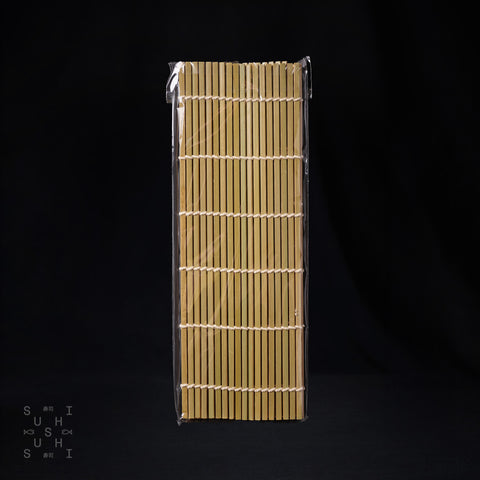
A makisu (巻き簾) is the bamboo rolling mat used to shape maki sushi. Thin bamboo slats are tied together with string, so the mat bends one way and stays rigid the other. Lay nori and rice on it, roll, then press to set the shape. 27 x 27cm, also available in cases of 4, 10 and 20.
Why Chefs Choose This
- Even pressure: the slats spread your grip along the whole roll, so it sets firm without crushing the rice.
- Right size: 27cm square takes a full sheet of nori with room to grip.
- Simple to replace: inexpensive enough to keep spares on the line and change when worn.
- Multi-use: the same mat shapes rolled omelette and squeezes blanched greens.
How to Use
- Hosomaki and futomaki: thin and thick rolls with nori on the outside.
- Uramaki: wrap the mat in cling film for inside-out rolls, so the rice does not stick.
- Tamagoyaki: roll the warm omelette in the mat to set a neat, even shape.
- Greens: roll blanched spinach in the mat and squeeze out the water for ohitashi.
Makisu (巻き簾) means rolling blind: maki is to roll, su is a bamboo or reed blind. Makizushi (巻き寿司), rolled sushi, is one of the main families of sushi, from the thin hosomaki with a single filling to the thick futomaki with several. The mat is the tool that makes it repeatable. Bamboo is used because it is light, stiff along the slat and flexible across it, and because it lets steam and moisture escape rather than trapping them against the rice.
Learn more: Types of Sushi
Pairs with: Shokunin A grade nori, 50 sheets, Shokunin A+ grade nori, 8 sheets and Tamanoi sushi vinegar with dashi.
How do you use a sushi rolling mat?
Lay the mat flat with the slats running side to side and the string knots away from you. Place a sheet of nori shiny side down on the edge nearest you, spread rice over it with damp hands, leaving a strip clear at the far edge, and lay the filling across the middle. Lift the near edge of the mat with your thumbs, hold the filling with your fingers and roll forward until the near edge of the nori meets the rice on the far side. Press along the mat to firm it, lift the mat, finish the roll and press once more. Cut with a wet knife.
Product Details
| Type | Makisu 巻き簾 (bamboo sushi rolling mat) |
| Brand | Kōmi |
| Origin | Japan |
| Size and Format | 27 x 27cm bamboo mat, bound with string, in a clear sleeve; single or cases of 4, 10 and 20 |
| Best Used As | Rolling maki sushi, setting tamagoyaki and squeezing blanched greens |
Which side of the sushi mat do I use?
Use the flatter, smoother face upwards and lay the slats running side to side, so the mat rolls away from you. Keep the tied ends of the string at the far side, so they do not catch as you roll. For inside-out rolls, wrap the whole mat in cling film first; the rice faces the mat and would otherwise stick between the slats.
How do I clean a bamboo sushi mat?
Rinse it in warm water straight after use and brush out any rice caught between the slats. Do not soak it and do not put it in the dishwasher, as bamboo that stays wet warps and can grow mould. Shake off the water, pat it dry, then stand it up or lay it flat somewhere airy until it is completely dry before putting it away.
How often should I replace a sushi mat?
In a busy kitchen, replace it as soon as the string frays, the slats split or it no longer dries out fully between uses. At home a well dried mat lasts a long time. Keeping one wrapped in cling film for inside-out rolls and one bare for nori-outside rolls helps both last longer.
SKU : T0187