
Japanese Tempura Paper, 500 Sheets
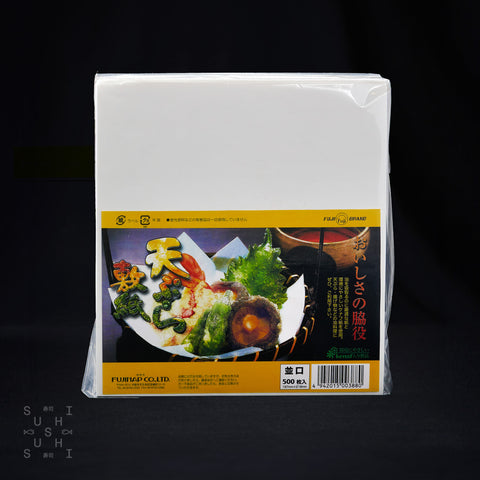
197 x 218mm, 500 sheets. Japanese tenpura shikishi: absorbent paper to lay under tempura and fried food, so it stays crisp on the plate.
These are tempura papers (天ぷら敷紙, tenpura shikishi), the folded white sheets you see under tempura in Japanese restaurants. Each 197 x 218mm sheet sits between fried food and the plate, basket or tray, and soaks up the oil that drains off, so the batter stays crisp and the plate stays clean. The pack comes from Fujinap Co. of Osaka under its Fuji brand, in a paper blended with kenaf fibre, and the maker states that no fluorescent whitening agents are used. Five hundred sheets in the standard weight, enough for a busy fryer section.
Why Chefs Choose This
- Crisper tempura: the paper draws off drained oil instead of letting it pool under the batter.
- Proper presentation: the folded white sheet is the traditional way to serve tempura in Japan.
- Food-safe paper: made without fluorescent agents, according to the maker, with kenaf fibre in the blend.
- Trade quantity: 500 sheets at 197 x 218mm, a practical size for plates, baskets and bento.
How to Use
- Plating: fold a sheet corner to corner, or offset, and lay the tempura on top.
- Baskets and trays: line a zaru, bamboo basket or wooden tray before serving fried food.
- Resting: place freshly fried pieces on a sheet for a moment to shed surface oil.
- Beyond tempura: use under karaage, katsu, croquettes, chips or pastries.
In Japan, tempura is rarely served straight onto a plate. A sheet of shikishi (敷紙, literally "spread paper") goes down first, often folded so a corner points towards the diner, and the tempura is arranged on top. It is partly practical, since the paper catches the last of the oil and keeps the batter light, and partly presentation, with the white paper framing the golden batter. The same idea runs through kaishi, the folded paper used in the tea ceremony. The pack is labelled 並口 (nami-kuchi), the standard weight, and おいしさの脇役: a supporting player for good flavour.
Why serve tempura on paper?
Because oil ruins tempura faster than anything. Even well-drained tempura sheds a little oil as it sits, and on a bare plate that oil collects under the pieces and softens the batter from below. An absorbent sheet takes it up, so the underside stays as crisp as the top. It also keeps the plate clean and gives the dish its familiar look: golden batter on a folded white sheet. For kitchens, a disposable sheet means no stained linens and faster turnaround.
Product Details
| Type | Tempura paper (天ぷら敷紙, tenpura shikishi) |
| Brand | Fuji Brand, from Fujinap Co., Ltd., Osaka |
| Sheet Size | 197 x 218mm |
| Quantity | 500 sheets |
| Grade | 並口 (nami-kuchi), standard weight |
| Material | Oil-absorbing paper with kenaf fibre; no fluorescent agents (maker's statement) |
| Storage | Dry place, away from moisture and strong smells |
| Best Used As | Liner for tempura, fried food, baskets and bento |
How do you fold tempura paper?
The classic fold is simple. Fold the sheet diagonally so the corners sit slightly offset, giving a two-layer triangle with a stepped edge, and place it on the plate with the folded edge towards the diner or the back, as your house style prefers. In a busy kitchen, a single diagonal fold, or the sheet laid flat at a slight angle, does the job.
Can I use tempura paper in the fryer?
No. These sheets are for serving and resting fried food, not for going into hot oil. Lay them on plates, baskets and trays, or on a rack to rest food straight out of the fryer. For draining large batches, use a wire rack first and then plate onto a fresh sheet.
What else can I use it for?
Anything fried or greasy that you want to present cleanly: karaage, tonkatsu, croquettes, fish and chips, doughnuts or tempura-style vegetables. It also works as a liner for bento boxes and serving trays, and as a base for rice crackers or wagashi on a platter.
SKU : S0649