

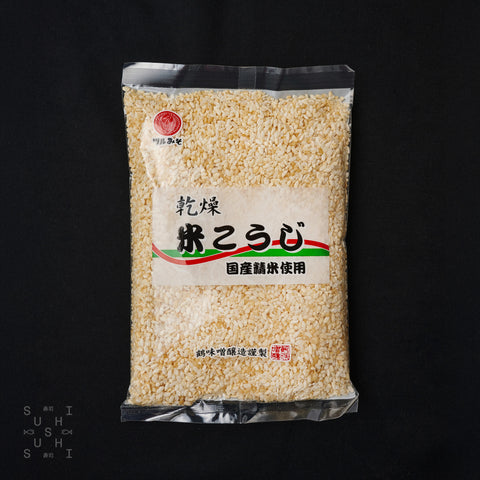
Tsurumiso, Dried Rice Koji, 500g
Dried rice koji from a Fukuoka miso brewer founded in 1870. 500g is enough to start shio koji, amazake and your first miso.
Koji is steamed rice grown through with Aspergillus oryzae, the mould behind miso, sake, mirin and soy sauce. Its enzymes break starch into sugar and protein into savoury amino acids, and that is where most Japanese fermented flavour comes from. This is dried rice koji (乾燥米こうじ) from Tsurumiso Jozo in Yanagawa, Fukuoka, made with Japanese-grown polished rice. Drying stops the mould growing while keeping the enzymes, so the bag keeps at room temperature and is ready whenever you want to make shio koji, amazake or miso.
Why Chefs Choose This
- Shio koji in days: mix with salt and water, stir daily, and within about a week you have a seasoning that tenderises and deepens fish, meat and vegetables
- Keeps on the shelf: dried koji stores at room temperature, unlike fresh koji, which needs chilling and using quickly
- One bag, many jobs: shio koji, amazake, koji pickles, koji butter and homemade miso all start here
- Made by miso makers: Tsurumiso has brewed miso in Fukuoka since 1870 and makes its own koji
How to Use
- Shio koji: 200g koji, 60g salt and about 250ml water in a clean jar; stir once a day at room temperature until sweet-smelling and soft, usually 5 to 7 days, then refrigerate
- Marinate: rub shio koji over fish, chicken or pork for 30 minutes to a few hours before cooking; wipe off excess, as it browns quickly
- Amazake: blend koji with cooked rice and water and hold at around 55 to 60°C for 6 to 8 hours for a naturally sweet rice drink or dessert base
- Homemade miso: mix with cooked, mashed soybeans and salt, pack tightly and leave to ferment for months
Koji (麹, also written 糀, rice blooming with flowers) is grain inoculated with Aspergillus oryzae. In 2006 the Brewing Society of Japan named Aspergillus oryzae Japan's national microorganism (国菌, kokkin), a nod to how much of the country's food depends on it. Rice koji (米麹) is the most common kind; barley and soybean koji are used for other styles of miso. Tsurumiso Jozo (鶴味噌醸造) was founded in 1870 in Yanagawa, the canal town in southern Fukuoka Prefecture, and makes miso, amazake and koji for Kyushu kitchens. Kyushu is known for sweeter barley and rice miso, both built on koji like this.
Learn more: What Is Shio Koji and What Is It Used For?
What does shio koji taste like?
Salty first, then gently sweet and savoury. As the koji works, its enzymes turn rice starch into sugars and protein into amino acids, so a finished shio koji tastes rounder and deeper than plain salt, with a faint aroma of rice and ripe fruit. Used as a marinade it seasons evenly, softens the texture of fish and meat, and helps the surface brown and caramelise in the pan. It is mild enough that the food still tastes of itself, just more so.
Product Details
| Type | Dried rice koji (乾燥米こうじ, kome koji) |
| Maker | Tsurumiso Jozo Co., Ltd. (鶴味噌醸造), founded 1870 |
| Origin | Yanagawa, Fukuoka Prefecture, Japan |
| Rice | Japanese-grown polished rice (国産精米使用) |
| Culture | Aspergillus oryzae |
| Net Weight | 500g bag |
| Storage | Room temperature, cool and dry, sealed. Refrigerate once opened |
| Best Used For | Shio koji, amazake, pickles and homemade miso |
How do I make shio koji from dried rice koji?
Break up 200g of dried koji in a clean jar, add 60g of fine salt and about 250ml of water, and stir well. Cover loosely and leave at room temperature, stirring once a day. Dried koji may need a little more water after the first day or two, as it soaks some up. It is ready when the grains are soft and it smells sweet and slightly fruity, usually after 5 to 7 days. Keep it in the fridge and use within a few months.
What is the difference between dried and fresh koji?
Fresh koji is live and very active, but it spoils within days unless kept cold. Dried koji has been gently dehydrated, which stops the mould while keeping its enzymes. It takes a little longer to get going, but it keeps at room temperature and gives steady results. For a kitchen using koji now and then rather than every day, dried is the practical choice.
What else can I make with rice koji?
Amazake, a naturally sweet rice drink and dessert base; koji pickles with cucumber, daikon or carrot; koji butter; and homemade miso, which takes months but is well worth doing once. Koji can also go into brines and rubs for meat. Anywhere you want more savouriness and a little sweetness without adding sugar, koji is worth trying.
Ingredients and allergens
Ingredients: Rice, koji (malt).
Allergen information is taken from the manufacturer's import specification; always check the pack before use.
SKU : S0315