


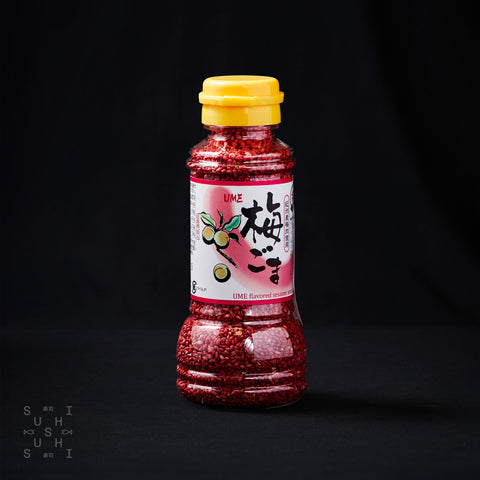
Toho, Sesame Seeds, Umeboshi Favour, 110g
Toasted sesame with a salty-sour pickled plum edge, ready to shake over rice.
Ume goma (梅ごま, plum sesame) is roasted sesame seasoned with umeboshi, the salted Japanese pickled plum, and tinted pink by it. It adds nutty crunch and a sharp, salty lift in one shake. 110g plastic shaker bottle with a flip cap.
More from Toho: Soy Sauce Sesame Seeds (110g), Yuzu Sesame Seeds (80g) and Wasabi Sesame Seeds (80g).
Why Chefs Choose This
- Two jobs in one: crunch from the sesame and seasoning from the plum, so the garnish does the work of a condiment.
- Cuts through richness: the sour ume note lifts fried food, fatty fish and pork.
- Colour on the plate: the pink seeds read clearly against white rice and pale tofu.
- No prep: shake straight from the bottle at the pass.
How to Use
- Rice and onigiri: scatter over steamed rice or mix through before shaping rice balls.
- Cold noodles: finish chilled soba, udon or somen with a pinch.
- Salads and vegetables: sprinkle over cucumber, blanched greens or a sesame dressing.
- Beyond Japan: toss through roast potatoes or over avocado on toast for a sour-savoury crunch.
Goma (胡麻) is sesame, and in the Japanese kitchen it is almost always toasted first to wake up the oil and aroma. Umeboshi (梅干し) means dried plum: ume fruit salted, sun-dried and often coloured with red shiso, one of Japan's oldest preserved foods and a fixture in lunchboxes and rice balls. Ume goma brings the two together in the same spirit as furikake, the family of dry seasonings made to be sprinkled over rice.
Learn more: Furikake
What does umeboshi sesame taste like?
Nutty and toasty first, from the roasted seeds, then a clean, salty sourness that is unmistakably pickled plum. The ume note is bright rather than fruity-sweet, and it fades into a savoury finish. The seeds stay crisp, so the texture matters as much as the flavour. Compared with plain toasted sesame it seasons the dish as well as garnishing it, so go easy on extra salt or soy.
| Type | Ume goma 梅ごま (umeboshi-seasoned roasted sesame) |
| Brand | Toho |
| Origin | Japan |
| Net Weight / Format | 110g plastic shaker bottle |
| Best Used As | Rice topping, garnish for noodles, salads and vegetables |
What is the difference between ume goma and plain toasted sesame?
Plain toasted sesame gives nuttiness and crunch only. Ume goma is seasoned with pickled plum, so it also brings salt and a sharp sourness, and the seeds take on a pink colour. Use plain sesame where you want a neutral garnish, and ume goma where you want the topping to season the dish, such as plain rice, cold noodles or simply dressed vegetables.
Is umeboshi sesame very sour?
No. The sourness is noticeable but balanced by the toasty sesame, so it reads as a bright, salty edge rather than the full hit of a whole umeboshi plum. A light sprinkle seasons a bowl of rice; build it up from there. If you want more plum, pair it with a little umeboshi paste on the side.
How should I store it after opening?
Keep the cap closed and store the bottle in a cool, dry cupboard away from heat and steam, following any guidance on the label. Moisture softens the seeds and dulls the aroma, so do not shake it directly over a steaming pan. Kept dry, it holds its crunch and colour well.
SKU : S0200