

Hasegawa Rolling Mat Makisu Green FMK-M
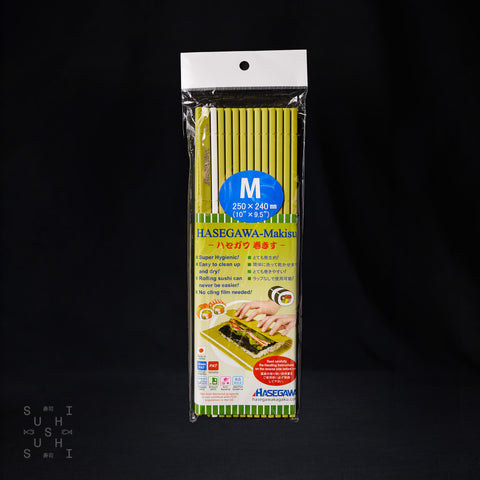
A 250 x 240mm sushi rolling mat in green resin that goes through the dishwasher, so it never goes mouldy like bamboo.
The Hasegawa FMK-M is a makisu for professional kitchens. Instead of bamboo slats tied with cotton, it is made from thin resin slats strung together, so it rolls maki as tightly and evenly as a traditional mat but can be washed hot, bleached and dried quickly. Rice washes off, nothing soaks in, and it does not crack, split or harbour mould. The green colour makes it easy to keep to one station in a colour-coded kitchen.
Why Chefs Choose This
- Hygienic by design: a non-absorbent resin mat that can be washed hot and sanitised, where bamboo and cotton hold moisture.
- Dries fast: water drains straight through the gaps, so it is ready for the next roll quickly.
- Built for service: no splinters, loose threads or snapped slats after months of use.
- Colour-coded: green helps keep it to one station or food group in a HACCP kitchen.
How to Use
- Hosomaki and futomaki: lay nori shiny side down, spread rice, add fillings, then roll away from you, pressing gently with the mat.
- Uramaki: cover the mat with cling film first, since the rice faces outwards on inside-out rolls.
- Shaping: squeeze tamagoyaki into a neat block, or roll and press blanched spinach for ohitashi.
- Cleaning: rinse off rice, wash in hot water or the dishwasher, and stand it on edge to dry.
The makisu (巻き簾, rolling blind) has been used in Japanese kitchens for generations to roll makizushi, the family of sushi wrapped in nori. The traditional version is made of bamboo slats bound with cotton string, and it works well, but it is hard to keep perfectly clean: rice gets into the gaps and the bamboo absorbs water. Hasegawa (長谷川化学工業, Hasegawa Chemical Industry) is a Japanese maker best known for hygienic resin chopping boards used in restaurant kitchens, and its makisu applies the same thinking to the rolling mat.
Learn more: Types of Sushi
Pairs with: Shokunin A+ Grade Nori, 8 Sheets, Shokunin B Grade Nori, 50 Sheets and Saika Yuzu Sushi Vinegar
Is a plastic makisu as good as bamboo?
For rolling, it does the same job: the slats bend around the roll and let you apply even pressure along its length, which is what gives a tight, round maki. The difference is in the cleaning. A bamboo mat has to be rinsed, dried carefully and replaced regularly because it absorbs water and can develop mould. A resin mat can be washed hot and sanitised like any other piece of kitchen equipment, which is why many professional kitchens prefer it. Some chefs still like the feel of bamboo; for a busy line, resin is simply easier to keep safe.
Product Details
| Type | Sushi rolling mat (巻き簾, makisu) |
| Brand and Model | Hasegawa, FMK-M (medium), green |
| Dimensions | 250 x 240mm |
| Material | Resin slats (not bamboo) |
| Care | Dishwasher safe; can be sanitised with kitchen bleach; dry standing on edge |
| Origin | Japan |
| Pack Options | Single, or cases of 4, 10 or 20 |
| Best Used For | Hosomaki, futomaki, uramaki, tamagoyaki shaping |
Can it go in the dishwasher?
Yes. That is the main reason to choose a resin makisu. Rinse off loose rice, then wash it in a commercial or domestic dishwasher, or by hand in hot soapy water, and let it drain standing on its edge. Because the slats do not absorb water, it dries quickly and does not hold the moisture that lets mould grow in a bamboo mat. It can also be sanitised with a kitchen bleach solution as part of your normal cleaning schedule, then rinsed well before the next use.
Which side of the mat do I use?
Hold the mat with the slats running side to side, so they roll up away from you. Lay the nori shiny side down on the mat for standard hosomaki and futomaki, so the shiny side ends up on the outside of the roll. For inside-out uramaki, wrap the mat in cling film first so the rice does not stick to the slats, then roll as normal. Keep the edge of the nori nearest you lined up with the edge of the mat for an even, tight roll.
Why green?
Colour-coded equipment helps kitchens keep tools to one station or food group, which supports food-safety plans and HACCP records. Choose the colour that fits your kitchen's system; green is often used for vegetables and salad, but follow your own scheme. A sushi section that rolls both raw fish and vegetable maki may keep separate mats for each, and a coloured resin mat makes that easy to see at a glance during a busy service.
SKU : T1982