


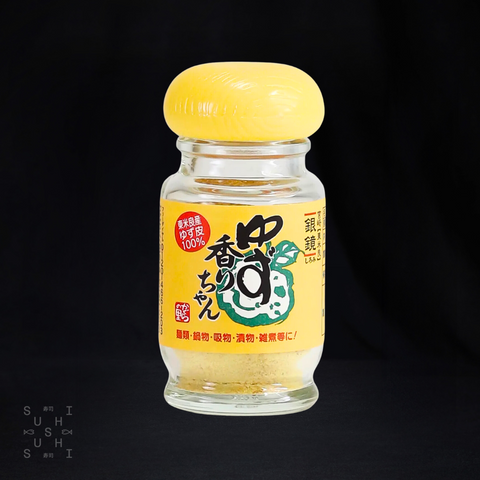
Kagura, Powdered Yuzu Zest, 25g
Dried yuzu peel, ground fine. A pinch brings yuzu fragrance to the pass all year round.
This is ゆず香りちゃん (yuzu kaori-chan, little yuzu fragrance), a powdered yuzu peel from Kagura no Sato (かぐらの里). The label states the peel is grown in Higashimera, in the Shiromi area of Miyazaki Prefecture. Yuzu keeps its scent in the rind, and this powder gives you that scent without zesting fresh fruit. 25g glass jar.
Pairs with: Pure Yuzu Juice (150ml), Tosa Green Yuzu Kosho (50g) and Shibanuma Classic Yuzu Ponzu (300ml).
Why Chefs Choose This
- Yuzu without the season: fresh yuzu is scarce and costly in the UK; the powder keeps in the cupboard.
- Aroma in a pinch: the fragrance sits in the peel, so a little goes a long way.
- Named origin: the label names Higashimera in Miyazaki Prefecture as the source of the peel.
- No prep: no zesting, no waste, no bitter pith; it goes straight on the dish.
How to Use
- Noodles and soups: the label suggests it for noodles, hot pots and clear soups; dust over just before serving.
- Zoni and pickles: also named on the jar: New Year zoni soup and quick pickles.
- Sashimi and grills: a light dusting over white fish, scallops or grilled chicken.
- Beyond Japan: stir into butter, shortbread dough, whipped cream or a gin and tonic garnish.
Yuzu (柚子) is Japan's aromatic citrus, grown for its fragrant rind and sharp juice rather than for eating fresh. In Japanese cooking the rind does the work: a sliver of yuzu peel floated on a clear soup is a classic seasonal touch, and in winter whole fruit go into the bath on the solstice. Powdered peel carries that aroma into dishes where a fresh strip would not suit, from noodle broths to a bowl of hot pot. The jar lists the uses itself: 麺類・鍋物・吸物・漬物・雑煮 (noodles, hot pots, clear soups, pickles and zoni).
Learn more: What is Yuzu?
What does powdered yuzu taste like?
Fragrance first. Open the jar and you get a floral citrus scent that sits between mandarin, grapefruit and lemon. On the tongue it is lightly bitter and sour, as dried peel is, with none of the juice's sharp acidity. The aroma is the point: warm liquid or fat releases it, so it blooms on a hot soup or melting butter and stays quieter on cold food. Use it like a finishing spice, a pinch at the end, rather than cooking it for a long time.
| Type | Powdered yuzu peel, ゆず皮 (yuzu kawa) |
| Brand | Kagura no Sato かぐらの里 |
| Product Name | ゆず香りちゃん Yuzu Kaori-chan |
| Origin | Higashimera (Shiromi), Miyazaki Prefecture, Japan |
| Net Weight / Format | 25g glass jar |
| Best Used As | Finishing seasoning for noodles, soups, hot pots, pickles and desserts |
What is the difference between yuzu powder and yuzu juice?
Yuzu juice brings sourness and liquid; the powder brings fragrance and almost no acidity. Reach for juice in ponzu, dressings and marinades where you want sharpness. Reach for the powder when you want the scent of yuzu without changing the balance of a dish, for example on a finished soup, a bowl of noodles or a dessert. Many kitchens use both: juice in the sauce, a pinch of powder on top.
How much yuzu powder should I use?
Start small. A pinch, roughly the amount you would use of a ground spice, is enough to scent a bowl of soup or noodles. Add it at the end of cooking or at the table, as long heating dulls the aroma. In baking, around half a teaspoon per batch of shortbread or sponge gives a clear yuzu note. Taste and build up; too much tips into bitterness from the peel.
How should I store yuzu powder?
Keep the cap tightly closed and the jar in a cool, dry place away from light and heat. Moisture is the main enemy, so use a dry spoon and do not shake it over a steaming pan. Aroma fades over time once opened, so use it within a few months for the best fragrance and check the best-before date on the jar.
SKU : S0387