
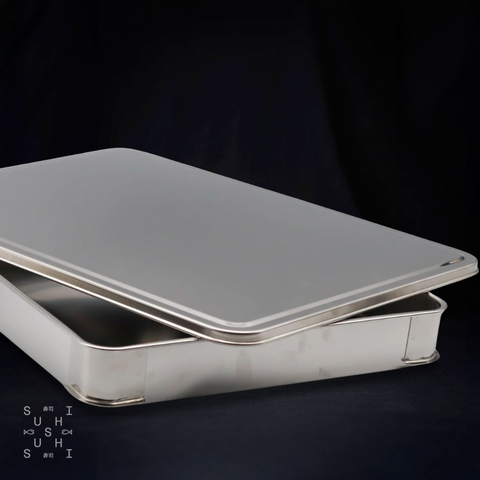

Large Sashimi Tray with Lid
A large stainless steel tray with a flat, fitted lid: the way to hold cut fish covered, cold and in order between prep and service.
Portion your fish ahead of service, lay it in the tray, fit the lid and it goes into the fridge protected from drying air and from everything else on the shelf. The lid sits flat, so trays stack in a walk-in instead of eating shelf space, and the whole thing is stainless steel, so it is non-reactive and easy to keep clean. It is in daily use at some of our best customers, including Sat Bains, Paul Ainsworth, The Aubrey at Mandarin Oriental and Le Manoir aux Quat'Saisons.
Why Chefs Choose This
- Covered and stackable: the flat lid keeps fish from drying at the edges and lets you stack trays in the fridge
- Stainless steel: hygienic and non-reactive, so it will not taint fish or react with salt, vinegar or citrus
- Order on the shelf: prepped neta stays laid out as you cut it, ready to pick up at the counter
- Proven in service: used by Sat Bains, Paul Ainsworth, The Aubrey and Le Manoir aux Quat'Saisons
How to Use
- Sashimi prep: portion saku blocks or sliced fish before service, cover and chill until needed
- Cures and kombujime: hold fish under salt, vinegar or kombu; stainless is safe with acids and salt
- Garnish and mise en place: keep shiso, tsuma, pickled ginger and prepared toppings together and covered
- Moving food: carry covered components from the prep kitchen to the counter or pass
Japanese cooks call a stainless steel prep tray a batto (バット), borrowed from the English word vat, and a lidded one is a futatsuki batto (蓋付きバット). At a sushi counter the fish and toppings are called neta (ネタ), and they are kept cold and covered right up to the moment they are cut or served. A lidded tray is how that happens in the fridge: the fish keeps its surface, does not pick up other smells, and every piece stays where it was laid, so service is a matter of lifting the lid rather than unwrapping cling film.
Learn more: Types of Sushi
Why keep sashimi covered in the fridge?
Fridge air is cold and dry. Left open, cut fish dries at the edges, dulls in colour and starts to take on whatever else is on the shelf. Covered, it keeps its surface and its smell stays its own. Most kitchens line the tray with kitchen paper or a dehydration sheet such as Pichit to catch drip, change the paper as it gets wet, and keep the lid on until the fish is needed.
Product Details
| Type | Lidded stainless steel prep and holding tray (蓋付きバット, futatsuki batto) |
| Material | Stainless steel tray and lid |
| Size | Large |
| Origin | Japan |
| Best Used For | Holding sashimi, sushi neta and prepared garnish in the fridge |
| As Used At | Sat Bains, Paul Ainsworth, The Aubrey at Mandarin Oriental, Le Manoir aux Quat'Saisons |
| Care | Wash in warm soapy water and dry fully before stacking |
Can I cure or marinate fish in it?
Yes. Stainless steel is non-reactive, so salt, vinegar, citrus and soy will not react with the tray or give the fish a metallic taste the way they can in aluminium. That makes it a sound choice for kombujime, a light salt cure or a vinegar marinade held in the fridge.
How should I lay fish in the tray?
Line the base with kitchen paper or a dehydration sheet, lay the fish in a single layer without pieces touching where you can, and fit the lid. Change the paper as it takes up moisture. Keep the tray in the coldest part of the fridge and follow your own food safety plan for how long prepared fish is held.
How do I clean and store it?
Wash the tray and lid in warm soapy water after each use and dry them fully. Avoid wire scourers, which leave scratches that dull the steel. Leave the lid off until everything is completely dry, then store the pair together somewhere clean.
SKU : T0230