


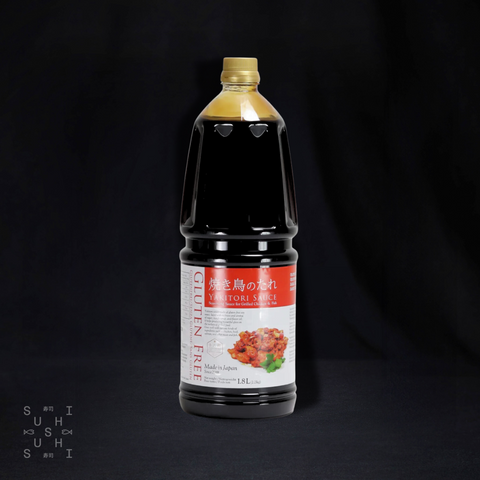
Shibanuma, Gluten Free Yakitori Sauce, 1.8L
A glossy yakitori tare from a soy brewery founded in 1688. One 1.8L bottle for the grill section.
Yakitori tare is the sweet, savoury glaze brushed onto grilled skewers until they lacquer and shine. Shibanuma's version has the deep soy backbone a good tare needs, and the label describes it as a seasoning sauce for grilled chicken and fish. It comes in a 1.8L bottle, or a case of six, for kitchens running a grill every service. Shibanuma Shoyu has brewed in Tsuchiura, Ibaraki, since 1688.
More from Shibanuma: Unagi Sauce (1.8L), Yakiniku Sauce (360ml) and Barrel-Aged Unpasteurised Soy Sauce (300g).
Why Chefs Choose This
- Proper lacquer: it clings, caramelises and builds a glossy coat over two or three dips.
- Soy depth, not just sweetness: a brewer's sauce with a real savoury backbone behind the sugar.
- Ready to use: saves making and reducing tare from scratch every day, with the same result each time.
- Kitchen size: the 1.8L bottle suits a busy grill station or a skewer-led menu.
How to Use
- Yakitori: grill skewers most of the way, then dip or brush and return to the heat two or three times.
- Tsukune: glaze chicken meatballs and serve with an egg yolk for dipping.
- Grilled fish and vegetables: brush onto aubergine, shiitake, salmon or mackerel in the last minutes of cooking.
- Rice bowls: spoon over yakitori-don or grilled chicken on rice.
Yakitori (焼き鳥) means grilled chicken, and the tare (たれ) is the sweet soy glaze that defines it. Traditional yakitori-ya keep a pot of tare going for years, dipping cooked skewers in and topping it up, so the sauce picks up the flavour of the grill. Shibanuma Shoyu (柴沼醤油醸造) was founded in 1688 in Tsuchiura, on Lake Kasumigaura in Ibaraki, and still ferments soy sauce in large wooden barrels. That brewing knowledge sits behind its sauces.
Learn more: Japanese Sauces
What does yakitori sauce taste like?
Sweet and savoury in balance. The salt and deep savouriness of soy sit under a glossy sweetness, and the sauce is thicker than soy, closer to a glaze, so it clings to the skewer. Over the grill it caramelises into a sticky, slightly smoky lacquer with a hint of bitterness at the charred edges, which is exactly the point. It tastes of good yakitori: moreish, savoury and grill-sweet.
Product Details
| Type | Yakitori tare (焼き鳥のたれ), sweet soy grilling glaze |
| Brand | Shibanuma Shoyu (柴沼醤油醸造), brewing since 1688 |
| Origin | Tsuchiura, Ibaraki Prefecture, Japan |
| Volume and Format | 1.8L bottle; also a case of 6 |
| Best Used As | Glaze for grilled chicken, skewers, fish and vegetables |
When do I brush yakitori sauce on?
Late, and in coats. The sugars catch and burn over direct heat, so grill the skewers most of the way first, then dip or brush them and return them to the grill for a moment. Repeat two or three times for a deep lacquer. Keep a separate working portion for this rather than dipping raw or used skewers into the main bottle.
What is the difference between yakitori tare and teriyaki sauce?
Both are sweet soy glazes, and they overlap a lot. Yakitori tare is built for the grill: thick enough to cling to a skewer and caramelise over charcoal, applied in coats near the end. Teriyaki usually describes a cooking method, glazing in a pan until the sauce turns glossy, and teriyaki sauces are often thinner. This tare will happily do teriyaki duty in a pan too; reduce it a little and it coats well.
How should I store it after opening?
In the fridge, cap on, and use it within the time given on the label. Wipe the neck and reseal between uses. Decant a working amount into a dish or tare pot for the grill rather than working from the bottle, which keeps the main supply clean through a busy service.
SKU : S0001-CS6