
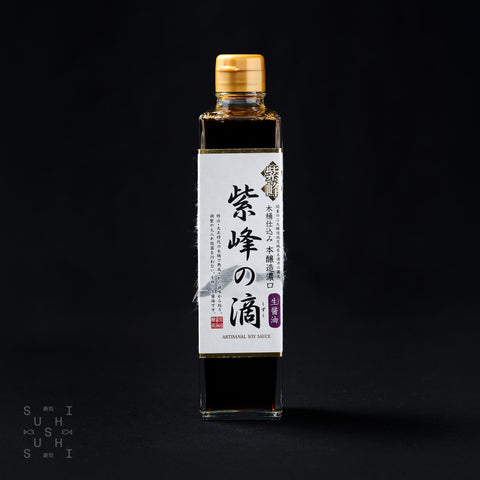
Shibanuma, Barrel-Aged Unpasteurised Soy Sauce, 300g
Living, barrel-aged soy from an eighteen-generation house.
This is Shiho no Shizuku, Shibanuma's nama shoyu: an unpasteurised soy sauce left with its character intact, brewed and matured in their old wooden barrels. It has a deep, complex umami with a smooth, rounded sweetness and a soft, woody scent, the kind of soy you finish a dish with rather than cook away. A 300g bottle of the real, traditional thing.
More from Shibanuma: dark soy sauce (18L), 2-year dashi soy sauce, yuzu ponzu, yakitori sauce, unagi sauce, yakiniku sauce and sesame dressing.
Why Chefs Choose This
- Unpasteurised (nama): not heat-finished, so it keeps a livelier, more aromatic character and its natural enzymes.
- Barrel-aged: fermented and matured in old wooden barrels for real depth.
- Finishing soy: rich and rounded, made to season at the end, not to cook away.
- Eighteen generations: brewed by a family that has made soy since 1688.
How to Use
- Dipping: a premium soy for sashimi and sushi, especially white fish.
- Finishing: a few drops to season raw fish, tofu or rice at the pass.
- Seasoning: stir into dressings and sauces for a rounded umami, or use in place of table salt.
- Tasting: good enough to judge on its own against a standard soy.
Soy sauce is shoyu (醤油), brewed from soybeans, wheat, salt and kōji and aged. Nama shoyu (生醤油) is the unpasteurised form, left unheated so its aroma, enzymes and living character stay intact, which makes for a more nuanced soy than the standard heat-finished bottle. Shibanuma Shoyu (柴沼醤油醸造) has brewed soy in Tsuchiura, Ibaraki, since 1688, eighteen generations of the same family, still fermenting in wooden barrels built in the Edo era. It is one of only around thirty soy sauce makers in Japan at this scale and the largest in Ibaraki.
Learn more: Inside the 200-Year-Old Shibanuma Factory
What does barrel-aged unpasteurised soy taste like?
Deeper and rounder than an everyday soy, with a complex savoury aroma, a soft woody scent and a smooth, gently sweet finish rather than a flat, salty hit. The barrel fermentation builds layers of umami, and because it is unpasteurised it keeps a fresher, more fragrant top note. It reads as soft and full on the palate, which is why it works as a finishing and dipping soy where the soy itself is tasted. Used neat on good fish, the difference from a mass-market soy is immediately clear.
| Type | Nama shoyu 生醤油 (barrel-aged unpasteurised soy) |
| Product line | Shiho no Shizuku 紫峰の滴 |
| Brand | Shibanuma (brewing since 1688) |
| Origin | Japan (Tsuchiura, Ibaraki) |
| Net Weight | 300g |
| Best Used As | A finishing and dipping soy for raw fish |
What is nama (unpasteurised) soy sauce?
Most soy sauce is pasteurised, heated at the end of production to stabilise it. Nama shoyu skips that heat step, so the soy keeps more of its living aroma, its natural enzymes and a fresher, more nuanced flavour. It is prized as a finishing and dipping soy where that extra character is tasted directly. Because it is unpasteurised it is best kept cool and used while fresh, as the qualities that make it special also make it a little more delicate than a standard bottle.
Why does barrel ageing matter for soy sauce?
Fermenting and ageing soy in large wooden barrels lets a complex community of microbes live in the wood and the storehouse and work on the moromi mash over a long maturation. That slow process builds the layered, rounded umami that distinguishes a craft soy from a fast, industrially produced one. Shibanuma still uses wooden barrels built generations ago, in storehouses dating back to the Edo era, which is increasingly rare and shows in the depth of the finished soy.
How should I store it after opening?
Keep it sealed in a cool, dark place, and refrigerate after opening, especially with an unpasteurised soy, to preserve its aroma and freshness. Heat and light dull soy sauce over time, so keep it away from the stove and out of direct sun. Used steadily as a finishing soy, a 300g bottle stays at its best throughout.
Ingredients and allergens
Ingredients: Water, defatted soybeans, wheat, salt.
Allergen information is taken from the manufacturer's import specification; always check the pack before use.
SKU : S0362