


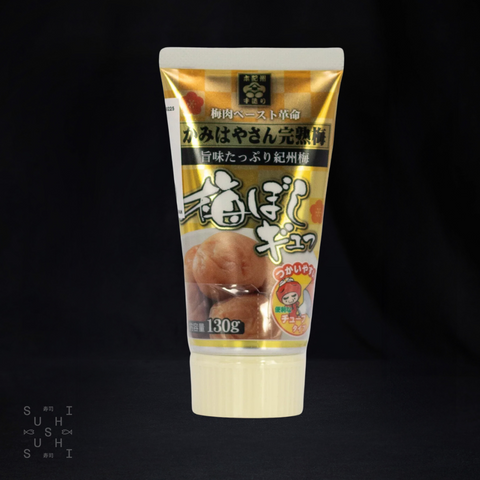
Okahata, Ripe Umeboshi Paste, 130g
Ripe Kishu umeboshi, ready-pureed in a squeezable tube.
Okahata Ripe Umeboshi Paste is pickled ume plum pushed to a smooth paste, so you get umeboshi's salty, sour hit without stoning and chopping. The pack names its plums as ripe Kishu ume (完熟 紀州梅). 130g squeeze tube.
Pairs with: Tencho whole shiso umeboshi, Momoya umeboshi paste with dashi and Tanaka ume and shiso furikake.
Why Chefs Choose This
- No prep: smooth paste with no stones to remove or flesh to chop.
- Concentrated: a small amount gives a bright salty and sour lift.
- Ripe fruit: made from fully ripened Kishu ume, as the pack states.
- Tube format: squeeze out what you need and keep the rest sealed.
How to Use
- Onigiri: a dab in the centre of a rice ball, the classic filling.
- Dressings: whisk into sesame oil and rice vinegar, or into mayonnaise.
- Cross-cuisine: brush on grilled chicken or pork, or stir into pan sauces.
- Drinks: a little in soda, highballs or cocktails for a sour edge.
Umeboshi (梅干し, "dried ume") are ume, a Japanese apricot-like fruit, salted, pickled and sun-dried. They are the classic filling for onigiri and the sour note beside a bowl of rice. Kishu (紀州) is the old name for the region around today's Wakayama Prefecture, which is the heart of Japanese ume growing. This tube takes ripe Kishu ume, fruit left to ripen fully, and turns it into a ready-to-use paste called bainiku (梅肉, plum flesh) in the kitchen.
Learn more: Japanese Pickles
What does umeboshi paste taste like?
Sharp, salty and sour in the first second, then a fruity depth that tastes faintly of apricot. Ripe ume give a softer, rounder sourness than green fruit, with a little natural sweetness under the salt. A small dab goes a long way: on hot rice it reads bright and clean, and in a dressing it adds tang that vinegar alone cannot.
| Type | Umeboshi paste 梅肉 (bainiku, pureed pickled ume) |
| Brand | Okahata |
| Key Feature | Ripe Kishu ume 完熟 紀州梅, per the pack |
| Origin | Japan (Kishu, Wakayama, per the pack) |
| Net Weight and Format | 130g squeeze tube |
| Best Used As | Onigiri filling, dressings, sauces and drinks |
What is the difference between umeboshi paste and whole umeboshi?
Whole umeboshi are the pickled plums, stone and all, served as they are or chopped. The paste is the same fruit pureed smooth with the stones removed, so it spreads and blends instantly. Use whole plums when you want them on show, beside rice or in onigiri, and the paste for dressings, sauces and quick seasoning.
Is umeboshi paste very sour?
It is sour and salty, but ripe ume are softer and fruitier than the sharpest pickled plums. Start with a small amount, about half a teaspoon in a dressing for two, and build up. Balancing it with a little mirin, honey or sesame oil softens it if you prefer a gentler tang.
How should I store the tube after opening?
Recap it tightly and keep it in the fridge once opened. The high salt content helps it keep, but cold storage holds the colour and flavour better. Wipe the nozzle before capping and use it within a few weeks of opening for the brightest taste.
SKU : S0225