


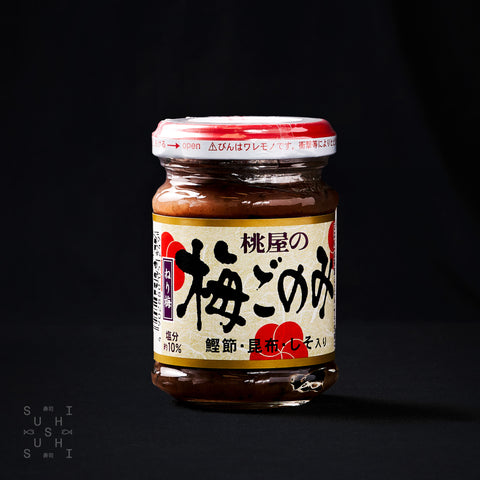
Momoya, Umeboshi Paste with Dashi, 105g
Momoya's Ume Gonomi: smooth umeboshi paste, rounded out with dashi. Sour, salty and savoury in one spoon. 105g jar.
Ume Gonomi (梅ごのみ) is neri-ume (練り梅): pickled ume plum worked into a smooth paste, from Momoya of Tokyo. Momoya pickles its plums for more than six months, blends the paste with dashi and shiso, and keeps the heating to a minimum so the fruit stays bright. The result takes the sharp corners off salt and sour. There are no stones to pick out and nothing to chop.
Why Chefs Choose This
- No prep: stoned and smooth, ready to spoon, spread or whisk.
- Softer edges: long pickling and dashi round off the salt and sourness of plain umeboshi.
- Savoury depth: the dashi adds umami, so it seasons as well as sharpens.
- Precise dosing: easy to measure by the half-teaspoon in a dressing or sauce.
How to Use
- Onigiri and ochazuke: the Japanese classic: a dab in the centre of a rice ball, or on rice with hot tea poured over.
- Ume-ae: toss with cucumber, daikon or blanched greens for a quick sour-salty side.
- Dressings: whisk with oil and rice vinegar for an ume dressing for salads and cold noodles.
- Grilled fish and chicken: brush on chicken or fish with a little shiso, or stir into mayo for a sharp dip.
Umeboshi (梅干し), "dried ume", are ume fruit salted, sun-dried and often coloured with red shiso. Ume (Prunus mume) is usually called a plum in English, though it sits closer to the apricot. Umeboshi have been a fixture of the Japanese table for centuries, the sour heart of an onigiri and a bento. Neri-ume (練り梅, "kneaded plum") is the stoned, puréed form, made for convenience. Momoya launched Ume Gonomi in 1972; the name plays on konomi (好み), "to your liking".
Learn more: Japanese Pickles
Pairs with: Tanaka red shiso furikake, Momoya Gohan desuyo! nori jam and katsuobushi and nori furikake.
What does umeboshi paste taste like?
Sour first, a bright, puckering tartness, then salt, then a softer fruitiness underneath. In this version the dashi and shiso add a savoury, herbal finish that plain umeboshi does not have, and the long pickling takes the sharpest edges off. The texture is smooth and thick, like a dense fruit purée. It is strong, so treat it as a seasoning: a little lifts a bowl of rice or a dressing, too much takes over.
Product Details
| Type | Neri-ume (練り梅, umeboshi paste) with dashi |
| Brand | Momoya (桃屋), Tokyo, founded 1920 |
| Product | Ume Gonomi (梅ごのみ), launched 1972 |
| Origin | Made by Momoya, Japan |
| Net Weight and Format | 105g glass jar |
| Best Used As | Onigiri, ochazuke, dressings, dips and grilled fish |
What is the difference between umeboshi and umeboshi paste?
Umeboshi are whole salted and dried ume plums, stone in. Umeboshi paste, or neri-ume, is the same fruit with the stone removed and the flesh worked smooth. The paste is quicker to use and easier to measure, which suits dressings, sauces and onigiri. This one also carries dashi and shiso, so it is rounder and more savoury than plain plum.
Is it very salty?
It is a pickled plum, so yes, it is salty and sour, but Momoya rounds it off with dashi and long pickling, so it is gentler than many whole umeboshi. Use it the way you would use anchovy or capers: as a seasoning, a little at a time. Taste before adding other salt or soy to the dish.
How should I store it after opening?
Keep the jar in the fridge once opened, with the lid closed, and use a clean spoon each time. The salt and acidity help it keep well, but follow the storage guidance on the jar. If it firms up in the fridge, stir it before use.
SKU : S0957