

Tanaka, Ume and Shiso Furikake, 33g
Young greens, ume plum and shiso on a wakame base: a mix-in rice seasoning from Tanaka of Hiroshima.
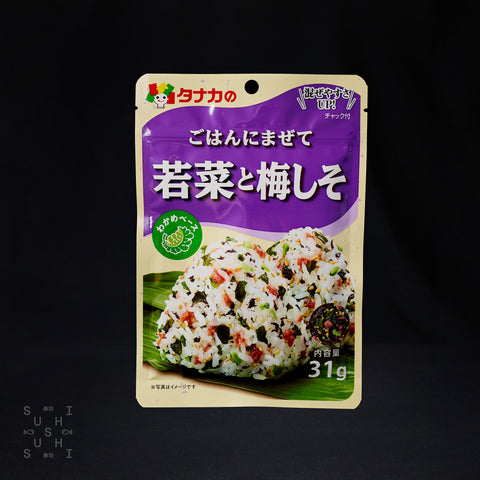
This is Tanaka Foods' Wakana to Ume Shiso (若菜と梅しそ) from the Gohan ni Mazete (ごはんにまぜて, mix into rice) range. It is a mazekomi furikake, made to be stirred through freshly cooked rice rather than only sprinkled on top. The pack describes a wakame base (わかめベース) carrying flecks of green leaf, ume plum and shiso, and the range is made to mix in easily. The pouch has a zip.
Why Chefs Choose This
- Made for mixing: the Gohan ni Mazete range is designed to stir evenly through hot rice.
- Sour, salty and green: ume and shiso bring a sharp, fresh edge, and the wakame gives body.
- Seasoning and colour in one: one stir seasons the rice and flecks it green and red.
- Resealable pouch: the zip top keeps it dry between uses.
How to Use
- Onigiri: the classic use: mix through hot rice before shaping.
- Bento and plain rice: stir through a bowl of rice for lunch boxes and staff meals.
- Vegetables: scatter over blanched greens or sliced cucumber with a drop of sesame oil.
- Cross-cuisine: toss through buttered new potatoes, a grain salad or plain pasta.
Furikake (ふりかけ) means something sprinkled over, and mazekomi (混ぜ込み) styles like this one are meant to be mixed in. Ume (梅) is the Japanese apricot-plum, salted and dried to make umeboshi. Shiso (紫蘇), or perilla, is a herb in the mint family; its red form is what colours umeboshi. Wakana (若菜) simply means young greens. Tanaka Foods (田中食品) was founded in 1901 in Kure, Hiroshima, and in 1904 to 1905 began making Ryoko no Tomo (旅行の友, travel companion), a rice seasoning for the navy that the company describes as Japan's first furikake.
Learn more: Furikake
Pairs with: Tanaka red shiso powder, Tanaka 6 vegetable furikake and Momoya umeboshi paste.
What does ume shiso furikake taste like?
Sour and salty first, from the ume, then the herbal, slightly minty lift of shiso. The wakame sits underneath as a mild, savoury, marine note that rounds the sharpness off. Mixed into hot rice the flakes soften and spread, so every mouthful carries a little of each. There is no chilli heat. It is fresh rather than heavy, which is why it suits cold rice in onigiri and bento as well as a hot bowl.
Product Details
| Type | Mazekomi furikake (混ぜ込みふりかけ, mix-in rice seasoning) |
| Product | Wakana to Ume Shiso (若菜と梅しそ), Gohan ni Mazete range |
| Brand | Tanaka Foods (田中食品), Hiroshima, founded 1901 |
| Origin | Japan |
| Format | Resealable zip pouch |
| Best Used As | Mixed through rice for onigiri, bento and rice bowls |
What is the difference between furikake and mazekomi furikake?
Classic furikake is sprinkled over a bowl of rice just before eating. Mazekomi, or mix-in, furikake is made to be stirred through freshly cooked rice so the seasoning and colour spread evenly, which is what you want for onigiri and bento. This one is a mix-in style, though it works perfectly well sprinkled on top too.
How much should I use?
Start with about one heaped teaspoon per bowl of rice and adjust to taste. For onigiri, mix it through rice while it is still hot so the flakes soften and distribute, then shape. It is salty and sour, so taste before adding any other salt. Check the pack for the maker's suggested ratio.
How should I store it?
Press the zip closed after each use and keep the pouch somewhere cool and dry, out of direct light. Moisture makes the flakes clump and dulls the colour, so always use a dry spoon. Follow the best-before date on the pack.
SKU : S0377