


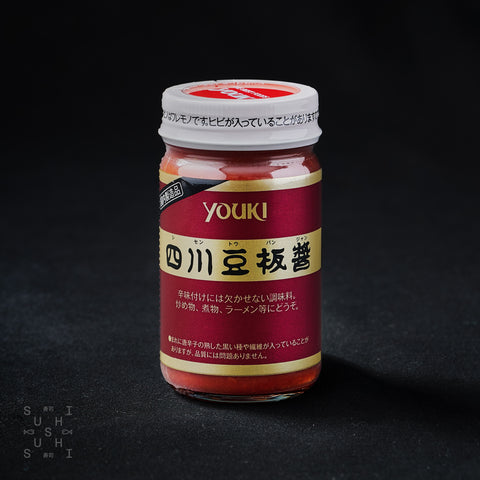
Youki, Tobanjan Chilli Bean Paste, 130g
Sichuan-style chilli bean paste, made in Japan. The base of a proper mapo tofu.
Tobanjan (豆板醤) is the Japanese name for doubanjiang, the fermented broad bean and chilli paste at the heart of Sichuan cooking. Youki's Shisen Tobanjan (四川豆板醤, Sichuan tobanjan) is a dense, brick-red paste with a salty, savoury heat. The label calls it an essential seasoning for adding heat and suggests it for stir-fries, simmered dishes and ramen. Fry a spoonful in oil first and it turns the oil red and builds the backbone of the dish. 130g glass jar, made in Japan.
Pairs with: Kuki Classic Roast Sesame Oil and Kuki Premium La Yu Chilli Oil. More from Youki: Japanese XO Sauce, 120g.
Why Chefs Choose This
- Heat with depth: the fermented beans bring a savoury, salty base, so it seasons as well as heats.
- Blooms in oil: fried for a minute in hot oil it releases colour and aroma, the classic first step in Sichuan cooking.
- Concentrated: a teaspoon or two carries a whole dish, so a 130g jar goes a long way.
- Made in Japan: the label marks it as made in Japan, a steady, consistent paste for the pass.
How to Use
- Mapo tofu: fry with minced pork, garlic and ginger, add stock and silken tofu, then thicken.
- Stir-fries: add to the wok with aubergine, green beans or pork for a quick, punchy sauce.
- Ramen and noodles: stir a little into a miso or tantanmen-style broth for heat and colour.
- Dips and marinades: mix with mayonnaise for a spicy dip, or rub on chicken wings before roasting.
Tobanjan (豆板醤) is the Japanese reading of the Chinese doubanjiang: tō (豆) means bean, ban (板) means board or slab, and jan (醤) means a fermented paste or sauce. It comes from Sichuan in western China, where broad beans are fermented with chilli and salt into a thick paste. In Japan it is best known as the backbone of mābō dōfu (麻婆豆腐, mapo tofu) and ebi chili (prawns in chilli sauce), Sichuan dishes that became everyday Japanese home cooking in the second half of the twentieth century. Japanese kitchens use it far beyond Chinese food, in ramen broths, hot pots and stir-fries.
Learn more: Japanese Spices & Seasonings
What does tobanjan taste like?
Salty first, then a savoury, fermented depth, then the chilli heat building behind it. It is not a pure chilli sauce: the fermented broad beans give it a deep, almost meaty savouriness, and straight from the jar it tastes sharp and salty. The magic happens in the pan. Fried briefly in oil, the raw edge cooks off, the oil turns red and the paste becomes rounder and more aromatic. Heat is firm but not punishing; it is there to support the dish, which is why it sits so well with tofu, pork and aubergine.
| Type | Tobanjan 豆板醤 (chilli bean paste, Sichuan style) |
| Brand | Youki ユウキ |
| Product | Shisen Tobanjan 四川豆板醤 |
| Origin | Japan (made in Japan, as marked on the label) |
| Net Weight / Format | 130g glass jar |
| Best Used As | Base seasoning for mapo tofu, stir-fries, ramen and chilli dips |
What is the difference between tobanjan and chilli oil?
Tobanjan is a thick, fermented paste of broad beans and chilli, used as a cooking base: you fry it at the start to build flavour and colour. Chilli oil, or la-yu, is chilli infused in oil and is mostly used as a finishing condiment, drizzled over gyoza, noodles or rice at the table. They work well together. Many cooks start a mapo tofu with tobanjan in the pan and finish it with a spoon of chilli oil. If you want heat with savoury depth, reach for tobanjan; if you want aroma and crunch on top, use chilli oil.
Is tobanjan very spicy?
It has a firm chilli heat, but most of its character is salty and savoury rather than fiery. Heat levels vary between brands, and Japanese-made tobanjan tends to be balanced for everyday cooking. Start with a teaspoon per portion, fry it in oil, and taste before adding more. Remember it is salty, so ease back on soy sauce or salt elsewhere in the dish. If you want more fire without more salt, add dried chilli or a dash of chilli oil instead of extra paste.
How should I store tobanjan after opening?
Keep the jar sealed in the fridge once opened and always use a clean, dry spoon. The salt and the chilli make it a hardy paste, and it keeps well chilled, but the aroma is at its best in the first months. A little oil may separate on the surface; stir it back in. Check the best-before date on the jar and keep it away from heat and direct sunlight before opening.
SKU : S0028