


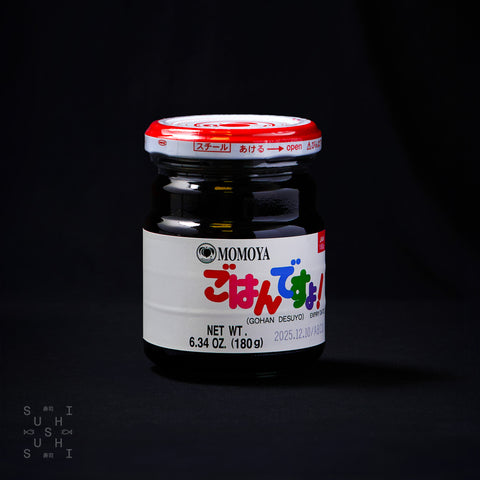
Momoya, Nori Seaweed Jam, 180g
Momoya's Gohan desuyo!: Japanese nori simmered down into a glossy, savoury paste for hot rice. 180g jar.
This is nori tsukudani (海苔佃煮): nori seaweed simmered in sweetened soy until it collapses into a dark, spoonable paste. Momoya sells it as ごはんですよ! (Gohan desuyo!), and makes it with Japanese-grown nori. A teaspoon on a bowl of hot rice is the whole idea. It is sweet, salty and deeply savoury, and it turns plain rice into a meal in seconds.
Why Chefs Choose This
- Instant flavour: one spoonful seasons a bowl of rice; no cooking, no prep.
- Japanese nori: Momoya makes it with nori grown in Japan.
- Spoonable texture: soft and jammy, so it spreads, folds and stirs in easily.
- Small dose, big effect: a little goes a long way, so a jar lasts.
How to Use
- On hot rice: the classic: a teaspoon on freshly cooked rice, Japan's gohan no tomo (ご飯の友, rice companion).
- Onigiri: use as a filling, or mix through the rice before shaping.
- Cheese toast: spread thinly on toast under melted cheese, one of Momoya's own recipes.
- Fried rice and pasta: stir into fried rice or a buttery spaghetti for a deep, savoury note.
Tsukudani (佃煮) takes its name from Tsukudajima (佃島), a small island at the mouth of the Sumida river in Edo, today's Tokyo, where small fish and seaweed were simmered in soy and sugar so they would keep. Nori tsukudani applies the same method to seaweed. Momoya (桃屋), founded in Tokyo in 1920, sells it under its Edo Murasaki (江戸むらさき) name; murasaki, "purple", is old sushi-counter slang for soy sauce. Gohan desuyo! launched in 1973 and quickly became the centre of Momoya's sales. The name is what a parent calls when dinner is on the table: the rice is ready.
Learn more: What is Nori?
Pairs with: Momoya umeboshi paste, Momoya crispy chilli oil with fried garlic and katsuobushi and nori furikake.
What does nori tsukudani taste like?
Sweet and salty first, like a reduced soy glaze, then the deep, rounded savouriness of nori comes through and lingers. The sea is there as a gentle background rather than a strong marine hit. The texture is soft, glossy and slightly sticky, a little like a loose jam, with the odd strand of seaweed. On hot rice it melts in and seasons every grain around it. Momoya's version leans towards the sweet side, which makes it easy to like.
Product Details
| Type | Nori tsukudani (海苔佃煮: nori seaweed simmered in sweetened soy) |
| Brand | Momoya (桃屋), Tokyo, founded 1920 |
| Product | Edo Murasaki Gohan desuyo! (江戸むらさき ごはんですよ!), launched 1973 |
| Origin | Japan |
| Net Weight and Format | 180g glass jar |
| Best Used As | Rice topping, onigiri filling, toast and fried rice |
What is Gohan desuyo?
Gohan desuyo! is Momoya's nori tsukudani, a paste of nori seaweed simmered in sweetened soy, sold in Japan since 1973. It is eaten spooned onto hot rice at breakfast or dinner, a classic Japanese rice companion. On this site it is listed as Nori Seaweed Jam, which describes the texture well: soft, spreadable and glossy.
How much should I use?
Start with a teaspoon on a bowl of rice and adjust. It is concentrated, so a little seasons a lot. For onigiri, mix about a teaspoon through each portion of rice or tuck it in the middle as a filling. On toast, spread it thinly before adding cheese. In fried rice or pasta, add it at the end of cooking so it coats rather than catches.
How should I store it after opening?
Keep the jar in the fridge with the lid closed once opened, and use a clean, dry spoon each time so it keeps well. Follow the storage and use-by guidance printed on the jar. If the surface darkens slightly in the fridge that is normal; stir it through before use.
SKU : H1355