
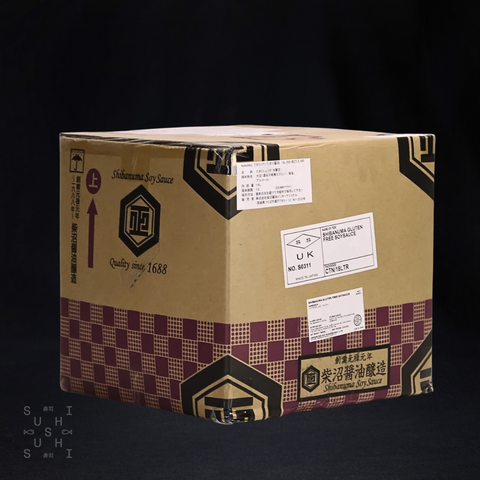
Shibanuma, Gluten Free Tamari Soy Sauce, 18L BBD (27/03/26)
Bulk Gluten-Free Tamari from One of Japan's Oldest Soy Sauce Breweries
Tamari is a Japanese soy sauce brewed without wheat, producing a darker, richer, more intensely savoury result than standard koikuchi shoyu. Shibanuma — a soy sauce brewery in Ibaraki Prefecture, operating continuously since 1688 — makes this tamari using only non-GMO soybeans and salt, with no wheat, no additives, and no preservatives. The 18-litre box-in-bag format is designed for professional kitchens running high volumes of gluten-free service, where decanting into smaller dispensers keeps the sauce fresh while reducing packaging waste.
Why Chefs Choose This
- Verified gluten-free: No wheat in the brew — safe for coeliac and gluten-free menu lines without cross-contamination risk from the sauce itself
- Two-ingredient purity: Non-GMO soybeans and salt only — clean label, no flavour enhancers, no caramel colour
- 18L bulk format: Dramatically lower cost per litre versus bottles — designed for kitchens using soy sauce at volume
- Heritage brewery: Shibanuma has been brewing soy sauce since 1688 — over 330 years of continuous production
How to Use
- Sashimi & sushi: Serve as the primary dipping sauce — tamari's fuller body pairs better with raw fish than light soy
- Gluten-free marinades: Use as a 1:1 replacement for standard soy sauce in teriyaki, yakitori, and glazes
- Finishing sauce: Drizzle over grilled vegetables, tofu, or rice dishes — the concentrated flavour means less is needed
- Back-of-house staple: Decant into smaller bottles for line use — the bag-in-box dispensing keeps the bulk supply airtight
What is the difference between tamari and regular soy sauce?
Standard Japanese soy sauce (koikuchi shoyu) is brewed with roughly equal parts soybeans and wheat, giving it a lighter colour and a slightly sweet, aromatic quality. Tamari is brewed with little or no wheat — in Shibanuma's case, none at all — resulting in a darker, thicker sauce with a more concentrated soybean flavour and deeper umami. Because it lacks the volatile aromatics that wheat contributes, tamari tastes rounder and less sharp, making it particularly effective in cooked applications where standard soy sauce can become harsh. For kitchens managing gluten-free menus, tamari is not just a dietary substitution — it is a functionally different sauce with its own culinary strengths.
Product Details
| Type | Tamari Soy Sauce (たまりしょうゆ — Tamari Shoyu) |
| Brand / Brewery | Shibanuma Soy Sauce (柴沼醤油醸造), est. 1688 |
| Ingredients | Soybeans (non-GMO), salt |
| Allergens | Soy |
| Dietary | Gluten-free |
| Volume | 18 litres (bag-in-box) |
| Origin | Ibaraki Prefecture, Japan |
| Storage | Ambient — refrigerate after opening for best quality |
Is tamari safe for coeliacs?
This tamari is brewed with soybeans and salt only — no wheat is used in the production process, and it is labelled gluten-free. However, if you are catering to coeliac customers, always verify the gluten-free certification status and check whether the production facility handles wheat in other product lines. Shibanuma's labelling confirms gluten-free status for this specific product.
How long does an 18-litre box of soy sauce last once opened?
Soy sauce is naturally preserved by its high salt content and will not spoil quickly once opened. However, flavour quality degrades with exposure to air and light. The bag-in-box format helps here — the inner bag collapses as sauce is dispensed, minimising air contact. In a professional kitchen environment, an opened 18L box will typically maintain good quality for several months. Decant into smaller opaque bottles for line use and keep the main box in a cool, dark storage area.
Can tamari replace regular soy sauce in recipes?
In most applications, yes — tamari can be used as a direct 1:1 replacement for standard soy sauce. It will produce a slightly darker colour and a rounder, less sharp flavour. The main difference is in raw applications: tamari lacks the bright, wheaty aroma of koikuchi shoyu, so dipping sauces may taste different. For cooking — marinades, glazes, stir-fries, braises — tamari often performs better than standard soy sauce because its flavour holds up under heat without becoming acrid.
SKU : S0311-SD