


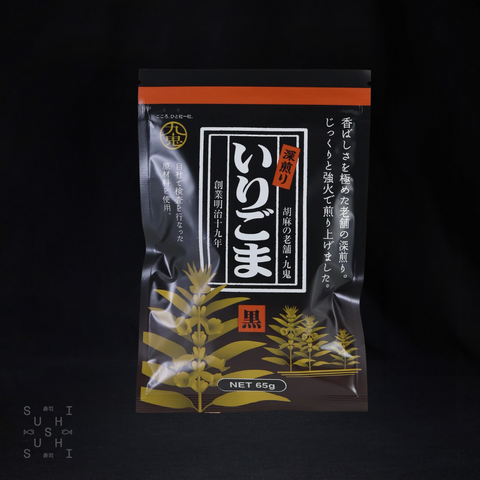
Kuki, Deep Roast, Premium Black Sesame Seeds, 65g
Deep-roast Japanese black sesame from Kuki, the sesame house founded in 1886.
Kuro iri goma (黒いりごま) are black sesame seeds roasted and ready to use. Kuki roasts these deep (深煎り, fukairi), and the pack says slowly over a strong flame, for a fuller, more toasted aroma. Kuki's pack also notes it inspects its raw sesame in house. 65g stand-up pouch, also sold as a case of ten.
More from Kuki: Deep Roast White Sesame Seeds (65g), Roasted Black Sesame Paste (120g) and Dark Roast Sesame Oil (170g).
Why Chefs Choose This
- Deep roast: more aroma and depth than standard toasted seeds.
- Colour: a sharp black contrast on rice, fish and desserts.
- Grind to order: crush in a suribachi for black sesame dressings and sweets.
- A specialist's seed: from a sesame house trading since 1886.
How to Use
- Rice: over plain rice, onigiri and sekihan, often mixed with salt as gomashio.
- Kuro goma-ae: grind and mix with soy sauce and sugar to dress greens.
- Desserts: grind into ice cream, mochi fillings or panna cotta.
- Beyond Japan: crust tuna or salmon, or fold into bread and biscuits.
Goma (胡麻) is sesame, and kuro goma (黒ごま) is black sesame, the stronger-flavoured seed. Japanese kitchens roast sesame further than most and often grind it fresh in a suribachi, a ridged mortar, because the aroma is released at the moment of crushing. Black sesame shows up sprinkled on festive red rice (sekihan) and ground into sweets. Kuki (九鬼産業) was founded in 1886 in Yokkaichi, Mie Prefecture; the pack calls the company 胡麻の老舗, an old-established sesame house.
Learn more: Japanese Spices and Seasonings
What does black sesame taste like?
Earthier and more intense than white sesame, with a toasty, slightly smoky edge and a pleasant bitterness from the deep roast. Whole, the seeds give a fine crunch; ground, they turn rich, creamy and almost chocolate-dark in flavour, which is why black sesame works so well in desserts. A quick re-warm in a dry pan before use brings the aroma back to full strength.
Product Details
| Type | Iri goma, kuro (いりごま 黒), deep-roast black sesame seeds |
| Brand | Kuki (九鬼), founded 1886 in Yokkaichi, Mie |
| Key Feature | Deep roasted (深煎り) slowly over a strong flame |
| Origin | Japan |
| Net Weight and Format | 65g stand-up pouch; also a case of 10 |
| Best Used As | Garnish, gomashio, dressings and desserts |
What is the difference between black and white sesame?
Black sesame has a stronger, earthier and slightly more bitter flavour and a striking colour, used on rice, in desserts and wherever you want contrast. White sesame is milder and sweeter, the everyday choice for garnishing and goma-ae. In Japanese cooking they are used side by side.
How do I make gomashio?
Gomashio is black sesame and salt, the classic topping for rice and onigiri. Warm the seeds briefly in a dry pan, then crush them lightly with salt in a suribachi or mortar, roughly eight or ten parts sesame to one part salt, adjusted to taste. Leave some seeds whole for texture.
How should I store sesame seeds after opening?
Close the pouch tightly, pressing out the air, or tip the seeds into an airtight jar, and keep them in a cool, dark, dry place. Sesame is rich in oil, so heat and light dull its aroma over time. Buy a size you will use steadily, and keep larger stocks sealed until needed.
SKU : S0423