
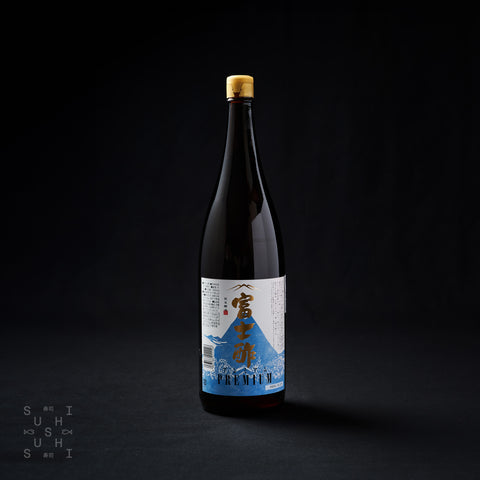
Iio Jozo, Premium Rice Vinegar, 1.8L
Fujisu Premium: eight times the rice the law asks of a rice vinegar, brewed slowly in Miyazu, Kyoto since 1893. Mellow enough to taste on its own.
This is Iio Jozo's Fujisu Premium (富士酢プレミアム) in the 1.8L bottle. Japanese labelling rules require 40g of rice per litre for a vinegar to be called rice vinegar; Iio Jozo uses eight times that, around 320g, grown without pesticides in the Tango region of northern Kyoto. The brewery makes its own sake from that rice, then turns it into vinegar by static surface fermentation and long maturation, the slow, old way. The result is soft acidity, real rice sweetness and a depth of umami that ordinary rice vinegar does not come near.
Why Chefs Choose This
- Eight times the rice: about 320g of rice per litre gives natural sweetness, body and umami, so shari needs less sugar
- Slow, static fermentation: the vinegar bacteria work on the surface over months rather than being forced in days, which keeps the aroma gentle and complex
- Own rice, own sake: Iio Jozo grows its rice locally without pesticides and brews its own sake as the base
- Mellow enough to use raw: the acidity is soft enough for dressings, sunomono and even a splash over sashimi
How to Use
- Sushi rice: the vinegar for shari that tastes of rice rather than just sour; cut the sugar in your usual sushi-zu and taste
- Sunomono and pickles: soft acidity for cucumber, wakame, octopus and quick pickles
- Dressings and ponzu: with dashi, citrus and soy for a ponzu with depth, or whisked with oil for a dressing
- Uncooked is best: Iio Jozo recommends Premium for raw use, where its aroma shows; use a cheaper vinegar for long cooking
Fujisu (富士酢) is Iio Jozo's flagship vinegar, made in Miyazu on the Sea of Japan coast of northern Kyoto Prefecture, where the family has brewed since 1893. Iio Jozo (飯尾醸造) does almost everything itself. Its rice comes from farms in the Tango region, grown without pesticides, and it brews that rice into sake before seeding it with vinegar bacteria. Fermentation is static: a film of bacteria works across the surface of the sake, slowly, rather than having air forced through it in a modern acetator. The vinegar then matures before it is bottled. Premium is the richest of the Fujisu range, with the highest rice ratio.
Learn more: Japanese Spices & Seasonings
Pairs with: Yamazaki premium sushi rice (5kg), Hakodate Nanatsuboshi sushi rice (5kg) and a cedar ohitsu rice holder.
What does Fujisu Premium taste like?
Round and mellow first, sour second. Iio Jozo describes a gentle aroma, calm acidity and mature umami, and that is fair. There is a clear sweetness of rice, a soft, almost savoury body, and the acidity arrives slowly rather than catching the back of your throat. It is pale amber rather than water-clear. Compared with standard rice vinegar it tastes less sharp and much deeper, closer to a good sake than to a condiment. In sushi rice it gives a rounder, more integrated seasoning.
Product Details
| Type | Junmai rice vinegar (純米酢), Fujisu Premium (富士酢プレミアム) |
| Maker | Iio Jozo (飯尾醸造), founded 1893 |
| Origin | Miyazu, Kyoto Prefecture, Japan |
| Rice | Grown without pesticides in the Tango region, Kyoto; about 320g per litre, eight times the labelling minimum |
| Method | Brewed to sake in-house, static surface fermentation, long maturation |
| Volume and Format | 1.8L glass bottle |
| Storage | Keep sealed after opening to limit oxidation; cool, dark place |
| Best Used As | Sushi rice, sunomono, dressings, pickles, raw dishes |
Why is Fujisu Premium more expensive than ordinary rice vinegar?
Rice and time. Ordinary rice vinegar can be made quickly with the legal minimum of rice, 40g per litre, often with added alcohol. Fujisu Premium uses around 320g of pesticide-free rice per litre, is brewed into sake by the vinegar maker itself, and is fermented slowly on the surface before maturing. You taste the difference in sushi rice and in anything served raw.
How should I adjust sushi rice seasoning for Fujisu?
Start with your usual sushi-zu and cut the sugar, by around a quarter, then taste. The rice sweetness in the vinegar does part of the work. The acidity is also softer, so some chefs use a little more vinegar by volume. Aim for rice that tastes seasoned and rounded rather than sweet or sharp.
What is static fermentation and why does it matter?
It is the traditional way to make vinegar. The bacteria form a film on the surface of the sake and convert the alcohol to acid slowly, over a long period. Modern submerged fermentation pumps air through the liquid and finishes in a fraction of the time. The slow method gives a gentler acidity and a more complex aroma. It costs more in time and space, which is why few makers still use it.
SKU : S0770