

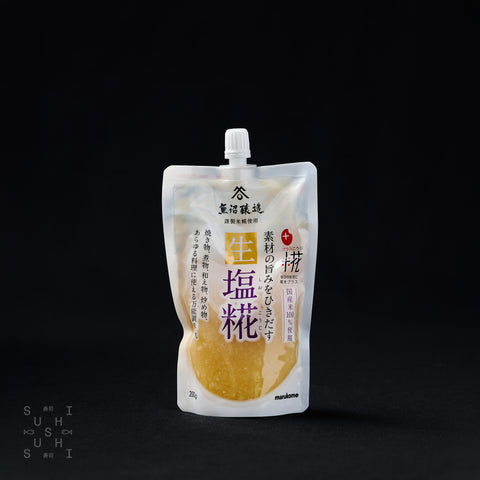
Marukome, Nama Shio Koji, Cultured Rice Seasoning, 200g
Live koji paste, the all-purpose Japanese seasoning that tenderises and seasons in one step.
Shio koji (塩糀) is a cultured rice seasoning of rice koji, salt and water, a living culture whose active enzymes tenderise protein and build umami on contact. Marukome's Nama Shio Koji (生塩糀) is the raw paste form: thick and porridge-like with visible rice grains, and the pack states it is made with 100% Japanese-grown rice. "Nama" (生) means raw, so the enzymes are left active. It is sold under Uonuma Jōzō (魚沼醸造), one of Marukome's own brands. Rub it into meat, stir it into a braise, or use it as a marinade base. 200g spouted pouch.
Going through a lot? The same seasoning comes in a 500g pack. More from Marukome: White Miso Paste (Shiro Miso), 1kg.
Why Chefs Choose This
- Live enzymes (nama): left raw, so the enzymes stay active for tenderising and umami.
- 100% Japanese rice: the pack states it is made with domestically grown rice.
- Paste format: the thick, grainy texture clings to protein better than a liquid for rubs and marinades.
- Marukome pedigree: a Nagano miso and koji maker founded in 1854.
How to Use
- Protein marinade: spread a thin layer over chicken, pork, fish or tofu and leave for 30 minutes to overnight.
- Grilling: the rice sugars help browning, so coat meat before grilling for a deeper colour.
- Simmered dishes: stir into stews and braises for a rounded, savoury depth.
- Dressings: blend with oil and vinegar for a textured, savoury dressing.
Shio koji (塩糀, salt koji) is made by combining rice koji, rice grown over with the kōji mould Aspergillus oryzae, with salt and water and leaving it to mature. The koji's enzymes, mainly proteases and amylases, break down protein and starch, which is why shio koji both tenderises and deepens flavour in a single step. The 糀 character used on the pack is the Japanese-made kanji for koji, written with rice (米) and flower (花), a picture of the white bloom of mould on the grain. Long a quiet workhorse of the home kitchen, it found a wider audience in Japan and with chefs abroad in the 2010s as a way to replace several seasoning and curing steps with one.
Learn more: What Is Shio Koji?
What is the difference between shio koji paste and liquid shio koji?
Both are cultured from the same base of rice koji, salt and water, but the format changes how you use them. The paste keeps the whole cultured rice grains, giving a thick texture that clings to surfaces; it suits direct-contact jobs like dry rubs and thick marinades where you want the enzymes pressed against the protein. The grains also caramelise in cooking, adding colour. Liquid shio koji is the pressed extract: easier to measure, it dissolves cleanly into sauces and dressings and scorches less readily at high heat. Neither is better, they are different tools. Paste for contact, liquid for integration.
| Type | Nama shio koji 生塩糀 (raw cultured rice seasoning) |
| Brand | Marukome マルコメ, Nagano (founded 1854); Uonuma Jōzō 魚沼醸造 label |
| Key Feature | Nama 生 (raw, live enzymes); made with 100% Japanese-grown rice |
| Origin | Japan |
| Net Weight / Format | 200g spouted pouch |
| Best Used As | Marinade, tenderiser and seasoning for meat, fish, vegetables and dressings |
What is shio koji?
Shio koji is a Japanese seasoning made from rice koji, rice grown over with the koji mould, combined with salt and water. The culture produces active enzymes, mainly proteases and amylases, that break down protein and starch on contact. This is why shio koji tenderises meat and fish while building umami at the same time. It drew wide attention in the 2010s as cooks found it could replace several seasoning and tenderising steps with one application.
What does nama (raw) mean on shio koji?
Nama (生) means raw. A nama shio koji is sold with the enzymes from the koji culture still active, and it is those enzymes that do the tenderising. Heat-treated versions are more shelf-stable but have less enzyme activity. For kitchens using shio koji mainly as a tenderiser, the nama version is the one to choose, which is why it needs to be kept chilled once opened.
Can shio koji replace salt in recipes?
Partially. Shio koji contains salt, so it will season food, but it also adds umami, a subtle rice sweetness and enzymatic tenderising that plain salt cannot. When substituting, you will need several times the weight of shio koji that you would use in salt, so add it gradually and taste as you go, easing back on other salty seasonings in the dish. For proteins, soups and marinades the result tastes rounder than salt alone.
SKU : H1102