
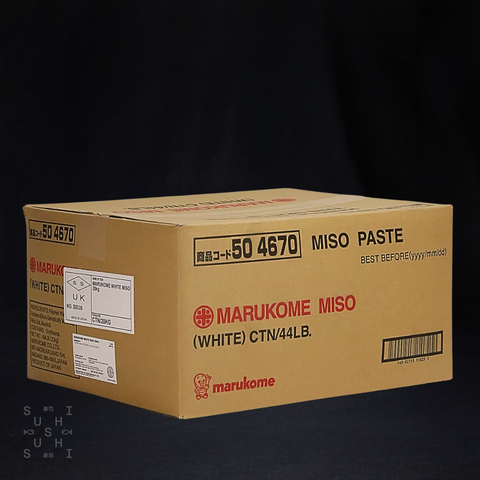
Marukome, Shiro White Miso, 20kg
Mild, sweet shiro miso from Marukome of Nagano, brewing since 1854, in the 20kg carton a volume kitchen runs on.
Shiro miso is the pale, gently sweet miso: lower in salt and the most versatile paste in the kitchen. It seasons soup, dressings and marinades without taking over. At 20kg this is the format for a kitchen that makes miso soup by the pot and marinates by the tray. Marukome has brewed miso in Nagano since 1854, in Shinshū, the region that makes more miso than anywhere else in Japan. One carton gives the same result across weeks of service.
Smaller kitchen? The same miso comes in a 1kg pack.
Why Chefs Choose This
- Mild and sweet: a short ferment and plenty of rice koji give a low-salt, naturally sweet paste that seasons without dominating
- Batch consistency: a 20kg carton holds the same standard across a full service week and beyond
- The all-rounder: the default miso for soup, dressings, marinades and sauces
- Proven producer: Marukome has brewed miso in Nagano since 1854
How to Use
- Miso soup: whisk into hot dashi off the boil for a mellow, everyday bowl
- Saikyo-style marinade: blend with mirin and sake to cure black cod, salmon or chicken for a day or two before grilling
- Dressings: whisk with rice vinegar, a little sugar and oil for a sweet, savoury dressing
- Beyond Japanese: stir into butter, mash, a beurre blanc or caramel for gentle savoury depth
Shiro miso (白味噌) means white miso, named for its pale colour. Miso (味噌) is a paste of soybeans and kōji, the cultured rice that drives fermentation, mixed with salt and left to mature. White miso uses a higher share of rice kōji and a shorter ferment, which keeps it light and leaves more of the rice's natural sweetness, with less salt than red miso. Marukome (マルコメ) was founded in 1854 in Nagano, in the Shinshū region that gives its name to Japan's best-known style, Shinshū miso. Because it is mild and a touch sweet, white miso is the one to reach for when you want miso's depth without its salt taking over.
Learn more: What Is Miso?
What does white miso taste like?
Mellow, smooth and gently sweet, with a soft savouriness rather than the salty punch of red miso. The sweetness comes from the rice kōji and the short ferment, and it gives a rounded, almost creamy depth that sits in the background of a dish. It dissolves easily and will not swamp delicate ingredients, which is why it suits light soups, fish and dressings. You will need a slightly heavier hand than with red miso, as the salt and intensity are lower.
Product Details
| Type | Shiro miso (白味噌), white fermented soybean paste |
| Brand | Marukome (マルコメ), brewing since 1854 |
| Origin | Nagano (Shinshū), Japan |
| Net Weight and Format | 20kg catering carton |
| Storage | Cool and dry; refrigerate once opened and reseal the inner bag tightly |
| Best Used As | Miso soup, marinades, dressings and sauces |
| Also Available | 1kg pack |
What is the difference between white miso and red miso?
White miso (shiro miso) is fermented for a shorter time with more rice kōji, so it stays pale, mild and slightly sweet, with less salt. Red miso (aka miso) is aged longer and darkens into a stronger, saltier, more savoury paste. White suits light soups, dressings and fish; red carries braises, hearty soups and glazes. Many kitchens keep both and blend them. We also stock Marukome red miso in the same 20kg format.
How much white miso should you use in miso soup?
Around 18 to 20g, a generous tablespoon, per 200ml bowl of dashi is a good start, then taste. Scaling up for service, work to roughly 90 to 100g per litre of dashi. Whisk it in through a small sieve so it dissolves smoothly, and keep the pot below the boil once the miso is in, as boiling dulls the aroma. For a full method, see our miso soup recipe.
How do you store a 20kg pack of miso?
Keep the carton cool and dry and reseal the inner bag tightly after each use. Once opened, refrigerate if you can, which slows further fermentation and keeps the colour and flavour steady. Miso keeps for months when stored well. The surface may darken where it meets the air; that is normal oxidation, not spoilage. Smooth the surface and press a sheet of baking paper onto it to limit contact with air.
SKU : S0335