


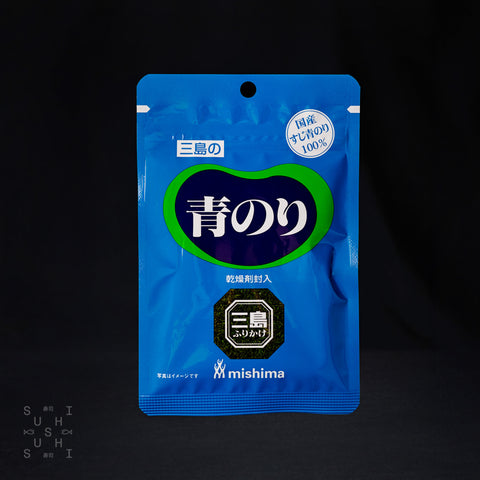
Mishima, Nori Powder, 3.2g
Green laver flakes, Japanese grown. The bright green dust on okonomiyaki and takoyaki.
This is Mishima's aonori (青のり), dried green laver seaweed in fine flakes. The pack states 国産すじ青のり100%: 100% suji aonori grown in Japan. Sprinkle it over hot food at the end for colour and a fresh, marine aroma. 3.2g pouch with a desiccant sachet inside to keep it dry.
Why Chefs Choose This
- Finishing colour: a bright green scatter that lifts a brown or golden plate.
- Aroma, not bulk: a pinch brings a fresh seaweed fragrance without adding weight.
- Japanese grown: the pack states 100% Japanese suji aonori.
- Kept dry: a desiccant sachet in the pouch protects the flakes.
How to Use
- Okonomiyaki and takoyaki: scatter over the sauce and mayonnaise with bonito flakes.
- Yakisoba: finish griddled noodles just before serving.
- Rice and potatoes: over rice, onigiri, or chips and fried potatoes with salt.
- Batters and tempura: mix a little into tempura batter or isobe-age for a green fleck.
Aonori (青のり) means green nori, but it is a different seaweed from the nori used for sushi. Sushi nori is laver pressed into sheets and roasted; aonori is green algae dried and crumbled into flakes. Suji aonori (すじ青のり) is one of the most prized types, valued for its strong aroma. In Japanese cooking it is a finishing seasoning, the green dust that goes on okonomiyaki, takoyaki and yakisoba alongside katsuobushi, and a common flavour in rice seasonings. Mishima (三島食品) is a Japanese maker of furikake and rice seasonings.
Learn more: What is Nori?
Pairs with: Okan bonito flakes (katsuobushi), Daihoku katsuobushi and nori furikake and Shokunin A+ grade nori sheets.
What does aonori taste like?
Mostly aroma. Aonori smells fresh and green, like a sea breeze with a hint of grass, and that fragrance is what it brings to a dish. The taste is lightly savoury and marine, gentler and less toasty than roasted nori sheets, and it is not salty on its own. Scattered over hot, sauced food, the warmth releases the aroma, which is why it goes on at the very end. A small pinch goes a long way.
Product Details
| Type | Aonori 青のり (dried green laver flakes), suji aonori |
| Brand | Mishima (三島食品) |
| Origin | Japan (pack states 100% Japanese suji aonori) |
| Net Weight and Format | 3.2g pouch with desiccant |
| Best Used As | A finishing sprinkle for okonomiyaki, takoyaki, yakisoba and rice |
What is the difference between aonori and nori?
They are different seaweeds. Nori, for sushi and onigiri, is laver pressed into thin sheets and roasted, with a deep, toasty flavour. Aonori is green algae dried into small flakes, with a brighter colour and a fresher, more fragrant aroma. Crumbled nori sheets are not a true substitute on okonomiyaki or takoyaki, because the aroma is the point of aonori.
How do I use aonori?
Use it as a finishing seasoning, sprinkled on at the end rather than cooked in. The classic use is on okonomiyaki, takoyaki and yakisoba, over the sauce and mayonnaise with bonito flakes. It is also good over rice, onigiri, fried potatoes and buttered popcorn, or mixed into tempura batter. Add it just before serving so the aroma is fresh.
How should I store aonori?
Keep the pouch sealed in a cool, dry place away from steam and light, and leave the desiccant sachet inside. Aonori draws in moisture and loses colour and aroma when left open near the stove, so close it tightly between uses and use a dry spoon or fingers. Use within the date on the pack, and soon after opening for the best aroma.
SKU : S0209