
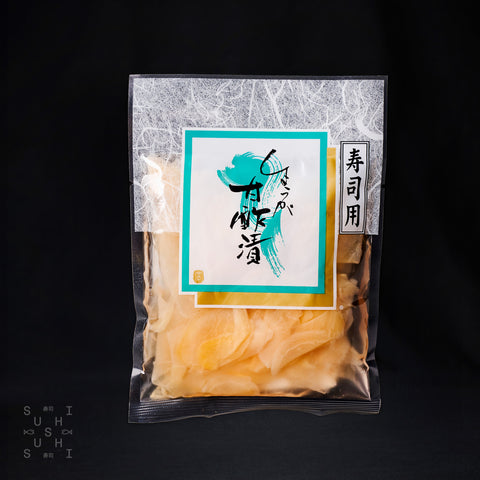
Miyame, Sushi Ginger (Gari), 60g
The Palate Cleanser That Defines Proper Sushi Service
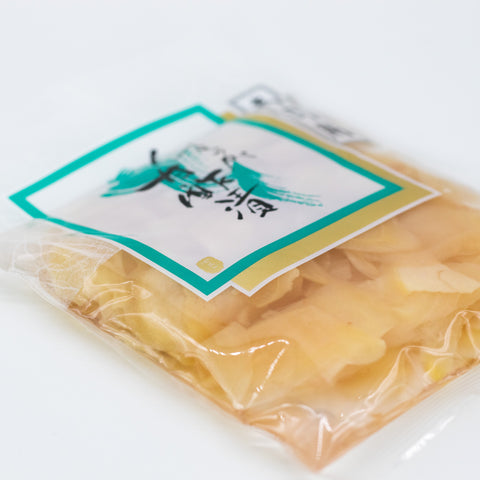
Gari is the thinly sliced, sweet-vinegar pickled ginger served alongside sushi as a palate cleanser between courses. Its purpose is functional — the sharp, sweet-sour bite resets the palate between different fish, allowing each piece to be tasted cleanly. Miyame's gari is ready to serve straight from the pack: pre-sliced, lightly pickled, and portioned at 60g for individual or small-batch service. The natural pale-gold colour indicates a traditional pickle without heavy artificial colouring.
Why Chefs Choose This
- Sushi-grade quality: Labelled 寿司用 (sushi-yō) — specifically produced for sushi service, not as a general condiment
- Ready to plate: Pre-sliced and pickled — open the pack and serve directly, no prep required
- Controlled portioning: 60g packs reduce waste compared to opening a large tub for low-volume service
- Natural colour: Pale gold rather than bright pink — signals a more traditional, less processed product
How to Serve
- Sushi accompaniment: Place a small mound alongside nigiri or sashimi — eaten between pieces to cleanse the palate
- Bento & takeaway: Add a portion to bento boxes and sushi platters as a finishing touch
- Garnish: Use as a bright, acidic garnish on poke bowls, rice bowls, or grilled fish plates
- Cocktail garnish: A strip of gari works as a garnish for gin or sake-based cocktails — adds colour and a pickled bite
What is the difference between gari and beni shoga?
Both are pickled ginger, but they serve entirely different purposes. Gari (がり) is thinly sliced young ginger pickled in sweet rice vinegar — delicate, mild, and designed as a palate cleanser for sushi. Beni shōga (紅生姜) is mature ginger cut into strips and pickled in umezu (plum vinegar), giving it a bright red colour and a much sharper, saltier bite. Beni shōga is a topping and garnish for dishes like gyūdon, yakisoba, and takoyaki — it would never be served with sushi. The two are not interchangeable, despite both being called "pickled ginger" in English.
Product Details
| Type | Sweet Pickled Sushi Ginger (しょうが甘酢漬 — Shōga Amazu-zuke) |
| Brand | Miyame |
| Net Weight | 60g |
| Origin | Japan |
| Storage | Refrigerate after opening |
Why is sushi ginger pink or yellow — what is the difference?
Naturally pickled young ginger turns a pale gold or light blush pink from the reaction between the ginger's anthocyanins and the vinegar. The bright pink gari commonly seen in supermarkets and lower-end sushi bars is artificially coloured, usually with E124 or beetroot extract. Neither colour affects the flavour significantly, but the natural pale colour is generally considered a marker of quality in traditional sushi restaurants. This product has a natural pale-gold colour.
How much sushi ginger should you serve per person?
A small mound of 10–15g per person is standard for a nigiri or sashimi course. The ginger is eaten a slice at a time between different fish, not consumed all at once. For a 60g pack, that gives approximately four to six individual servings. If you are serving gari with takeaway sushi, 5–10g per box is typical.
Is sushi ginger eaten with the sushi or separately?
Separately. In traditional sushi etiquette, gari is eaten between pieces of sushi to reset the palate — not placed on top of the sushi or eaten alongside it in the same bite. Think of it as the equivalent of a sorbet between courses in a Western tasting menu. It neutralises the oils and flavours of the previous fish so the next piece is tasted fresh. Placing ginger on top of nigiri is considered incorrect in Japanese sushi tradition.
SKU : S0206