

Momoya Seasoned Shichimi 55G
Momoya's fresh, oil-coated shichimi with Wakayama sansho and Kochi yuzu peel: less chilli, more fragrance, and it clings to food.
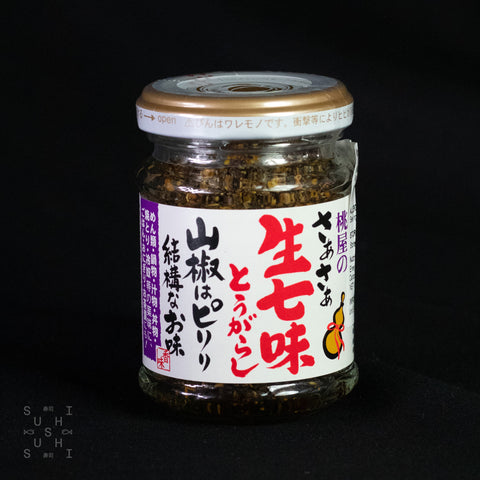
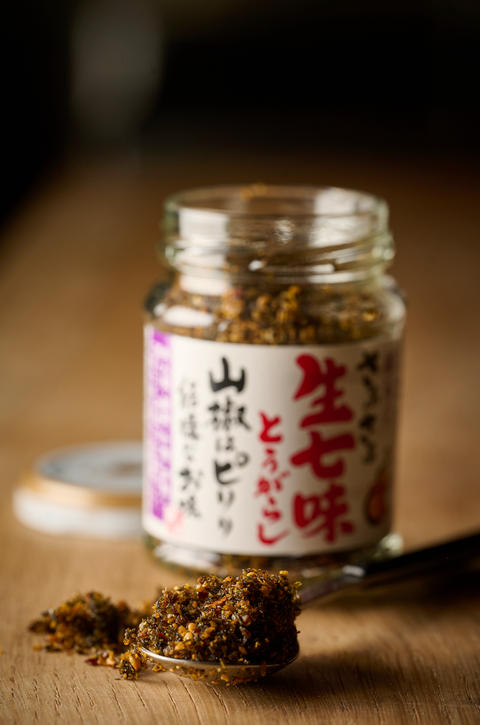
The full name on the jar is さあさあ生七味とうがらし 山椒はピリリ結構なお味: fresh (nama) shichimi, where the sansho tingles and it tastes rather good. Momoya coats the seven spices in rapeseed oil and seasons them with a little sugar and salt, which keeps them moist and holds on to their aroma. The chilli is deliberately turned down so that the sansho, from Wakayama, and the yuzu peel, from Kochi, come to the front. It comes in a 55g glass jar.
Why Chefs Choose This
- Fragrance first: less chilli and more sansho and yuzu than a standard shichimi
- Moist and clinging: oil-coated, so it sits on noodles, rice and grilled food instead of blowing away
- Named origins: sansho from Wakayama and yuzu peel only from Kochi
- A 1920 maker: from Momoya, the Tokyo condiment house founded in 1920
How to Use
- Noodles and soups: on udon, soba, ramen and miso soup, just like dried shichimi
- Grills: over yakitori, grilled fish, karaage and tonkatsu
- Hotpots and donburi: stirred into nabe or over rice bowls
- On its own: a spoonful with plain rice or over cold tofu (hiyayakko)
Shichimi tōgarashi (七味唐辛子), seven-flavour chilli, was first sold in Edo, now Tokyo, in the 1620s, and blends chilli with six other seasonings that vary by maker, commonly sansho, sesame, citrus peel, seaweed, ginger and hemp or poppy seed. Nama (生) marks this as a fresh, moist style rather than the usual dry powder. The playful name borrows from the proverb 山椒は小粒でもぴりりと辛い: sansho is tiny but it still bites, the Japanese way of saying small but mighty. Momoya (桃屋), founded in Tokyo in 1920, is best known for its seasoned condiments, including the crispy chilli oil that started Japan's taberu rayu boom.
Learn more: Sansho: The Japanese Pepper
What does fresh shichimi taste like?
Fragrant before it is hot. The first thing you notice is the citrus lift of yuzu peel and the lemony, numbing tingle of sansho, which builds on the lips. The chilli is there as a gentle warmth rather than a hit. Sesame and seaweed give it a nutty, savoury base, and the oil and a touch of sugar make it rounder than a dry shichimi. It tastes more like a finished seasoning than a spice.
Product Details
| Type | Nama shichimi tōgarashi (生七味とうがらし), oil-coated seven-spice |
| Brand | Momoya (桃屋), Tokyo, founded 1920 |
| Key Spices | Sansho from Wakayama, yuzu peel from Kochi, with sesame, ginger, seaweed, chilli and green onion |
| Texture | Moist, coated in rapeseed oil |
| Origin | Japan |
| Weight and Format | 55g glass jar |
| Storage | Cool, dark place before opening. Refrigerate after opening |
| Best Used As | Topping for noodles, soups, grills, rice and tofu |
How is nama shichimi different from dried shichimi?
Dried shichimi is a loose powder that sits on top of food and loses its aroma quickly once opened. Nama shichimi is coated in oil and lightly seasoned, so it is moist, clings to what you put it on and keeps the fragrance of the sansho and yuzu for longer. Use it the same way, and also straight on rice or tofu, where a dry powder would not work.
Is it very spicy?
No. Momoya has reduced the chilli so that the sansho and yuzu lead. Expect a gentle warmth and a numbing tingle from the sansho rather than real heat. If you want more fire, add a pinch of dried chilli alongside it.
How should I store it once opened?
Keep the jar closed in the fridge after opening and use a clean, dry spoon each time to keep it fresh. Check the date on the jar for unopened stock.
SKU : S0286