

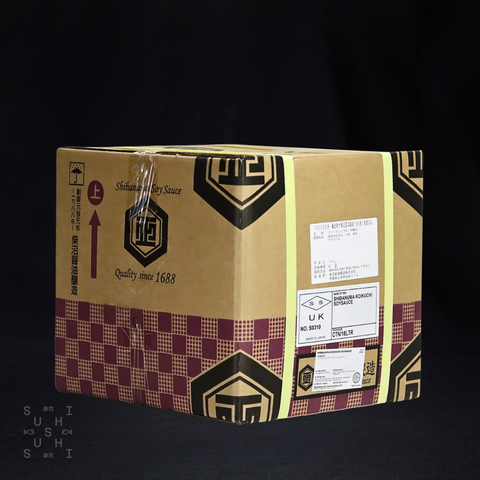
Shibanuma, Japanese Dark Soy Sauce, 18L
The everyday dark soy, from a craft house, by the cube.
Koikuchi is the all-purpose dark soy that does most of the work in a Japanese kitchen, and at 18L this is the format for one that runs through it. Shibanuma brews it the slow, traditional way, so even the catering cube carries more depth and balance than a standard commodity soy. The workhorse soy, done properly.
More from Shibanuma: barrel-aged soy sauce (300g), 2-year dashi soy sauce, yuzu ponzu, yakitori sauce, unagi sauce, yakiniku sauce and sesame dressing.
Why Operators Choose This
- All-purpose: koikuchi, the standard dark soy for cooking and dipping alike.
- Craft depth at volume: traditionally brewed, so it beats a commodity soy on flavour.
- Catering format: 18L keeps a busy kitchen stocked and the cost per litre down.
- Eighteen generations: brewed by a family making soy in Ibaraki since 1688.
How to Use
- Cooking: the base seasoning for stir-fries, simmered dishes and sauces.
- Marinades: a backbone for meat and vegetable marinades.
- Dipping: decant for the sushi and sashimi station.
- Tare and broths: build ramen tare, glazes and noodle broths.
Soy sauce is shoyu (醤油), and koikuchi (濃口, dark soy) is the all-purpose standard that accounts for most of what Japan uses. It is brewed from roughly equal parts soybeans and wheat with kōji and salt, fermented and aged to a balanced, salty-savoury depth that suits both cooking and dipping. Shibanuma Shoyu (柴沼醤油醸造) has brewed soy in Tsuchiura, Ibaraki, since 1688, eighteen generations of the same family, still fermenting in wooden barrels built in the Edo era. It is one of only around thirty soy sauce makers in Japan at this scale and the largest in Ibaraki, so even a catering cube carries that craft in the flavour.
Learn more: The SushiSushi Soy Sauce Guide
What is koikuchi soy sauce?
Koikuchi is the standard dark soy sauce of Japan, the all-purpose style used for the bulk of cooking and for dipping. Brewed from roughly equal parts soybeans and wheat, it has a deep, balanced flavour that is salty and savoury without being harsh, with a clear aroma from the wheat in the brew. It is the soy a diner expects with sushi and the one most recipes mean when they simply say "soy sauce". A well-brewed koikuchi like this gives a rounder, less flat result than a cheap commodity soy.
| Type | Koikuchi shoyu 濃口醤油 (dark soy sauce) |
| Brand | Shibanuma (brewing since 1688) |
| Origin | Japan (Tsuchiura, Ibaraki) |
| Net Volume / Format | 18L catering cube |
| Best Used As | All-purpose cooking and dipping soy at volume |
What is the difference between koikuchi and tamari?
Koikuchi is brewed from roughly equal parts soybeans and wheat, giving a balanced, all-purpose soy with a clear, slightly sharp aroma; it is the everyday standard. Tamari uses mostly or only soybeans, so it is usually gluten-free and comes out thicker, darker and more deeply savoury with a softer salt. Use koikuchi as your general cooking and dipping soy, and tamari where you want extra richness or need to keep a dish wheat-free.
Why choose a craft soy over a commodity one?
Most cheap soy is brewed fast, sometimes chemically, for a flat, salt-forward result. A traditionally brewed soy like Shibanuma's is fermented and aged slowly in wooden barrels, which builds a rounder, more layered umami. In a dipping bowl the difference is obvious, but it carries through cooking too, giving sauces, marinades and braises more depth from the same volume. At catering scale it is a way to lift every dish without changing a recipe.
How should I store an 18L cube of soy sauce?
Keep it in a cool, dark store away from heat and direct light, which dull soy over time. Decant working amounts into a smaller bottle for the line and keep the main cube closed between top-ups to limit air contact. Soy is a stable, long-keeping product thanks to its salt, but it is at its best fresh, so order to your turnover rather than stockpiling far beyond it.
Ingredients and allergens
Ingredients: Water, defatted soybeans, wheat, salt, alcohol.
Allergen information is taken from the manufacturer's import specification; always check the pack before use.
SKU : S0310