

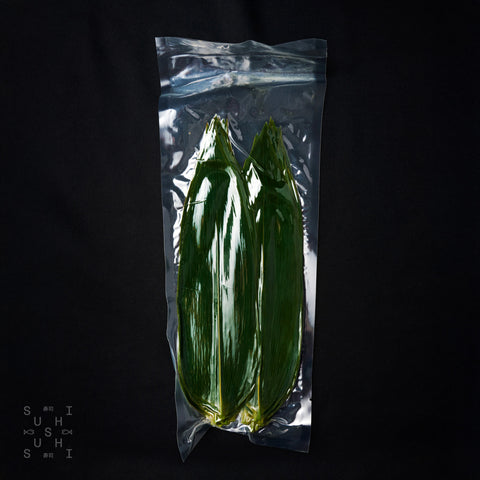
Bamboo Leaves 280-320mm (100 pieces)
280 to 320mm long, 100 leaves to a vacuum pack. The green under the sashimi that makes a plate look finished.
Bamboo leaves, sasa no ha in Japanese, are the traditional lining for sashimi platters, sushi trays and bento. The deep green sets off raw fish and white rice, separates one item from the next and makes a plate look considered before anyone picks up chopsticks. These leaves are 280 to 320mm long, vacuum-packed 100 to a pack and ready to use straight from the bag. For kitchens that plate sashimi every day there is a case of 30 packs, 3,000 leaves.
Why Chefs Choose This
- Ready to plate: straight from the vacuum pack, no soaking needed for cold presentation
- A useful size: 280 to 320mm lines a platter or a takeaway tray without trimming, and cuts down easily for smaller dishes
- Divides and protects: separates different fish and garnishes on a platter so flavours and colours do not run together
- Case price for daily use: the case of 30 brings the cost per leaf down for kitchens that use them every service
How to Use
- Sashimi platters: lay one or two leaves across the base before arranging the fish
- Sushi trays and bento: line takeaway trays or use cut pieces as dividers between items
- Cut decorations: trim into shapes (sasa-giri) for dividers and garnishes
- Wrapping and steaming: soak briefly in water to soften, then wrap rice or fish for steaming or grilling
Sasa (笹) is dwarf bamboo, the low, leafy relative of the tall bamboo used for building, and sasa no ha (笹の葉) are its leaves. Japanese cooks have used them for centuries to wrap and serve food: sasa-zushi from Niigata and Nagano is served on them, and chimaki (粽), rice dumplings wrapped in leaves, are eaten for the Boys' Festival in May. The leaves have long been used with fish because they were believed to help keep food fresh. Sushi chefs also cut them into decorative dividers, a craft called sasa-giri (笹切り).
Learn more: Types of Sushi
Do bamboo leaves add flavour to sashimi?
Not really, when used cold. On a sashimi platter the leaf is a clean, neutral surface with a faint fresh, green smell, and the fish does not pick up any real flavour from it. Its job there is presentation and separation. Heat changes that. Wrap rice or fish in a leaf and steam or grill it, and a gentle, grassy bamboo fragrance does pass into the food, which is much of the point of dishes like chimaki and sasa-zushi.
Product Details
| Type | Bamboo leaves for food presentation (笹の葉, sasa no ha) |
| Leaf Length | 280 to 320mm |
| Pack Size | 100 leaves, vacuum-packed |
| Case | 30 packs, 3,000 leaves (select the case option) |
| Brand | Kōmi |
| Storage | Unopened: cool and dry, out of direct sunlight. Once opened, keep leaves in a sealed bag in the fridge and use promptly |
| Best Used For | Sashimi platters, sushi trays, bento and wrapping |
What are the bamboo leaves used in sushi restaurants called?
Sasa no ha (笹の葉), dwarf bamboo leaves. Sasa grows low, with broad, flexible leaves that suit food wrapping and presentation, unlike the tall take (竹) bamboo used for building. In sushi bars they line platters, divide ingredients and are cut into decorative shapes, a skill called sasa-giri.
How do you prepare bamboo leaves before use?
For cold presentation, take them out of the pack, wipe with a damp cloth if you like and use them as they are. For wrapping or steaming, soak them in cold water for a few minutes to soften so they fold without cracking, then pat dry. Once opened, keep unused leaves sealed in the fridge so they stay green and flexible.
Why do Japanese chefs use bamboo leaves with raw fish?
Partly tradition and partly practicality. Bamboo leaves have been used to wrap and serve fish for centuries, and were long believed to help keep it fresh. In a modern kitchen the main reasons are presentation and order: the leaf gives a clean, green base, separates different fish and garnishes, and makes a platter look properly finished.
SKU : S0782