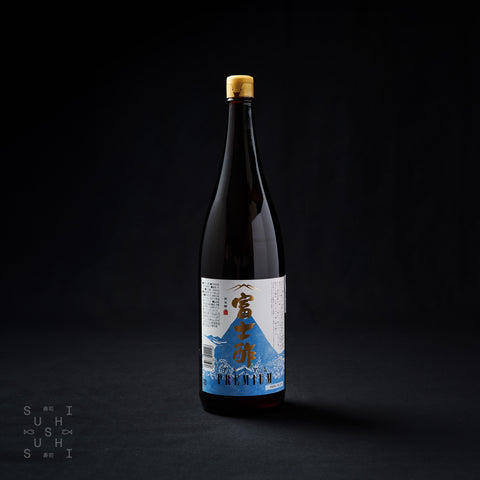
Iio Jozo, Premium Rice Vinegar, 1.8L
Iio Jozo has been making vinegar in Miyazu, on the northern Kyoto coast, since 1893. The brewery starts where industrial producers do not: it brews its own sake first, then acetifies it, using 320g of pesticide-free rice per litre — roughly eight times the quantity used in standard commercial rice vinegar. The fermentation is static, not submerged: the acetobacter cultures work at the surface over several months rather than being forced through an industrial acetator in days. The vinegar is then aged in cedar barrels for over a year before bottling. The result is a product with a fundamentally different character — mellower, rounder, and substantially more complex than the clear, sharp acidity of commodity rice vinegar. The 1.8L format is for kitchens that use it seriously.
Why Chefs Choose This
- 320g rice per litre — the concentration is visible in the flavour: natural sweetness, umami depth, and amber colour that supermarket rice vinegar cannot replicate regardless of price
- Static surface fermentation — months of slow acetification rather than the industrial submerged method; the process preserves aromatic compounds that forced fermentation destroys
- Self-brewed sake base — Iio Jozo produces its own sake before converting it to vinegar, controlling the quality of the base alcohol at every stage
- Cedar-barrel aged — over a year of maturation that rounds the acidity and adds the faint woody complexity you notice most in sushi rice seasoning
How to Use
- Sushi rice seasoning: the 1.8L format is built for this — the mellow acidity integrates quickly and the natural sweetness means less sugar is needed in the shari balance
- Sunomono and dressed salads: the amber hue and rounded acidity suit raw vegetable dishes where sharp white vinegar would overwhelm
- Ponzu and dressings: blend with dashi and citrus for a ponzu with genuine depth; the umami of the vinegar carries weight that thin rice vinegar cannot
- Pickling and light curing: the slower, rounder acid profile produces pickles with a softer finish — less aggressive than Western wine vinegar, more complex than standard rice vinegar
Junmai Fujisu (純米富士酙) translates as "pure rice Fuji vinegar": 純米 (junmai) means pure rice — no added alcohol or acids — and 富士 (Fuji) references the brewery's flagship designation, a name synonymous with quality in Japanese artisan vinegar. Miyazu, on the Sea of Japan coast in northern Kyoto Prefecture, has clean groundwater and a temperate climate suited to slow fermentation. The brewery's process — jijō-su (自醸酙), meaning self-brewed vinegar — has been continuous since the Meiji era. The su-gura (酙蔵), or vinegar warehouse, uses the same biological sequence that Iio Jozo has followed for over a century: cook the rice, saccharify with koji, ferment to sake, seed with acetobacter, acetify slowly at the surface, and age. The industrial alternative compresses this to days. The 1.8L Fujisu takes the better part of two years from rice to bottle.
What is the difference between Iio Jozo and standard rice vinegar?
Volume, time, and method. Standard commercial rice vinegar uses around 40g of rice per litre, submerged fermentation in industrial acetators (days rather than months), and no barrel aging. Iio Jozo uses 320g of rice per litre, static surface fermentation over several months, and over a year in cedar. The flavour difference is significant: commercial rice vinegar is sharp and one-dimensional; Fujisu is mellow, slightly sweet, and umami-present. It seasons differently — it integrates rather than cuts.
| Product | Iio Jozo Junmai Fujisu |
| Volume | 1.8L |
| Origin | Miyazu, Kyoto Prefecture, Japan |
| Founded | 1893 |
| Rice per litre | 320g |
| Fermentation | Static surface, cedar-barrel aged |
| Primary use | Sushi rice, sunomono, ponzu, pickling |
| SKU | S0770 |
Why is the 1.8L so much more expensive than supermarket rice vinegar?
Eight times the rice, months of static fermentation, over a year of cedar-barrel aging, and a brewery that has been doing this since 1893. Supermarket rice vinegar is a commodity product made as fast as possible from minimal raw material. Fujisu is the opposite: slow, high-ingredient, artisan-produced. The economics reflect the process. For a sushi kitchen going through vinegar at volume, the cost per portion is still modest — and the quality difference in the finished shari is not subtle.
How should sushi rice seasoning be adjusted when using Fujisu?
Reduce the sugar. The natural sweetness from 320g of rice per litre means the shari balance will be too sweet if you use the same ratio as with standard rice vinegar. Start with your usual formula, cut the sugar by around a quarter, and taste. The acidity is also mellower, so you may find you want slightly more vinegar by volume than you'd normally use — but the result is shari with a rounder, more integrated finish.
What does static fermentation mean and why does it matter?
Static (or surface) fermentation means the acetobacter cultures work at the liquid's surface, exposed to air, over several months. Industrial submerged fermentation forces air through the liquid in acetator tanks and completes the process in days. The difference is similar to slow-brewed versus fast-brewed soy sauce: the slow method preserves aromatic compounds, produces more complex acids, and develops flavour that forced fermentation cannot replicate. Static fermentation is the method all artisan Japanese vinegar breweries use; it is simply too slow for commodity production.
Storage
Store unopened in a cool, dark place away from direct sunlight. Once opened, keep the bottle tightly sealed and store at room temperature or in the fridge — vinegar's natural acidity means it keeps well, though flavour is best within a few months of opening. Some natural sediment may settle over time; this is a normal result of the traditional brewing process and does not affect quality.
SKU : S0770