
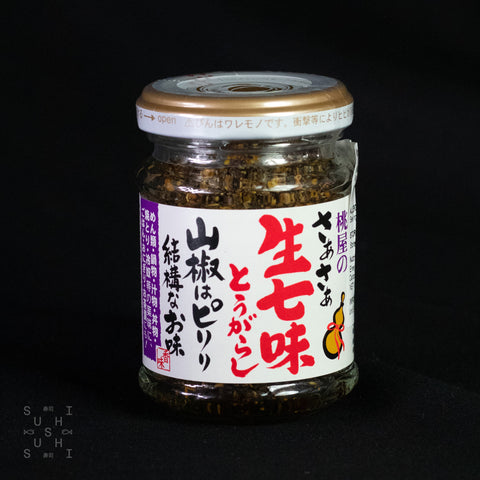
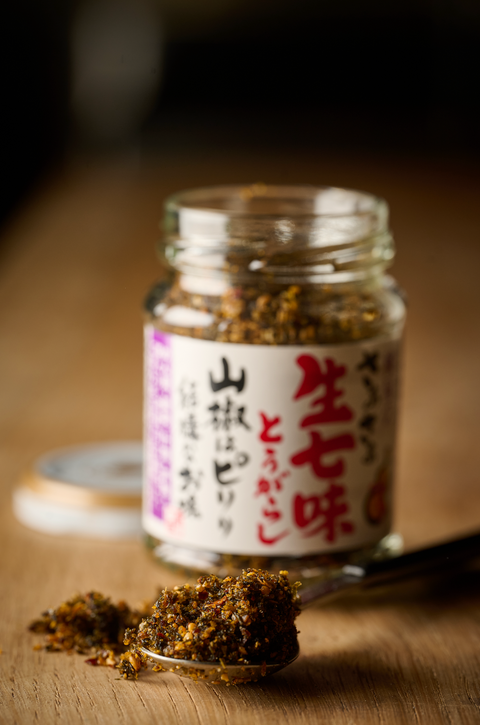
Momoya Seasoned Shichimi 55g BBD (24/07/26)
This product is past its printed best-before date. Best-before is a quality date, not a safety date; sold at a reduced price.
Shichimi togarashi — Japan's seven-spice blend — has been a table condiment since the seventeenth century. The dried version in the distinctive tall jar is in every Japanese restaurant in the country and most Asian supermarkets in the UK. Momoya's version is something different. This is nama shichimi (生七味): fresh, oil-coated, moist. The character changes completely. Where dried shichimi sits on top of food, the nama version clings, penetrates, and delivers heat and citrus at the same time. Momoya Co. has been making Japanese condiments in Tokyo since 1920. This particular blend is led by yuzu peel and sanshō pepper, with nori and sesame bringing depth. It is aromatic in a way that dried shichimi simply is not.
Why Chefs Choose This
- Moist, oil-coated texture adheres to protein and vegetables in a way a dried spice blend cannot — especially useful on yakitori, grilled fish, and tonkatsu
- Yuzu peel delivers a genuine citrus note that brightens fatty dishes without adding liquid or acidity
- The sanshō component retains its numbing tingle — dried sanshō loses this quality quickly; the fresh format preserves it
- Momoya's hundred-year production history means a consistent blend and tight quality control across batches
How to Use
- Finish yakitori, karaage, or tonkatsu immediately before service — the moist texture needs no rehydration on the plate
- Stir into ramen broth or miso soup at the table; the oil carries the aromatics through the liquid
- Spread lightly onto salmon or sea bass before grilling — the yuzu and sesame notes char-caramelise
- Ochazuke topping, gyoza dipping sauce enricher, or mixed into cold soba tare for a spiced finish
Shichimi togarashi originates in the Yagenbori district of Edo — today's eastern Tokyo — where a spice dealer began selling the blend in the 1620s. The recipe has never been standardised: every maker's combination is different, and regional and seasonal variations still exist across Japan. The qualifier nama (生) marks this as a fresh preparation rather than a dried one. In Japan, nama typically signals quality and proximity to raw ingredients — in the same way that nama sake means unpasteurised sake. Momoya's production sits in the same part of Tokyo where the blend was invented. The 55g jar is designed for kitchen rather than table use: enough for a service period rather than a condiment dash.
What does nama shichimi taste like compared to the standard dried version?
The heat level is similar — moderate, not aggressive — but the experience is entirely different. Where dried shichimi is sharp and immediate, the fresh version is warmer and more sustained, with a yuzu citrus note that lifts the heat and sanshō tingle that runs beneath it. The sesame and nori bring a savoury, slightly smoky base. It reads less as a spice condiment and more as a finishing seasoning.
| Product | Momoya Nama Shichimi Togarashi |
| Size | 55g jar |
| Origin | Tokyo, Japan |
| Producer | Momoya Co. Ltd. (est. 1920) |
| SKU | H1359 |
How does fresh (nama) shichimi differ from dried shichimi?
Dried shichimi is a powder or coarse blend with a relatively short flavour burst. Nama shichimi uses fresh or semi-fresh ingredients coated in oil, which preserves volatile aromatics — particularly the citrus and sanshō — that evaporate quickly once dried. The texture is moist and slightly sticky rather than sandy, so it behaves differently on the plate. Dried shichimi disperses; nama shichimi adheres.
How should this be stored?
Keep refrigerated after opening. Use within 4–6 weeks. The oil coating preserves the fresh aromatics; once opened, oxygen will begin to dull the yuzu notes. Unopened, store in a cool, dark cupboard until the date printed on the jar.
What is Momoya known for?
Momoya Co. is a Tokyo condiment manufacturer founded in 1920. They are best known in Japan for seasoned condiment pastes and blends that combine heat and umami in formats designed for both home cooking and professional kitchens. Their shichimi range represents a more traditional side of their output — rooted in the Edo-period condiment culture that originated in the same part of the city where Momoya still operates.
SKU : H1359-SD