
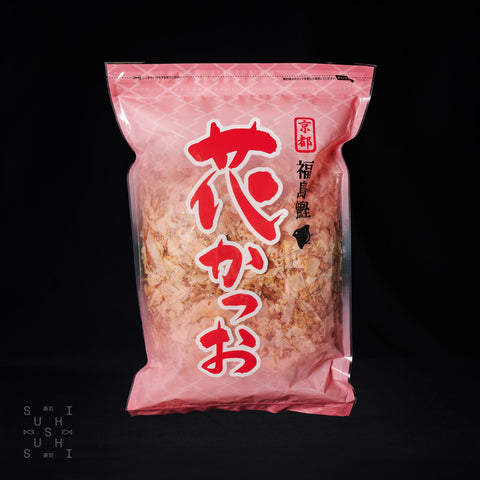
Okan, Bonito Flakes (Katsuobushi), 500g
Paper-thin bonito for dashi and finishing.
Katsuobushi, shaved into fine, smoky flakes. Steep them for the classic bonito dashi, or scatter them over a finished dish where they curl in the heat and melt into savoury depth. This is the catering bag, 500g, for kitchens that go through bonito by the handful.
Why Chefs Choose This
- Real katsuobushi: dried skipjack shaved thin for a deep, smoky umami.
- Two jobs: the backbone of dashi and a finishing garnish in one bag.
- Theatre: the flakes "dance" over hot food, a signature finish on okonomiyaki and takoyaki.
- Volume: a 500g bag for kitchens that use bonito daily.
How to Use
- Dashi: steep in hot water with kombu, then strain for ichiban dashi.
- Garnish: finish okonomiyaki, takoyaki and chilled tofu (hiyayakko).
- Furikake: blend into a rice seasoning, or scatter over steamed rice.
- Sauces: infuse dressings and tare for a smoky, savoury backbone.
Katsuobushi (鰭節) is skipjack tuna that has been simmered, deboned, smoked over weeks and often fermented with a benign mould, then dried until it is as hard as wood. Shaving it produces the fine flakes used across Japanese cooking. It is one of the richest natural sources of inosinate, the savoury compound that multiplies with the glutamate in kombu to create the deep umami of a classic dashi. Beyond stock, the flakes are a finishing ingredient in their own right, curling and "dancing" as they hit hot food.
Learn more: How are Bonito Flakes Made?
What do bonito flakes taste like?
Smoky, savoury and lightly fishy, with a deep umami that lingers. On their own the flakes are delicate and almost crisp, melting on the tongue; steeped into water they give a clear, aromatic stock. As a garnish they add a smoky, savoury hit and a soft texture, and the warmth of the food makes them move, which is part of their appeal. The flavour is more assertive and marine than a kelp dashi, which is why bonito leads in robust, everyday stocks.
| Type | Katsuobushi 鰭節 (shaved dried bonito) |
| Brand | Okan |
| Net Weight | 500g (catering bag) |
| Best Used As | Bonito dashi and a smoky finishing garnish |
How do I make dashi with bonito flakes?
For ichiban dashi, first draw a kombu stock: steep kelp in cold water, then warm to just below boiling and lift it out. Take the pan off the heat, add a generous handful of bonito flakes, leave them for about a minute as they sink, then strain through a fine sieve or muslin without pressing. The result is a clear, aromatic stock. Re-simmer the used flakes and kombu for a second, lighter niban dashi.
Why do bonito flakes move on hot food?
It is not a trick, just physics. The flakes are extremely thin and light, so the rising heat and steam from hot food make them curl and flutter, which looks like dancing. It happens on warm dishes such as okonomiyaki, takoyaki and freshly cooked rice. It has no effect on flavour, but it is a recognised part of the dish's appeal and a sign the flakes are properly thin and fresh.
How should I store bonito flakes?
Keep the bag sealed in a cool, dry place away from light and humidity. The flakes are dry and delicate, so they take on moisture quickly once open and can lose their aroma; press out the air and reseal tightly after each use, or decant into an airtight container. Kept dry and sealed, they hold their smoky flavour well.
SKU : D0015