
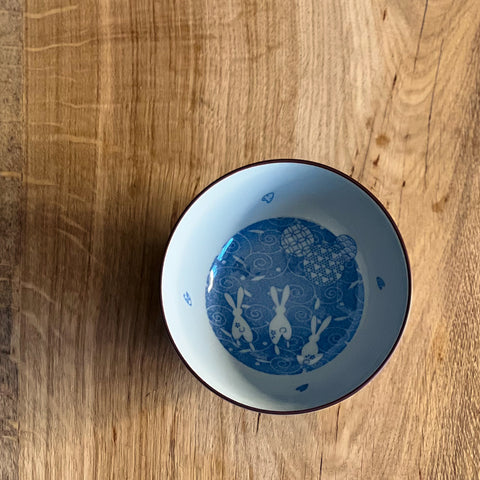
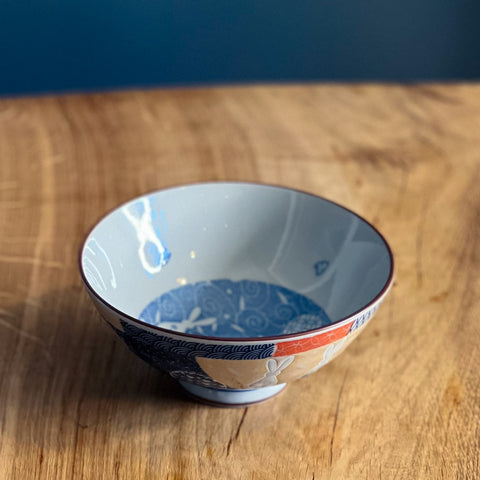
Jumping Hare Bowl, 14cm
A Rice Bowl with a Leaping Hare and a Little Luck
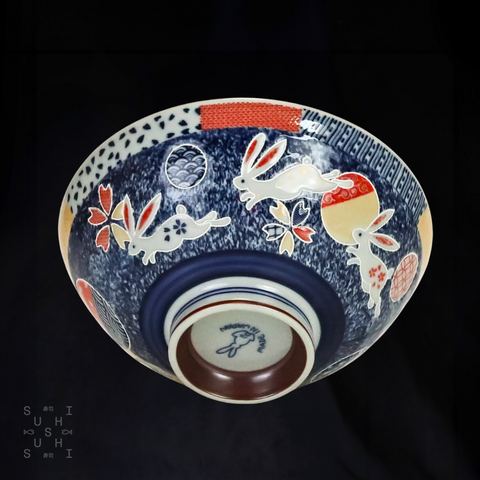
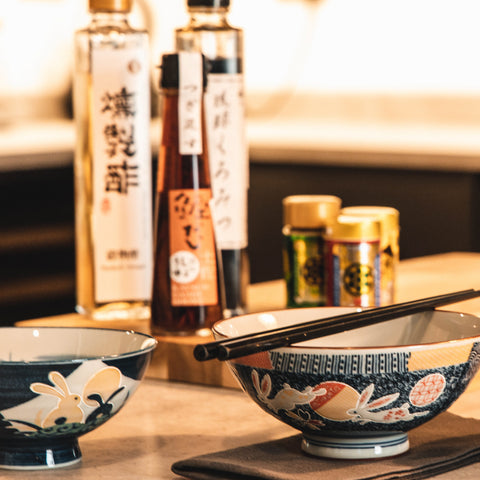
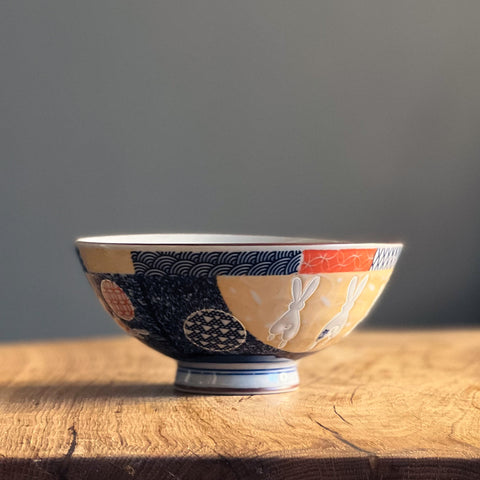
There is a reason the hare keeps appearing on Japanese ceramics. This 14cm rice bowl from Kanekyu Seito carries a leaping hare motif, a design that is both charming and quietly auspicious in Japan, where the rabbit is a creature of the moon, good fortune and forward momentum. At a true rice-bowl size, it is made to be picked up and held in the everyday Japanese way, turning an ordinary bowl of rice into something with a bit of character.
Why You'll Reach For It
- Charming, meaningful design: the leaping hare is auspicious in Japan, a motif of luck and forward movement
- True rice-bowl size: 14cm is the classic chawan size, made to be held in the hand
- By a Japanese maker: produced by Kanekyu Seito, not a generic import
- A natural gift: a characterful, affordable piece that gives well on its own or as a pair
How to Use
- Rice: the proper size for a bowl of Japanese rice, held in the hand to eat
- Donburi and small dishes: a modest rice-bowl dish, or a bowl of pickles and sides
- Breakfast bowl: miso-soup accompaniment, congee or a small cereal bowl
- Gifting: a single bowl or a his-and-hers pair, as rice bowls are often given in Japan
兎 — The hare, the moon and good fortune
The hare (兎, usagi) is one of the most loved motifs in Japanese design, and it carries real meaning. In Japanese folklore the markings on the moon are not a man but a rabbit, the tsuki no usagi, pounding mochi, so the hare is tied to the moon, to autumn moon-viewing, and to a sense of gentle good fortune. Its leaping form also reads as progress and momentum, which is why hare designs are popular as gifts and at the new year. On a rice bowl, the most everyday object on the Japanese table, that small motif turns a daily ritual into something with a quiet story behind it.
What is the right size for a Japanese rice bowl?
A traditional rice bowl, or chawan, is usually around 12 to 14cm across and shaped to sit comfortably in one hand, since Japanese rice bowls are lifted to eat rather than left on the table. At 14cm this bowl is right in that classic range: a proper individual portion of rice, with enough room for a donburi-style dish too. It is deliberately smaller and deeper than a Western cereal or soup bowl, which is what makes it sit so naturally in the hand and suits the way Japanese food is eaten.
Product Details
| Type | Japanese rice bowl (chawan) |
| Diameter | 14cm |
| Design | Leaping hare motif |
| Maker | Kanekyu Seito |
| Material | Ceramic |
| Origin | Japan |
| Care | Hand wash recommended to protect the design |
Why is the hare such a common motif in Japan?
The hare carries layers of meaning. In Japanese folklore a rabbit lives on the moon pounding mochi, so the hare is linked to the moon and to autumn moon-viewing (tsukimi). Its leaping movement is also read as progress and good fortune, which makes hare designs popular as gifts and around the new year. That blend of charm and auspicious meaning is why you find the motif across Japanese ceramics, textiles and confectionery.
Is this a good gift?
Very much so. Rice bowls are a traditional gift in Japan, often given as a pair, and the hare's associations with luck and forward movement make this design especially fitting for a new home, a new year or a fresh start. It is affordable enough to give without ceremony but characterful enough to feel considered, which is a hard balance to strike in a present.
How should I care for it?
Hand washing is recommended to protect the printed design over the long term. Warm water and a soft sponge are all it needs; avoid abrasive scourers, which can wear a decorative surface with repeated use. As with any ceramic, let it cool before washing if it has held hot food, to avoid thermal shock.
SKU : T0095