

Taiji TS-1 Sake Warming Machine
160 x 345 x 483.5mm, stainless steel. Warm sake to order, one flask at a time, at the same temperature every time.
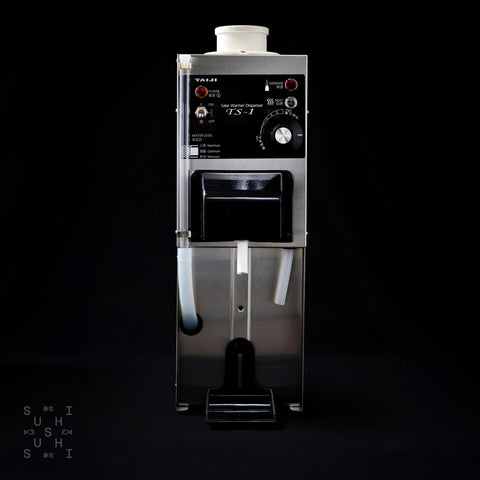
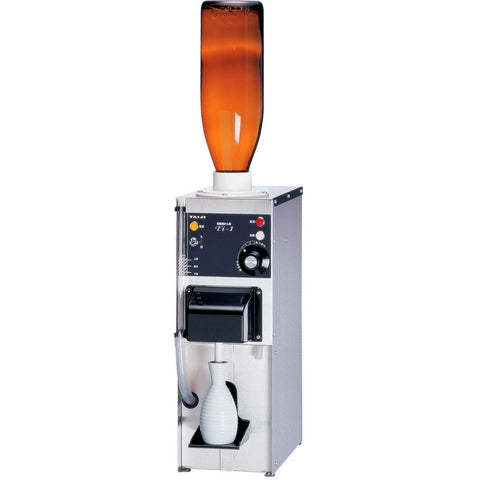
The Taiji TS-1 is a counter-top automatic sake warmer. A 1.8L isshōbin stands upside down in the top, the sake runs through a heated water bath, and it dispenses straight into a tokkuri flask at the temperature you set on the dial. Taiji says a single gō (about 180ml) can be ready in around 25 seconds. The flask fills and stops on its own, so nobody is standing over a pan of hot water during service, and the fortieth flask of the night is as warm as the first.
Why Chefs Choose This
- Consistent temperature: a variable thermostat holds the setting, so warm sake stops depending on who is on the bar
- Gentle, indirect heat: the sake is warmed through a water bath rather than direct heat, which Taiji designs to protect its flavour
- Fast to the table: around 25 seconds for one gō at its quickest, by Taiji's figures
- Auto-stop pour: a level sensor stops the dispense when the flask is full, and the all-stainless body stands up to a busy bar
How to Use
- Load the bottle: fill the water tank (2.3L), then stand a 1.8L bottle upside down in the top with the supplied cap and anti-tip bracket
- Set the dial: choose a warm setting for the sake on the bottle; nuru-kan (around 40°C) and jō-kan (around 45°C) suit most junmai and honjōzō
- Pour to order: place a tokkuri under the spout and let it fill and stop
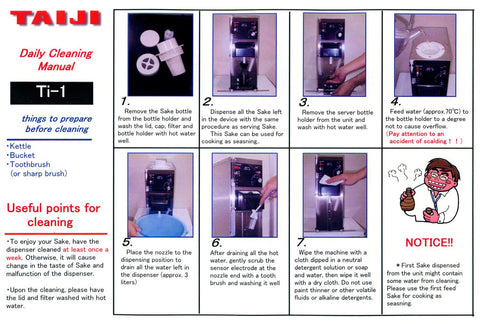
- Close down: switch off, wipe the spout and exterior, and drain the water tank if the machine will stand unused
Kan-zake (燗酒), warmed sake, is as old as sake drinking in Japan, and the language for it is precise: hinata-kan (日向燗) is sun-warm, around 30°C; nuru-kan (ぬる燗) lukewarm, around 40°C; jō-kan (上燗) around 45°C; atsu-kan (熱燗) hot, around 50°C. The traditional way is a tokkuri stood in a pan of hot water. Taiji (タイジ) was founded in 1964, when it released the Hot Cabi, which it describes as Japan's first electric towel warmer, and its automatic sake warmers followed. Taiji puts its share of Japan's automatic sake warmer market at around 90%.
Learn more: The Ultimate Guide to Sake Temperature
What does warming do to sake?
It changes the balance. Gentle warmth brings the rice forward: the sake tastes fuller, rounder and more savoury, acidity softens and the finish lengthens. Sweetness reads as less sugary. Taken too far, the alcohol starts to dominate and delicate fruit aromas disappear, which is why control matters. Richer, rice-driven styles such as junmai, honjōzō and many everyday futsūshu open up beautifully at nuru-kan or jō-kan. Fragrant ginjō and daiginjō are usually better chilled.
Product Details
| Type | Automatic sake warmer and dispenser, counter-top (酒燗器) |
| Brand | Taiji (タイジ), founded 1964 |
| Dimensions | W160 x D345 x H483.5mm; 768mm tall with bottle fitted; 916mm clearance needed to load a bottle |
| Weight | 5.8kg |
| Bottle | One 1.8L bottle (isshōbin), inverted |
| Heating | Indirect water bath, variable thermostat; water tank 2.3L |
| Body | Stainless steel |
| Supplied With | Serving stand, bottle cap, water funnel and anti-tip bracket |
| Origin | Japan |
What temperature does the Taiji TS-1 warm sake to?
You set it. The thermostat is variable, so you can dial in the warm-sake range from nuru-kan, around 40°C, to atsu-kan, around 50°C, and it holds there. Start at jō-kan, around 45°C, for most junmai and honjōzō and adjust by taste. Pour a flask, try it, then nudge the dial rather than chasing temperature by hand.
Which sake should you serve warm?
Fuller, rice-forward styles: junmai, honjōzō and good futsūshu, especially drier ones. Warmth brings out their body and savouriness. Aromatic ginjō and daiginjō, most nigori and sparkling sake are usually served chilled, as heat flattens what makes them special. A simple rule for a bar: warm the workhorse sake, chill the showpieces.
How do you clean and look after the TS-1?
Wipe the spout and exterior after each service. If the machine will not be used for a few days, switch it off and drain the water tank so water does not stand in it. Keep it upright on a level, stable surface, clear of splash zones, and fit the anti-tip bracket, since a full 1.8L bottle sits high. Remove the bottle before cleaning around the top.
SKU : A0006