
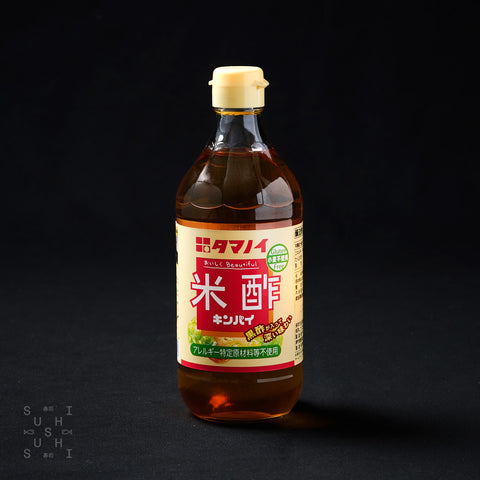
Tamanoi, Japanese Rice Vinegar, 500ml
The mild rice vinegar sushi rice is built on.
Japanese rice vinegar is softer and less sharp than Western vinegars, with a gentle acidity and a faint natural sweetness from the rice. It is the foundation of seasoned sushi rice and a clean, versatile acid for dressings and pickles. Tamanoi has brewed vinegar in Japan since 1907. 500ml.
Using a lot? It also comes in a 1.8L bottle.
Why Chefs Choose This
- Mild acidity: softer and rounder than wine or malt vinegar, it seasons without harshness.
- Sushi-rice ready: the classic base to season with sugar and salt for shari.
- Clean and pale: light in colour, so it brightens without tinting a dish.
- Proven maker: Tamanoi has specialised in Japanese vinegar since 1907.
How to Use
- Sushi rice: warm with sugar and salt, then fold through hot rice.
- Pickles: the base for quick sunomono and tsukemono.
- Dressings: whisk into ponzu, sesame dressings and marinades.
- Cross-cuisine: a gentler acid for slaws, sauces and reductions.
Komezu (米酢) means rice vinegar, made by fermenting rice first into alcohol and then into vinegar. Because it starts from rice, it carries a mild acidity and a soft, faintly sweet character quite unlike the sharp bite of wine or malt vinegar. It is one of the foundation seasonings of Japanese cooking, and the base of sushi-su, the seasoned vinegar that gives sushi rice its gentle tang. Tamanoi, founded in 1907, is one of Japan's established rice vinegar makers.
Learn more: Cooking Sushi Rice: A Masterclass in Rice
What does Japanese rice vinegar taste like?
Clean, mild and gently sweet, with a soft acidity that rounds a dish rather than cutting through it. It has none of the harsh, eye-watering sharpness of malt vinegar or the fruity edge of wine vinegar; instead it tastes of a light, mellow tang with a faint rice sweetness behind it. That softness is exactly why it suits delicate work, seasoning sushi rice, dressing raw fish and making light pickles, where a sharper vinegar would dominate.
| Type | Komezu 米酢 (Japanese rice vinegar) |
| Brand | Tamanoi (founded 1907) |
| Origin | Japan |
| Net Volume | 500ml |
| Best Used As | Sushi rice, pickles, dressings |
What is the difference between rice vinegar and sushi vinegar?
Rice vinegar is the plain fermented vinegar, just the acid, with nothing added. Sushi vinegar (sushi-su) is rice vinegar that has already been seasoned with sugar and salt, ready to fold straight into hot rice. With plain rice vinegar you control the seasoning yourself, which is why chefs often prefer it; with sushi vinegar you trade that control for speed and consistency. This is the plain version, so you can season it to your own recipe.
How do I make sushi rice with it?
Warm the rice vinegar gently with sugar and salt until they dissolve, then fold it through freshly cooked, still-hot rice with a cutting motion, fanning to cool as you go for a glossy finish. A common starting ratio is roughly 100ml of vinegar mix per 1kg of cooked rice, adjusted to taste. Use it warm, not boiling, and avoid mashing the grains. See our sushi rice masterclass for the full method.
How should I store rice vinegar?
Keep it sealed in a cool, dark cupboard away from direct heat and light. Vinegar is self-preserving thanks to its acidity, so it keeps for a long time and does not need refrigerating, though chilling does no harm. Keep the cap on tightly to preserve the aroma. If a harmless haze or sediment appears over time, that is natural and not a sign of spoilage.
SKU : S0325