
What Is Miso?
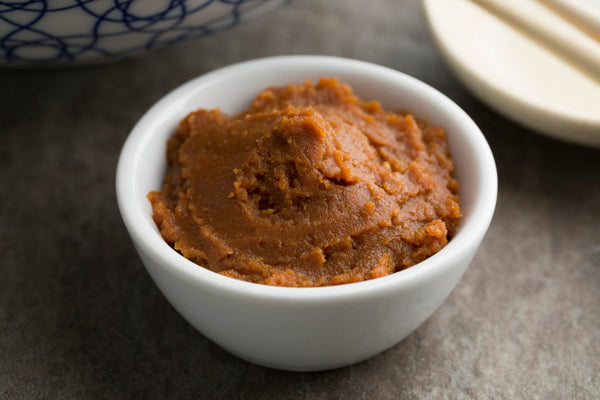
Miso (味噌) is a salted paste made from soybeans fermented with kōji and salt. It is the backbone of Japanese seasoning: the base of miso soup, the savoury depth in marinades, glazes and dressings, and one of the oldest umami tools in the kitchen. Rice-malt miso alone accounts for 82% of the Japanese market.
This is our main guide to miso, written for chefs and curious cooks alike: what it is, the types and how they differ, how it is traditionally made over three years, how a kitchen actually uses it, and how to choose between white, red and soybean styles. It sits inside our Fermented Masterclass.
What Is Miso?
Miso (味噌) is a fermented paste made by combining cooked soybeans with kōji (麹, a grain cultured with Aspergillus oryzae mould) and salt, then leaving the mixture to ferment. The kōji enzymes break the soybeans down into savoury amino acids, building the deep umami that defines miso. It is one of Japan's core fermented soybean foods.
The soybean (大豆, daizu) sits at the heart of it. Historically Japan ate little meat under a long-standing carnivore ban (肉食禁止令), so soybean foods and fish carried much of the country's protein. Tofu, soy sauce, natto and miso all come from the same bean, and miso is the one that turns it into a concentrated seasoning rather than a food eaten on its own.
For a chef, the useful way to hold miso is as living salt with depth. It seasons, it preserves, and it carries glutamate-rich savouriness into a dish in a way plain salt never can. That is why a spoonful lifts a stock, a dressing or a braise.
Source: Ishii Miso factory record (Nagano); miso composition and soybean context as displayed at the factory. The Aspergillus oryzae mechanism is established food science.
What Are the Types of Miso?
Miso is classified two ways: by the malt base it is fermented on, and by colour and character. By malt base, Japanese miso splits into four, dominated by rice-malt miso at 82% of the market. By colour, the practical split chefs use is sweet pale white miso against robust, longer-fermented red miso, with soybean misos at the deepest end.
The malt base is the first axis. It is simply which grain the kōji is grown on before it meets the soybeans:
| Type | Japanese | Made from | Market share |
|---|---|---|---|
| Rice-malt miso | 米味噌 (Kome-miso) | Soybeans + rice-malt + salt | 82% |
| Blended miso | 調合味噌 (Chōgō-miso) | A mix of different miso types | 10% |
| Barley-malt miso | 麦味噌 (Mugi-miso) | Soybeans + barley-malt + salt | 4% |
| Soybean-malt miso | 豆味噌 (Mame-miso) | Soybeans + soybean-malt + salt | 4% |
The second axis, colour and character, is the one you reach for at the stove. It tracks fermentation length and salt:
| Style | Japanese | Salt (approx.) | Character |
|---|---|---|---|
| White miso | 白味噌 (Shiro-miso) | ~4.3% | Pale, sweet, short-fermented; gentle and versatile |
| Red miso | 赤味噌 (Aka-miso) | ~9.5% | Robust, savoury, longer-fermented; more salt and backbone |
| Akadashi | 赤だし | ~9.5% | A red and soybean blend; dark and concentrated, soup-focused |
| Black soybean miso | 黒大豆味噌 | Speciality | Plump sweetness from Tamba black soybeans (Hyogo) |
The single most useful fact here is the salt gap: a white miso runs around 4 to 5% salt while a red can sit near twice that. That changes how much you add and how it behaves under heat. Our steer for a kitchen carrying one of each: a sweet white for dressings, marinades and delicate soups, and a red for hearty soups, braises and anything that needs backbone. The salinity figures above are from the Rokko Miso range and are typical rather than universal.
Source: malt-base types and market shares from the Ishii Miso factory record; colour and salinity figures from the Rokko Miso product sheet (typical of that range). Saikyō miso and the barley and soybean colour profiles are not yet covered in our records.
How Is Miso Made?
Miso is made by fermenting cooked soybeans with kōji and salt. Kōji supplies the enzymes that do the work: protease breaks protein into savoury amino acids, amylase breaks starch into sugars, and lipase breaks down fat. Yeasts and lactic-acid bacteria then build flavour over a long, slow ferment. Salt, around 12% of the starting mix, keeps the right microbes in charge.
Most miso today is mass-produced, more than 80% of the total, in a faster controlled process. The contrast is the traditional method, which the heritage producer Ishii Miso (established 1868 in Shinshū, the historical name for Nagano) still runs over three years in wooden barrels. The barrels (木桶, kioke) are large cedar tubs bound with braided bamboo hoops and covered with cloth lids weighted by stones.
The three-year cycle is tracked on a tag on every barrel, and it turns on four moments:
| Stage | Japanese | What happens |
|---|---|---|
| Shikomi | 仕込 | Initial brewing; the soybeans, kōji and salt are packed into the barrel and fermentation begins |
| Tenchi-gaeshi | 天地返し | "Heaven-earth return": the miso is turned to mix it through |
| Ikae 1 | 移替① | First transfer to a fresh barrel |
| Ikae 2 | 移替② | Second transfer, later in the cycle |
The turns and transfers are not housekeeping. Ishii's own panels give three reasons for them: to mix the miso so it ferments evenly through the barrel, to shift the balance of microbes and stimulate their activity, and to release built-up gas. Time is the other ingredient: three years is what lets the colour deepen and the flavour round out, which is why a heritage red tastes of more than a young white.
For a chef, the takeaway is simple. Fermentation length, salt and the malt base are the three dials behind every miso you buy, and a long barrel-aged miso is a genuinely different ingredient from a quick factory white, not just a darker one.
Source: Ishii Miso factory record (Nagano); the three-year timeline, barrel method and transfer purposes are that producer's documented traditional practice. Enzyme functions and the role of salt are established food science.
Popular Products
Four misos that show the range, from a sweet everyday white through a robust red to a barrel-deep soybean classic and a flavoured finishing miso:

Marukome White Miso Paste (Shiro Miso), 1kg
The pale, short-fermented white miso: lower in salt, naturally sweet and smooth. The most versatile paste to keep in a kitchen, at home in dressings, marinades and everyday miso soup.

Marukome Aka Red Miso, 20kg
The workhorse red (aka) miso in the volume format: fermented longer and saltier than white, for backbone in hearty soups, braises and glazes. The catering pack a busy Japanese kitchen reaches for first.


How Chefs Use Miso
Miso earns its place well beyond soup. It seasons and tenderises as a marinade, glazes fish and vegetables, thickens and deepens dressings and sauces, and brings savoury length to braises. The rule that matters is heat: miso's aroma and live character fade if it is boiled hard, so it goes in late, stirred through off a rolling boil.
White and red behave differently, and that is the practical lesson. Sweet white miso suits dressings, light marinades and delicate soups where you want roundness without much salt. Red and soybean misos carry hearty soups, slow braises and robust glazes, but you use less because the salt is higher. Flavoured misos, the sesame, yuzu (柚子味噌) and Japanese-pepper (山椒) styles, work as finishing condiments straight from the tub: brushed onto grilled tofu or konjac for dengaku (田楽), spread on rice balls before grilling, or thinned into a dip.
Our steer for a working kitchen: carry a sweet white and a robust red, treat them as two different seasonings rather than light and dark versions of one, and keep a flavoured miso for finishing. (Pairing and application guidance here is our own kitchen practice alongside the sourced uses, not a single cited standard.)
Source: culinary uses (dengaku, grilled rice balls, konjac, miso sauces, yuzu and sansho misos) from the Rokko Miso product sheet; broader kitchen guidance is SushiSushi practice. No first-hand tasting note is held for individual styles yet.
Frequently Asked Questions
What is the difference between white miso and red miso?
White miso (shiro-miso) is pale, short-fermented, lower in salt and naturally sweet, so it suits dressings, light marinades and delicate soups. Red miso (aka-miso) is fermented longer, darker, and roughly twice as salty, giving it more savoury backbone for hearty soups and braises. Use less red, and treat the two as different seasonings.
What is miso made from?
Miso is made from cooked soybeans fermented with kōji and salt. Kōji is a grain (usually rice, sometimes barley or soybeans) cultured with Aspergillus oryzae mould, and its enzymes break the soybeans down into savoury amino acids. The grain used for the kōji defines the type: rice-malt miso is by far the most common, at 82% of the Japanese market.
How long does it take to make miso?
It depends on the method. More than 80% of miso is mass-produced in a faster, controlled process. Traditional miso is aged far longer: the heritage producer Ishii Miso runs a three-year cycle in wooden barrels, turning and transferring the miso along the way so it ferments evenly and develops a deeper colour and rounder flavour.
Should you boil miso?
No. Add miso late and stir it through off a hard boil. Prolonged boiling drives off its aroma and dulls its live, fermented character, which is the whole point of using it. For miso soup, dissolve the paste into hot dashi just before serving rather than letting it bubble.
Is miso healthy?
Miso is a fermented food rich in protein and savoury amino acids, long valued in the Japanese diet. Producer displays cite various traditional health claims, but these are not settled science and miso is also salty, so it is best treated as a seasoning used in moderation rather than a health supplement.
Where to Buy Miso in the UK
If you are looking to buy miso in the UK, we keep a range with fast delivery across the UK, from sweet white shiro miso to robust red and dark soybean styles, plus flavoured finishing misos. Start with a white and a red if you are stocking a kitchen from scratch.
For more, browse the Fermented Masterclass, or read about kombu and bonito flakes, the two pillars of dashi that miso soup is built on.
Technical data sourced from a first-hand factory record at Ishii Miso Co. Ltd (Nagano, established 1868) and the Rokko Miso product sheet, with additional category context from SushiSushi product records. Production timelines and barrel methods reflect Ishii Miso's documented traditional practice; salinity figures are typical of the Rokko range; enzyme and fermentation mechanisms are established food science. Traditional health claims shown on producer displays are recorded as displayed and are not presented as settled science.

