

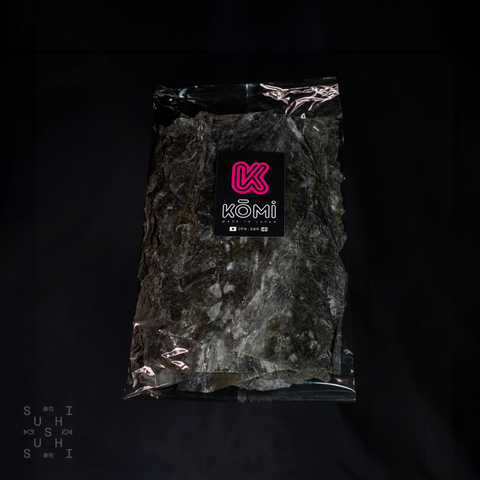
Kōmi, Classic Kombu (Dried Kelp), 1kg
The Umami Foundation, by the Kilo
Almost every savoury dish in the Japanese kitchen starts here. Kombu is dried kelp, and it is the single richest natural source of umami, the deep savoury note that underpins dashi and, through it, miso soup, simmered dishes, sauces and broths. This 1kg pack of Kōmi Classic Kombu is the catering format for kitchens that make dashi daily and do not want to keep reordering. It is the kombu we supply to some of the most demanding kitchens in the country, the Waterside Inn, Trivet and Plates among them.
More from the Kōmi kombu range: white kombu, ma kombu, A grade, 10-year aged white bay, 3-year aged black bay and salted shio-kombu.
Why Chefs Choose This
- The richest natural umami: kombu is the backbone of dashi and therefore of most Japanese savoury cooking
- Vegan dashi base: a kombu-only dashi gives a clean, fully plant-based stock, as used in Plates' Michelin-starred kitchen
- Catering volume: 1kg keeps a busy dashi station stocked and brings the cost per litre down
- Trusted at the top: on order with 3-star Waterside Inn, 2-star Trivet and 1-star Plates
How to Use
- Cold-brew dashi: steep a strip in cold water overnight (mizudashi) for the cleanest, most controlled stock
- Ichiban dashi: warm kombu in water to just below the boil, lift it out, then add bonito flakes for the classic first stock
- Kombu-jime: press fillets of white fish between sheets to cure, firming the flesh and lending umami
- Simmered dishes: add to nabe, oden and braises; never boil hard, which turns the broth cloudy and bitter
昆布 — Kombu, and the discovery of umami
Kombu (昆布) is edible kelp, dried and matured, and it has anchored Japanese cooking for centuries, traded the length of the country along the old kelp road from the cold northern waters where it grows best. Its importance is not just culinary history: in 1908 the chemist Kikunae Ikeda set out to identify the savoury taste in a bowl of kombu dashi and isolated glutamate, naming the fifth taste umami. Kombu remains the clearest expression of it. A good kombu dashi is the quiet foundation under a huge range of dishes, which is why a serious Japanese kitchen treats it as a staple rather than a speciality.
Learn more: Kombu Dashi (Kelp Stock)
How do you make dashi from kombu?
The gentlest and most reliable method is cold extraction: put a piece of kombu in cold water and leave it in the fridge overnight, then lift it out. That alone gives a clean vegan dashi. For a fuller first stock (ichiban dashi), heat the kombu and water slowly to just below a simmer, remove the kombu before it boils, then add a handful of bonito flakes off the heat and strain after a minute. The two rules that matter most: do not let kombu boil hard, and do not scrub off the fine white bloom on its surface, that powder is umami, not dirt. Wipe it lightly if at all.
Product Details
| Type | Kombu (昆布), dried kelp |
| Brand | Kōmi |
| Net Weight | 1kg (catering pack) |
| Best For | Dashi, vegan dashi, kombu-jime, simmered dishes |
| As Used At | Waterside Inn (3★), Trivet (2★), Plates (1★) |
| Origin | Japan |
| Storage | Cool and dry; keep sealed away from moisture |
Should you wash the white powder off kombu?
No. The fine white bloom on the surface is mostly mannitol and glutamates, the umami compounds you are buying kombu for, not dust or mould. Washing or scrubbing it off rinses away flavour. If the kombu looks dusty, wipe it very lightly with a barely damp cloth and no more. Treat the white bloom as a sign of good kombu rather than something to clean away.
How much kombu do I need per litre of dashi?
A common starting point is around 10g of kombu per litre of water for a standard dashi, scaling up for a stronger stock. Cold-brew (overnight in the fridge) tends to need a touch more kombu and time than the warm method but gives a cleaner result. A 1kg pack therefore makes a very large volume of stock, which is why it suits kitchens running dashi as a daily staple. Adjust to taste, kombu is forgiving, and the leftover sheets can be repurposed for a second, lighter stock or simmered into tsukudani.
Can you make dashi with only kombu, without bonito?
Yes. A kombu-only dashi is the standard vegan and vegetarian stock in Japanese cooking, clean and savoury with no fish at all, which is why plant-based kitchens rely on it. Cold extraction gives the best kombu-only result. Pairing kombu with dried shiitake makes an even deeper vegan stock. Adding bonito flakes turns it into the classic ichiban dashi, but the kombu base stands perfectly well on its own when you need to keep a dish meat- and fish-free.
SKU : S0855