
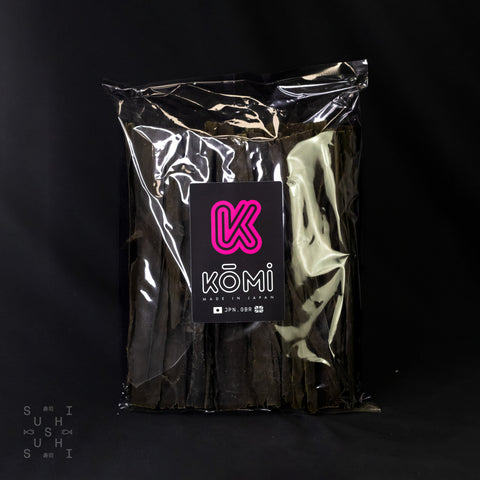
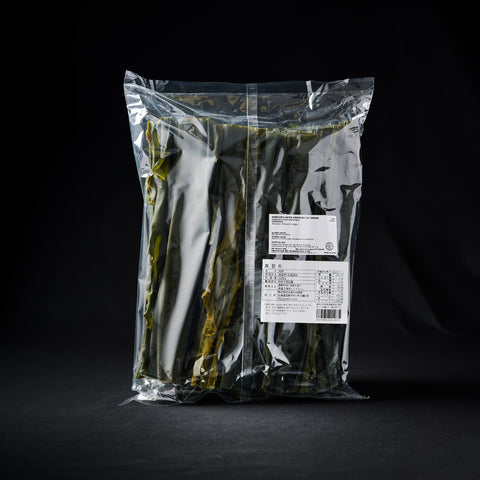
Kōmi, Ma Kombu, A Grade (Hokkaido Kelp), 500g
The kelp professional dashi is built on.
Ma kombu is the benchmark kelp for clear, refined dashi. Thick, broad fronds from the cold waters off Hokkaido give a clean, sweet stock with deep umami and no cloudiness. A-grade selection, 500g.
More from the Kōmi kombu range: white kombu, classic kombu (1kg), 10-year aged white bay, 3-year aged black bay and salted shio-kombu.
Why Operators Choose This
- Clarity: yields a clear, refined dashi without bitterness or murk.
- Depth: high natural glutamate gives a long, savoury finish.
- Grade: A-grade selection, thick broad fronds, consistent batch to batch.
- Control: cold-water extraction lets you dial strength to the dish.
How to Use
- Classic: cold-steep then warm below boiling for ichiban dashi.
- Stock: base for clear soups, nimono and donabe rice.
- Cross-cuisine: add a strip to risotto or a vegetable braise for savoury depth.
- Second use: simmer spent kombu for niban dashi, or chop into tsukudani.
Ma kombu (真昆布, ma konbu, "true kelp") is regarded as the top grade of Japanese kelp, harvested from the cold seas of southern Hokkaido around Hakodate. Kansai kitchens prize it for a clear, refined dashi, where the thick fronds give sweetness and umami without heavy colour. Glutamate, the compound behind savoury taste, was first identified in kombu dashi by the chemist Kikunae Ikeda in 1908.
Learn more: Kombu Dashi (Kelp Stock)
What does ma kombu taste like?
On its own, ma kombu dashi is clean and faintly sweet, with a rounded savoury weight that sits under everything you add to it. Less briny than wakame, less smoky than a katsuo stock, it reads as pure umami with a long finish. The thick A-grade fronds give a fuller, sweeter extraction than thinner cooking kombu, which is why Kansai chefs reach for it when the dashi itself is on show.
| Type | Ma kombu 真昆布 (true kelp) |
| Brand | Kōmi |
| Grade | A grade |
| Origin | Japan (Hokkaido) |
| Net Weight | 500g |
| Best Used As | Clear dashi base |
What is the difference between ma kombu and other kombu?
Ma kombu is the highest-grade kelp, thick and broad, giving a clear and refined dashi with a sweeter, rounder umami. Other grades such as rishiri or hidaka give a sharper or more rustic stock and suit everyday cooking. Use ma kombu when the dashi is the centre of the dish, a clear soup or a delicate simmer, and a cheaper grade when it is a background note.
What temperature should I extract kombu at?
For the cleanest result, steep the kombu in cold water for several hours or overnight, then warm it slowly and lift it out just before the water boils, at around 60 to 80 degrees. Boiling kombu turns the stock cloudy and can draw out a slick, bitter edge. Low and slow keeps the dashi clear and sweet.
How should I store ma kombu?
Keep it sealed in a cool, dry, dark place. Kombu is dried for long keeping, so it holds well as long as it stays dry. Reseal after opening to keep moisture out. A faint white powder on the surface is natural; it is mannitol, a source of the sweetness and umami, and not a fault, so do not wipe it all away before use.
SKU : S0045