Can I Use Arborio Rice for Sushi? Arborio vs Sushi Rice
Can I Use Arborio Rice for Sushi?
Arborio rice can be used for sushi in an emergency, but it will not behave like real sushi rice: it is a medium-grain risotto rice bred for creamy starch release, not the short-grain Japanese cultivars bred to hold together while staying separate and glossy. If you have arborio in the cupboard and nothing else, you can make a passable maki roll with it. If you are buying rice specifically to make sushi, buy short-grain Japanese sushi rice instead.
Arborio vs Sushi Rice: What Actually Goes Wrong
The failure with arborio is not that it "doesn't work" — it is that it fails in three specific, predictable ways, all traceable to the grain itself.
Surface starch. Arborio is bred for risotto, where the point is to rub starch off the grain surface into the cooking liquid to build a creamy sauce. That same starch, in a sushi context, turns the rice gluey and clumped rather than glossed with a thin, even vinegar coating. Sushi rice has less surface starch by design, so the vinegar seasons it rather than turning it to paste.
Grain integrity. A short-grain Japanese cultivar holds its shape under the light pressure of shaping nigiri or rolling maki — each grain stays distinct while the mass sticks together. Arborio's larger, starchier grain collapses more readily under the same handling, giving a mushier, less structured mouthful, and rolls that are harder to cut cleanly.
How it takes vinegar. Sushi rice is milled and polished specifically so the sushi-zu (vinegar seasoning) is absorbed evenly through the grain in the fan-and-fold step. Arborio's starch profile absorbs vinegar unevenly — patches taste sharp, others taste plain — because the grain was never bred for this step at all.
None of this means arborio is inedible in a roll. It means the result is a rice-and-vinegar approximation of sushi, not sushi rice.
What to Buy Instead
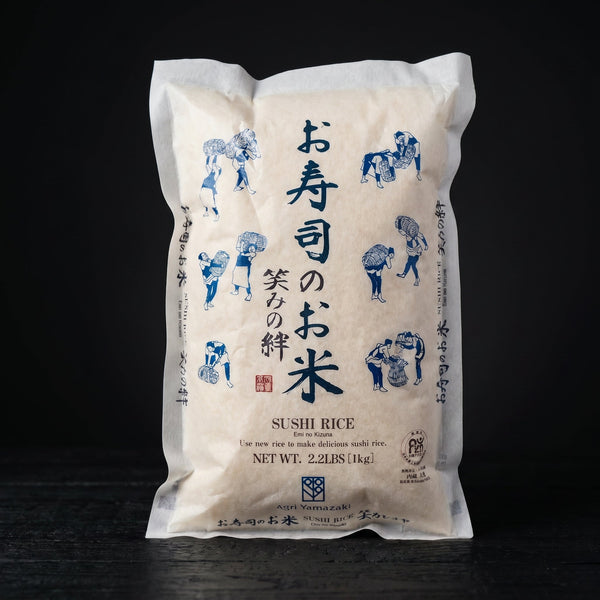
For sushi that actually behaves like sushi, buy a short-grain Japanese cultivar bred for the job. We stock Hakodate Nanatsuboshi Sushi Rice, 5kg — a Hokkaido-grown short-grain rice that holds its shape when shaped, takes vinegar evenly, and — usefully for a kitchen prepping ahead — stays good after it has cooled, rather than turning hard the way many sushi rices do an hour after cooking.

Source: grain behaviour (starch, structure, vinegar uptake) is established rice-cookery knowledge; stock and pricing verified live against the SushiSushi catalogue, 2 September 2026.
Frequently Asked Questions
Is arborio rice the same as sushi rice?
No. Arborio is an Italian medium-grain rice bred for risotto, releasing surface starch to build a creamy sauce. Sushi rice is a short-grain Japanese cultivar bred to hold its shape and take vinegar evenly. They behave differently in the pan and in the roll.
What happens if you make sushi with arborio rice?
It will roll, but the texture is gluier and less distinct grain-to-grain, the vinegar seasons unevenly, and the rice is more prone to collapsing under the light pressure of shaping. It is a workable emergency substitute, not an equivalent.
What rice should I buy for sushi at home?
A short-grain Japanese sushi rice such as Hakodate Nanatsuboshi. Look for a rice specifically labelled for sushi rather than a generic short-grain, since the breeding and milling are what make the vinegar step work.
Where to Buy Sushi Rice in the UK
We stock Hakodate Nanatsuboshi Sushi Rice with next-day delivery across the UK.

