
What Is Japanese Whisky? The Complete Guide
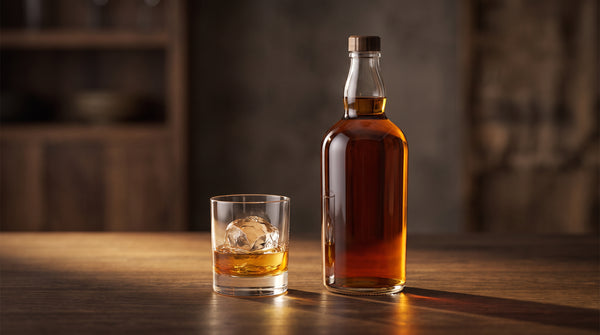
Japanese whisky is a distilled spirit built on the Scotch method but tuned to a different palate: less peat, and a character built to survive dilution in a highball. It began in 1924, and by 2020 had overtaken sake as Japan's biggest alcoholic-beverage export by value. This is our guide to what it is, how it is made, and why the Mizunara cask matters.
This sits inside our guide to Japanese alcohol, alongside sake and shochu, whisky's closest relatives on the production side.
What Is Japanese Whisky?
Whisky is a distilled spirit made from malted barley and other grains, matured for years in wooden casks, which is where it gets its colour and its complexity. The name comes from the Gaelic usquebaugh, "water of life", and the oldest surviving record of it is a 1494 Scottish Exchequer entry. Japan is now counted among the "five great whisky regions", alongside Scotland, Ireland, the USA and Canada.
Japanese whisky started in 1924, modelled directly on Scotch, and later developed its own character: restrained peat, and a flavour built to hold up when diluted with soda or water, which matters in a country where the highball is the standard way to drink it.
Source: NRIB "Story of Whisky 1" (general definition, history, five whisky regions) and "Story of Whisky 2" (the Japanese style). Facts extracted and reworded.
Malt, Grain and Blended: The Basic Types
Malt whisky is made from malted barley alone, pot-distilled, and carries the richest flavour. Grain whisky is made from cereals such as corn plus a little malt, column-distilled, and is lighter and milder. Blended whisky combines the two, and it is the mainstream style in Japan.
A single malt is a blend of multiple malt whiskies from one distillery, not a single cask; a single cask is bottled from just one. Regional styles differ across the five whisky nations: Scotch leans peaty and pot-distilled, Irish avoids peat and triple-distils, American bourbon runs at least 51% corn in charred new casks, Canadian whisky favours rye and corn, and Japanese whisky follows the Scotch method with a lighter hand on peat.
Source: NRIB "Story of Whisky 1" and "Story of Whisky 2" (type definitions and regional comparison). Facts extracted and reworded.
The 2021 Japanese Whisky Standard
Until 2021 there was no legal definition of "Japanese whisky", which meant spirit made and blended abroad could be sold under the name. After around four years of industry work, the Japan Spirits and Liqueurs Makers Association set the Standards for Labelling Japanese Whisky in 2021.
To carry the name, a whisky must be made from Japanese malt, grain and water, with malt essential; mashed, fermented and distilled at a domestic distillery; distilled to under 95% ABV; matured for at least three years in wooden casks of 700 litres or less, in Japan; and bottled in Japan at a minimum of 40% ABV, with caramel permitted only for minor colour adjustment. A bottle that fails any of these points cannot legally call itself Japanese whisky, whatever the label suggests.
Source: NRIB "Story of Whisky 2" (the 2021 standard, full criteria). Facts extracted and reworded.
How Japanese Whisky Is Made
Two-row barley is steeped, germinated and kiln-dried; burning peat at this stage is what gives a smoky flavour, and Japanese producers generally use very little. The dried malt is milled and mashed with water at around 63°C, converting starch to sugar, then fermented for two to three days to roughly 7% alcohol.
Malt whisky is distilled twice in copper pot stills: the first run lifts it to about 25% ABV, the second concentrates it to around 70%, and only the "heart", the middle cut of that second run, is kept as new spirit. Grain whisky is distilled continuously in a column still to over 90% alcohol.
A blender then works from typically 10 to 30 component spirits, called genshu, varying the mix to build flavour and colour. Because Japan has relatively few distilleries compared with Scotland, producers commonly make a wide range of genshu in-house rather than trading spirit between distilleries. After blending, the whisky is re-casked to marry for around six months before bottling.
Source: NRIB "Story of Whisky 1" and "Story of Whisky 2" (malting, mashing, fermentation, distillation and blending detail). Facts extracted and reworded.
Maturation and the Mizunara Cask
Spirit comes off the still colourless. Cask ageing is what turns it amber and builds flavour, while roughly 2 to 4% evaporates each year, the "angel's share", concentrating what remains. North American white oak gives apple and citrus notes, European Spanish oak gives dried fruit and a darker colour, and charring the inside of a cask adds vanilla, caramel and coffee notes.
Japan's distinctive contribution is Mizunara, Japanese oak from Hokkaido. It is porous and leaks easily, so staves have to be cut thick, but long maturation in it produces an incense-like, sandalwood aroma and a reddish-golden spirit found nowhere else. It is the single most recognisable signature of Japanese whisky.
For a chef building a drinks list, the steer is simple: a Mizunara-matured whisky is the one worth pouring neat to make the point; a lighter blend is the one that survives a highball on a busy service.
Source: NRIB "Story of Whisky 2" (cask types, the angel's share, Mizunara). Facts extracted and reworded.
A Century of Japanese Whisky
Japan's first whisky distillery was completed outside Kyoto in 1924, built Scotch-style with two pot stills and imported peat, under Masataka Taketsuru, who had trained in Scotland. The first domestic release came in 1929, but its peaty Scotch style was poorly received, which pushed producers toward blends tuned to Japanese palates.
Domestic shipments peaked in the early 1980s, still the all-time high, then whisky spent roughly 25 years in decline as shochu took share. Japanese whisky won the top prize at a major UK international spirits competition in 2001, building the global reputation it has now, and the 2009 highball boom brought a new, younger domestic audience. By 2024, a century after it began, Japanese whisky was counted among the world's five great whiskies.
Source: NRIB "Story of Whisky 2" (the full 1924 to 2024 history). Facts extracted and reworded.
Japan's Whisky Export Boom
In 2020, whisky overtook sake to become Japan's number one alcoholic-beverage export by value. Export value passed ¥10 billion in 2015 and grew roughly 5.4 times to about ¥56.0 billion by 2022, close to 40% of all Japanese alcoholic-beverage export value by the early 2020s. It now ships to more than 50 countries, with China and the USA together accounting for over half that value.
Japan named whisky one of 29 priority items in its 2020 plan to reach ¥5 trillion in agri-food exports by 2030, and craft distilleries are multiplying to meet the demand. That growth is also why bottles have become harder and pricier to find: production takes years to catch up with a boom in demand.
Source: NRIB "Story of Whisky 2" (export figures, market share, the 2030 export plan). Facts extracted and reworded.
Frequently Asked Questions
What makes a whisky legally "Japanese whisky"?
Since 2021, a whisky must be made from Japanese malt, grain and water, mashed, fermented and distilled at a Japanese distillery, matured at least three years in wooden casks of 700 litres or less in Japan, and bottled in Japan at a minimum of 40% ABV. Before that standard existed, spirit blended abroad could legally use the name.
Why is Mizunara oak special?
Mizunara is a Japanese oak from Hokkaido, distinctive to Japanese whisky. It is porous and prone to leaking, so casks need thick staves, but long maturation in it gives an incense-like, sandalwood aroma and a reddish-golden colour that other cask woods do not produce.
Is Japanese whisky peaty like Scotch?
Generally not. Japanese whisky is modelled on the Scotch method but was deliberately developed with restrained peat, tuned to a flavour that holds up when diluted in a highball or mizuwari, which is how most whisky is drunk in Japan.
Why is Japanese whisky so hard to find?
Demand has grown far faster than supply. Whisky overtook sake as Japan's top alcoholic export by value in 2020, and because whisky needs years of cask maturation, producers cannot simply speed up production to meet a sudden export boom.
Where to Buy Japanese Whisky
We do not currently hold Japanese whisky in stock. If you are building a Japanese drinks list, explore our sake range or browse our full range of Japanese drinks, and see our guide to shochu, whisky's closest relative among Japan's own spirits.
For more, browse our guide to Japanese alcohol, or read about sake and shochu.
Sourced from store/whisky/whisky.md v0.1 (PARTIAL). Class D lineage drawn on: SRC-whisky-nrib-whisky1-001 (NRIB, "Story of Whisky 1", general whisky); SRC-whisky-nrib-whisky2-001 (NRIB, "Story of Whisky 2", Japanese whisky). Both fact-extracted and reworded, not reproduced. Gaps written around: no specific Japanese distillery or brand names (record GAP, no SushiSushi SKU); no tasting notes by style (record GAP). Neither gap affects any claim made on this page.

