
What Is Japan Wine? A Guide to Japanese Wine
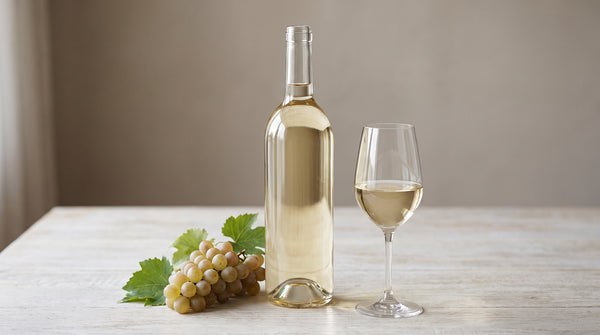
Wine is unique among the major fermented drinks: the grape already carries its own sugar, so there is no saccharification step the way there is with sake, beer or whisky. "Japan Wine" is a specific legal label, not just wine made in Japan, and it is built almost entirely around two home-grown grapes: Koshu and Muscat Bailey A. This is our guide to what it is and what makes the Japanese version distinct.
What Is Wine?
Wine is an alcoholic drink made by fermenting grapes. Grapes already contain roughly 200 to 220 grams of sugar per litre, so yeast ferments that sugar directly, with no conversion step first, unlike sake or beer. Wine grapes carry more sugar and acid than table grapes and are typically grown at latitudes of 30 to 50 degrees north or 20 to 40 degrees south, in low-rainfall, high-sunshine conditions with a wide swing between day and night temperatures.
Source: NRIB "Story of Wine 1" (definition, fermentation, viticulture). Facts extracted and reworded.
Types of Wine
By colour, wine is red, made by fermenting the juice with the skins to pull out colour and tannin, white, made from pressed juice usually from green grapes, or rosé. By process, it can be still, sparkling, made by a second fermentation in the bottle, and only French examples from the Champagne region may use that name, others are Spumante or Sekt, or fortified, with brandy added to raise the alcohol, as in Port, Sherry and Madeira.
Two sweet styles are worth knowing. Noble-rot wine, 貴腕, comes from grapes infected by Botrytis cinerea, a mould that concentrates their sugar. Ice wine comes from grapes left to freeze on the vine before pressing.
Source: NRIB "Story of Wine 1" (wine styles and production methods). Facts extracted and reworded.
The 2015 Japan Wine Standard
In October 2015, Japan's National Tax Agency defined "Japan Wine", 日本ワイン, as fruit wine made only from domestically grown Japanese grapes. The standard splits the market into three tiers: Japan Wine; Domestically Manufactured Wine, made in Japan but allowed to use imported concentrate or bulk wine, of which Japan Wine is a stricter subset; and Imported Wine.
Only true Japan Wine may show a region, grape variety and vintage on the front label, and each of those claims needs at least 85% of the grapes to match the stated area, variety or harvest year. A bottle can be made in Japan and still not qualify to call itself Japan Wine on the label.
Source: NRIB "Story of Wine 2" (the 2015 NTA standard and the 85% labelling rule). Facts extracted and reworded.
Japan's Own Grape Varieties
Koshu, 甲州, is Japan's most-used Japan Wine grape, a white variety and the old name of Yamanashi, grown in Japan long before winemaking itself began there. It gives light, fresh, gently aromatic whites often said to pair especially well with Japanese food, sometimes showing a grapefruit-citrus note. NRIB DNA analysis found its genome is around 20 to 30% East Asian wild species, likely Vitis davidii, with the rest classic Vitis vinifera.
Muscat Bailey A is Japan's most-used red grape, bred by Zenbei Kawakami at the Iwanohara Vineyard in Niigata, a Bailey by Muscat Hamburg cross that succeeded in 1927. It makes fruity, medium-bodied reds with a strawberry note. Yamabudo, ヤマブドウ, Vitis coignetiae, is a native wild Japanese grape behind high-acid, long-ageing reds and a cold-hardy breeding parent, important in Hokkaido.
NRIB has registered three Japanese varieties with the OIV, the international body for vine and wine: Koshu in 2010, Muscat Bailey A in 2013, and Yamasachi in 2020. European varieties are expanding too, chiefly Chardonnay and Merlot around Nagano and Yamagata, and Kerner and Zweigelt in Hokkaido, alongside sweet American varieties such as Niagara and Concord that are popular in Japan despite their "foxy" note being disliked in Europe.
Source: NRIB "Story of Wine 2" (grape varieties, breeding history, OIV registrations). Facts extracted and reworded.
Where Japan Wine Is Made
Yamanashi has the most wineries and is the historic home of Koshu and Muscat Bailey A. Nagano is rising fast on Merlot and Chardonnay, with many boutique producers. Yamagata grows Delaware, Muscat Bailey A and Chardonnay, and Hokkaido specialises in cool-climate Kerner, Zweigelt and native Yamabudo. As of November 2023, the protected fruit-wine Geographical Indications are Yamanashi, Hokkaido, Yamagata, Osaka and Nagano, and a GI cannot be used outside its own area or in a qualified form such as "Yamanashi-style". There were 468 grape-wine production sites across Japan at the end of 2022, spread from Hokkaido to Okinawa but concentrated in Yamanashi and Nagano.
Source: NRIB "Story of Wine 1" and "Story of Wine 2" (regions, winery count, Geographical Indications). Facts extracted and reworded.
Quality and Competition
The Japan Wine Competition, known as the Kokusan Wine Concours until 2014, has run since 2003, judging across 12 style categories to raise the quality and reputation of Japan Wine. Japan Wine has gone on to win international competitions and is framed culturally as a strong match for washoku, itself UNESCO-listed since 2013.
Source: NRIB "Story of Wine 2" (the competition, international results). Facts extracted and reworded.
A Short History of Wine in Japan
Wine itself is ancient, first made around 6000 BC in the Caucasus and flowering in Greece and Rome. It reached Japan far later, in 1549, as a gift from the missionary Francis Xavier to the Satsuma lord Shimazu Takahisa. A winemaking method appears in the 1695 text Honchō Shokkan, but industrial winemaking only began in the Meiji era, with the Dainihon Yamanashi Wine Company founded in 1877. Koshu itself, though, had already been grown in Japan long before any of that.
Source: NRIB "Story of Wine 1" and "Story of Wine 2" (origins and Japan's winemaking history). Facts extracted and reworded.
The Science: Sulfite, Colour and the Fish Problem
Sulfite is added to wine to prevent oxidation and hold back harmful microbes. Japan's legal maximum is 350 mg per kg under the Food Sanitation Act, and real domestic fruit-wine levels run far lower, averaging around 75 mg per kg in the cited survey. Red wine's colour comes from anthocyanins, pigments that build up as grapes ripen; high temperatures suppress that build-up and break the pigments down, so good colour needs cool, bright, low-water conditions around veraison.
For a kitchen pairing wine with seafood, there is a real chemistry reason some matches taste metallic: recent Japanese research links the unpleasant fishy note not just to tannin but to iron ions catalysing oxidation of the PUFAs, EPA and DHA, in fish. It is why some wines clash with fish and others do not, and it is an active area of research into genuinely seafood-friendly wine, directly relevant to washoku pairing.
Source: NRIB "Story of Wine 2" (sulfite limits, anthocyanin chemistry, the wine-fish pairing research). Facts extracted and reworded.
Frequently Asked Questions
What is the difference between "Japan Wine" and "Japanese wine"?
"Japan Wine" is a specific legal label, defined by Japan's National Tax Agency in 2015, for wine made only from grapes grown in Japan. Wine merely bottled in Japan from imported grapes or bulk wine is "Domestically Manufactured Wine" and cannot use the stricter label or show a region, grape and vintage on the front.
What is Koshu?
Koshu is Japan's most widely used grape for Japan Wine, a white variety grown in Japan long before winemaking began there. It produces light, fresh, gently aromatic wines said to pair especially well with Japanese food, and genetic analysis shows it is part East Asian wild vine and part classic European vinifera.
Why does wine sometimes taste metallic with fish?
Recent Japanese research links the problem to iron ions in the wine catalysing oxidation of PUFAs in fish, not just to tannin as previously assumed. It is why some wine and seafood pairings clash and others do not, and it is guiding research into wines better suited to washoku.
Where to Find Japan Wine
We do not currently hold Japan Wine in stock. If you are building a Japanese drinks list, explore our sake range or browse our full range of Japanese drinks, and see our guide to umeshu, Japan's other fruit-based option.
For more, browse our guide to Japanese alcohol, or read about sake and umeshu.
Sourced from store/wine/wine.md v0.1 (PARTIAL). Class D lineage drawn on: SRC-wine-nrib-wine1-001 (NRIB, "Story of Wine 1", general wine); SRC-wine-nrib-wine2-001 (NRIB, "Story of Wine 2", Japan Wine). Both fact-extracted and reworded, not reproduced. Gaps written around: no specific Japanese wineries, brands or SushiSushi SKUs (record GAP); no ABV ranges or tasting notes by style (record GAP); the sulfite average figure is edition-dependent between NRIB's JP and EN editions (record PARTIAL, not a true contradiction, both flagged as survey-year specific). Neither gap affects any claim made on this page.

