Shirodashi vs Hondashi: What Is the Difference?
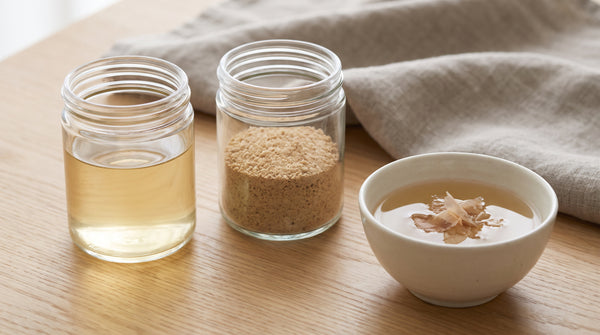
Shirodashi and hondashi both save you making dashi from scratch, and that is where the similarity ends. One is a pale liquid concentrate that is already seasoned. The other is a granulated powder that is essentially dashi on its own. Reach for the wrong one and you will either over-salt the dish or wonder why it tastes of nothing.
Here is the difference, and which to keep in the cupboard.
The short answer
Shirodashi (白だし) is a liquid concentrate: dashi already blended with light-coloured soy sauce, mirin and salt, so it seasons and adds umami in one pour. Hondashi is a granulated instant dashi powder: bonito-led stock in dry form, which gives you umami but little seasoning. Shirodashi is a finished base. Powder is a building block.
The practical consequence is salt. Shirodashi already carries soy and salt, so if you treat it like plain stock and then season the dish as usual, you will overshoot. Dashi powder carries far less, so it behaves much more like a stock cube: you still season afterwards.
The second consequence is colour. Shirodashi is built on pale soy specifically so it does not darken what it touches, which is why it is the choice for clear soups, chawanmushi, delicate simmered vegetables and dashimaki tamago. Powder dissolves clear-ish but bonito-brown, and is less precious about it.
A note on the word "hondashi"
Worth being straight about this, because it causes half the confusion: Hondashi is a brand name. It is Ajinomoto's instant dashi powder, and it has become so dominant in Japan that people use it the way British cooks say Hoover for a vacuum. What they usually mean is the category: instant granulated dashi, sold as dashi no moto (だしの素).
So when a recipe calls for hondashi, it is calling for instant dashi powder. Any good bonito-based dashi no moto does the same job. We do not stock the Ajinomoto brand, and we will not pretend otherwise, but the powders below are the same category and, in the case of the catering-grade bonito powder, a considerably purer one.
Which to use, and when
Use shirodashi when the dish is pale and the seasoning is the point: clear soups, chawanmushi, dashimaki tamago, simmered daikon or greens, a quick noodle broth, or a dipping sauce you want to build in seconds. Dilute it and you have a seasoned base already balanced.
Use dashi powder when you want umami without committing to a seasoning profile: miso soup (the miso brings the salt), ramen and udon broths you will season yourself, a base for a stew, or anywhere you want to boost savouriness in a non-Japanese dish. It is also the cheaper way to cook dashi in volume.
If you only keep one, keep the powder: it is more flexible, because you can always add soy and mirin to make something close to shirodashi, but you cannot easily take the salt back out of shirodashi. If you cook a lot of clear, pale Japanese dishes, keep both.
Neither is a substitute for dashi made properly from kombu and katsuobushi, and we would not claim otherwise. Both are what a working kitchen actually reaches for on a Tuesday.
What we stock, on both sides

Kōmi Shiro Dashi Concentrate, 1L
The shirodashi side. A pale, ready-to-dilute concentrate that seasons and adds umami in one pour, without darkening the dish. The litre format is the sensible buy if you cook Japanese regularly.

Shimaya Dashi no Moto Powder, 50g
The powder side, and the direct equivalent of what a recipe means by hondashi: bonito and kelp milled to a fine granule, dissolving in seconds. The everyday Japanese kitchen standard, in a small pack to try.


Shirodashi and dashi-powder composition described from our product specifications and range. Hondashi is a registered brand of Ajinomoto Co., Inc., referenced here only to explain the term; we do not stock it and make no claim about its formulation.

