

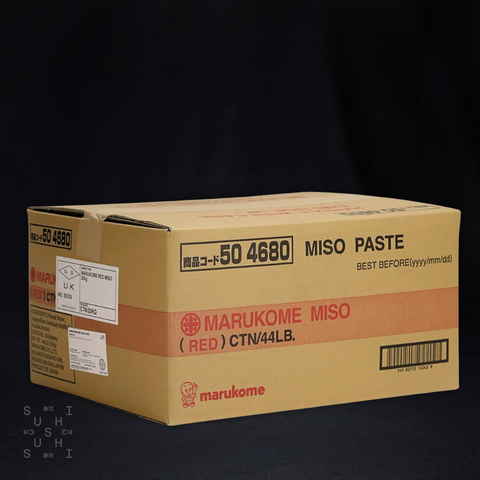
Marukome, Aka Red Miso, 20kg
The Red Miso a Volume Kitchen Reaches For First
Aka miso is the workhorse of a serious Japanese kitchen, and at 20kg this is the format built for one. Marukome has brewed miso in Nagano since 1854, in the heart of Japan's largest miso-producing region. This red miso is fermented longer than its pale counterpart, which deepens the colour and pushes the flavour towards a bolder, saltier, more savoury register. One carton seasons miso soup, glazes, marinades and braises across weeks of service with the same result every time. The same paste is also stocked in a 1kg pack for smaller kitchens.
Why Chefs Choose This
- Longer fermentation: aged further than white miso for a deeper colour and a bolder, saltier umami that holds up in robust dishes
- Batch consistency: a 20kg carton seasons soups, glazes and braises to the same standard across a full service week
- One paste, many jobs: works as a soup base, marinade, glaze and seasoning, so it earns its shelf space in a busy kitchen
- Proven producer: Marukome has brewed miso in Nagano since 1854, Japan's largest miso region, for a reliable, repeatable result
How to Use
- Miso soup: whisk into a hot kombu or katsuo dashi off the heat, never boiling, to keep the aroma
- Dengaku glaze: blend with mirin and sake, then grill onto aubergine, fish or black cod
- Braises and tare: stir into ramen tare, braising liquids and stocks for instant depth
- Beyond Japanese: fold into butters, dressings, caramels and gravies for a savoury backbone
Where red miso gets its colour
Aka miso (赤味噌) means simply red miso, named for the deep reddish-brown colour it develops as it matures. Miso (味噌) is a paste of soybeans and kōji, the rice culture that drives fermentation, worked with salt and left to age. The longer that ageing runs, the darker and more savoury the paste becomes, as its sugars and amino acids brown over months. Rice-kōji miso is the style most Western kitchens have tasted, and it is the dominant form made in Japan. Marukome has brewed miso in Nagano since 1854, in the Shinshū region that lends its name to the country's best-known miso. Miso itself is old: it had entered the samurai diet as soup by the twelfth century. Red sits at the stronger, saltier end of the family, which is why chefs reach for it when a dish needs weight rather than delicacy.
Learn more: What Is Miso?
What does red miso taste like?
Red miso leads with salt and a deep, roasted savouriness, closer to soy and stock than to anything sweet. Where white miso is mellow and faintly sugary, red miso is firmer and more assertive, with a long umami finish that coats the palate. The texture is dense and smooth, easy to whisk out into liquid. Because it is fermented longer, the flavour carries notes of caramel and toasted grain alongside the core soybean savouriness. In a dish it reads as backbone rather than seasoning, which is why a little goes a long way. Start with less than you think and build, as the salt level is higher than a pale miso.
Product Details
| Type | Aka Miso (赤味噌, red fermented soybean paste) |
| Brand | Marukome (brewing since 1854) |
| Origin | Nagano (Shinshu), Japan |
| Net Weight / Format | 20kg catering carton |
| Best Used As | Soup base, glaze, marinade and braising seasoning |
| Storage | Cool and dry; refrigerate once opened |
What is the difference between red miso and white miso?
The main difference is fermentation time. Red miso (aka miso) is matured longer, which darkens the colour and builds a stronger, saltier, more savoury flavour. White miso (shiro miso) is fermented for a shorter period and tastes milder and slightly sweet. In practice, white miso suits delicate dressings, light soups and fish, while red miso carries heavier dishes such as braises, hearty soups and grilled glazes. Many kitchens keep both and blend them to dial in the exact strength a dish needs. If a recipe does not specify, red miso gives more depth and white miso more subtlety. For the milder option in the same bulk format, we also stock Marukome white miso in 20kg.
How much red miso should you use in miso soup?
As a guide, around 15 to 18 grams of red miso, roughly one tablespoon, seasons a 200ml bowl of dashi. Because red miso is saltier than white, start at the lower end and taste before adding more. Whisk the paste into hot but not boiling dashi, ideally through a small sieve or miso muddler so it disperses evenly without lumps. Take the pan off direct heat once the miso is in, as a hard boil dulls the aroma and flattens the flavour. Scaling up for service, work to roughly 75 to 90 grams of miso per litre of dashi and adjust to taste. For a step-by-step method, see our miso soup recipe.
How do you store a 20kg catering pack of miso?
Keep the carton somewhere cool and dry and reseal the inner pack tightly after each use. Once opened, refrigeration is best for a pack this size, as it slows further fermentation and keeps the colour and flavour stable over a long service life. Miso is a preserved product and lasts for months when stored well. You may notice the surface darken slightly where it meets the air, which is normal oxidation rather than spoilage. Stir it back through, or smooth the surface and press a sheet of greaseproof paper onto it to limit contact with air.
Ingredients and allergens
Ingredients: Filtered water, soya beans, rice, salt, alcohol.
Allergen information is taken from the manufacturer's label; always check the pack before use.
SKU : S0336